Future of Humanity Institute, University of Oxford, Oxford, UK.
Independent Researcher, CA, United States.
Vaccine. 2022 Oct 26;40(45):6528-6548. doi: 10.1016/j.vaccine.2022.08.050. Epub 2022 Sep 8.
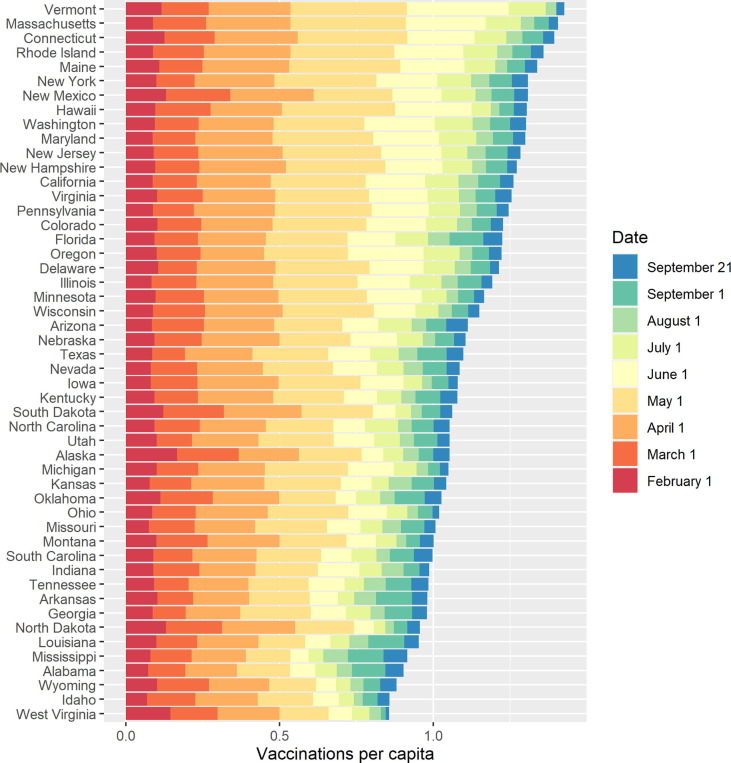
To examine predictors of state-level COVID-19 vaccination rates during the first nine months of 2021.
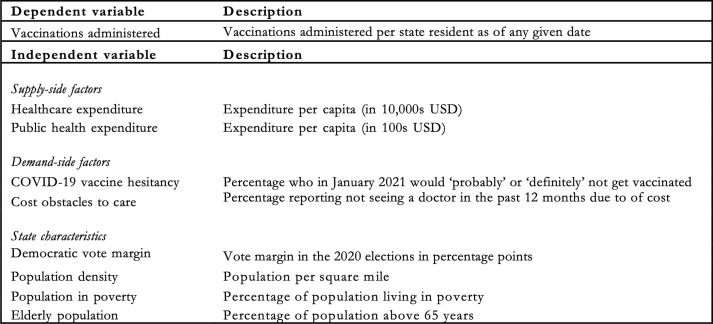
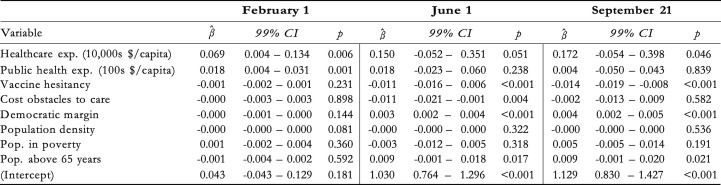
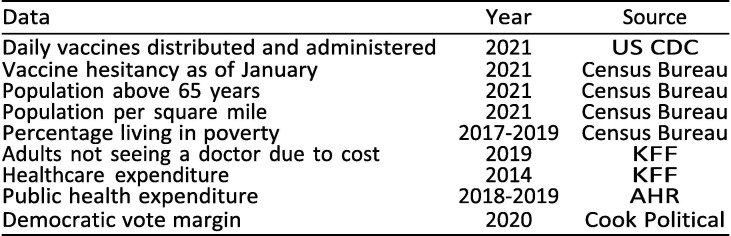
Using publicly available data, we employ a robust, iteratively re-weighted least squares multivariable regression with state characteristics as the independent variables and vaccinations per capita as the outcome. We run this regression for each day between February 1 and September 21, the last day before vaccine booster rollout.
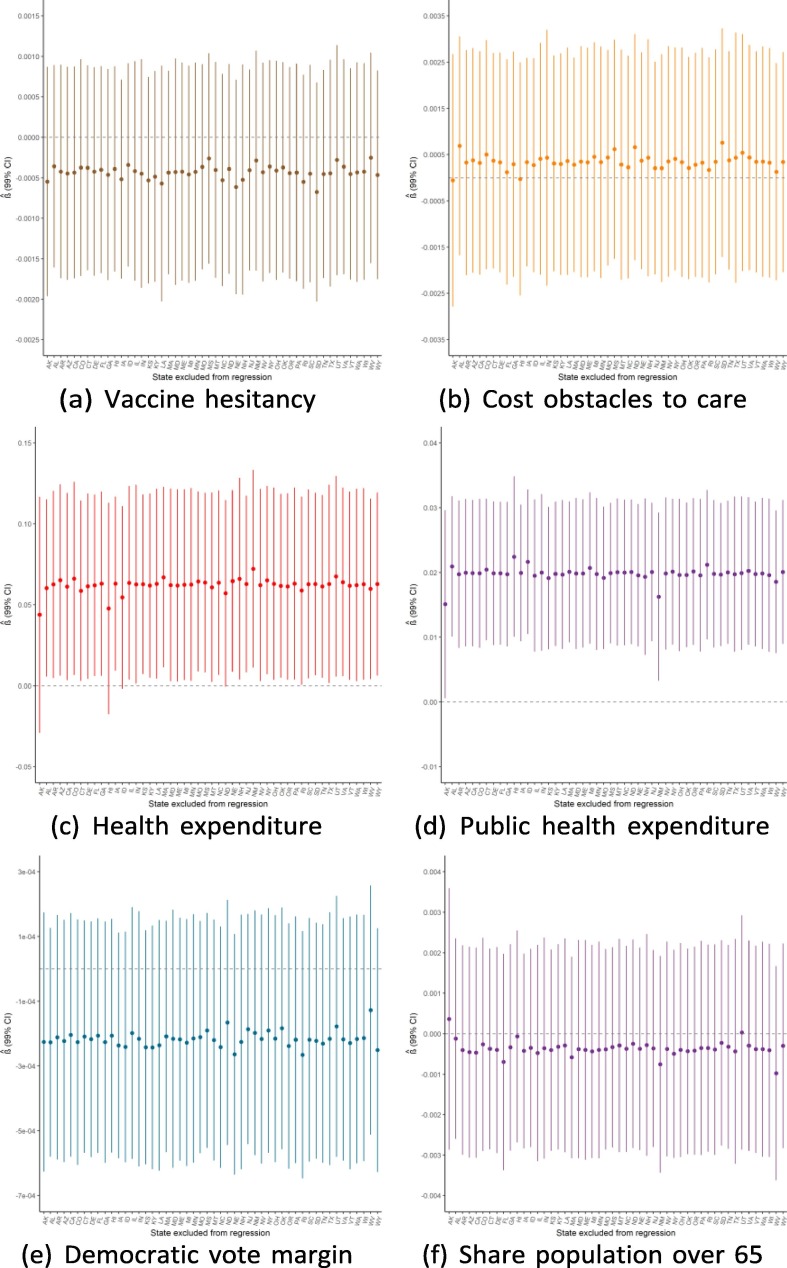
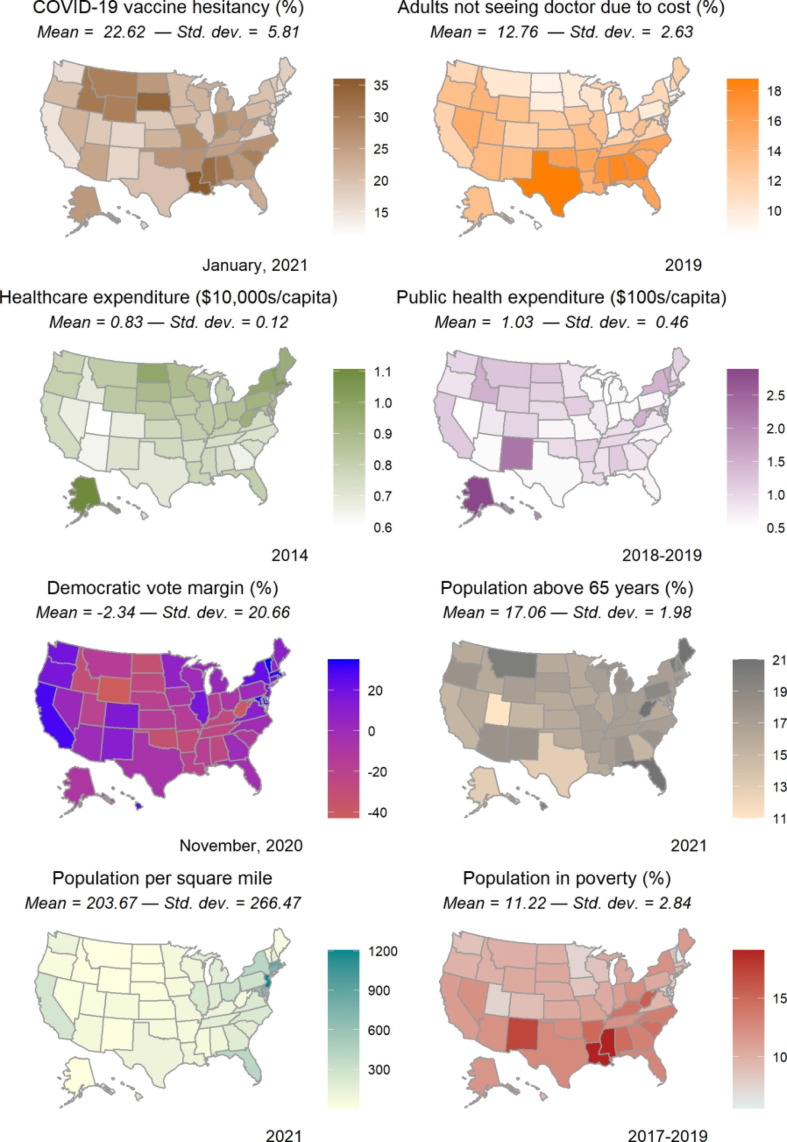
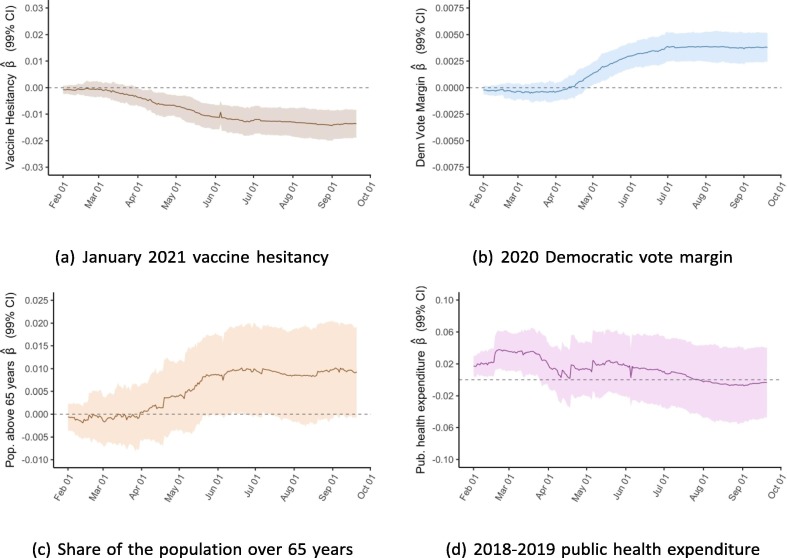
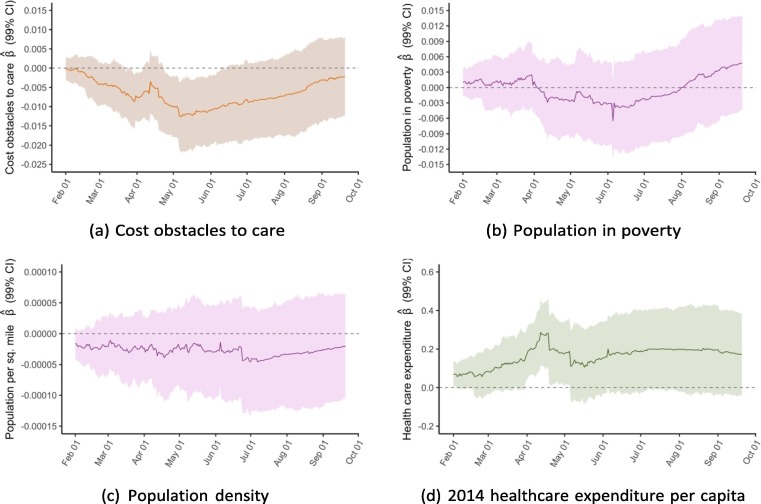
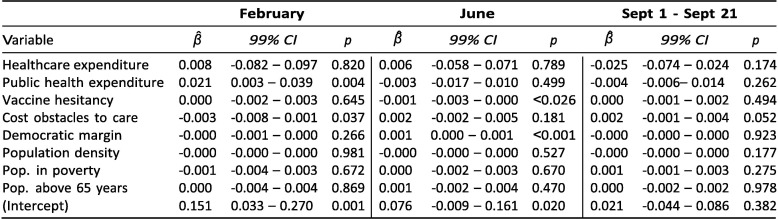
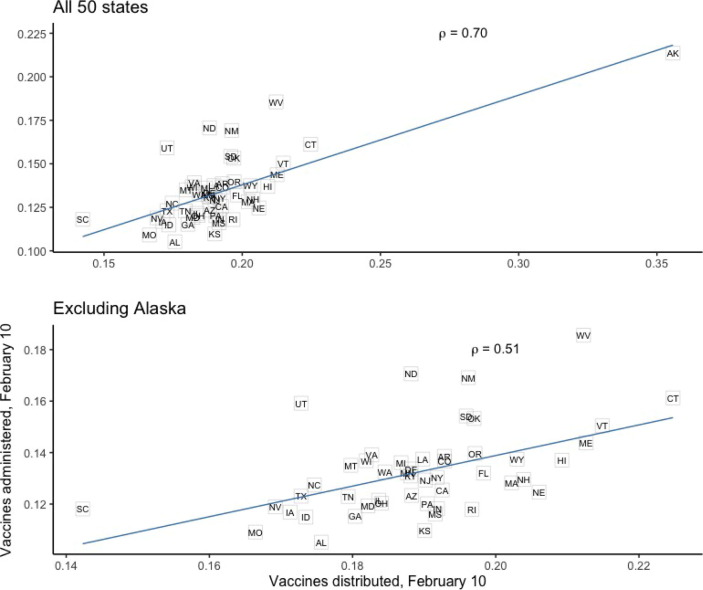
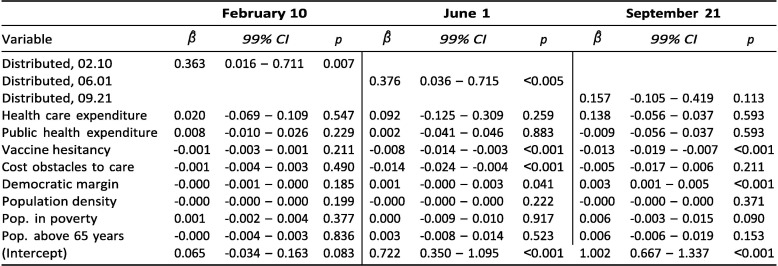
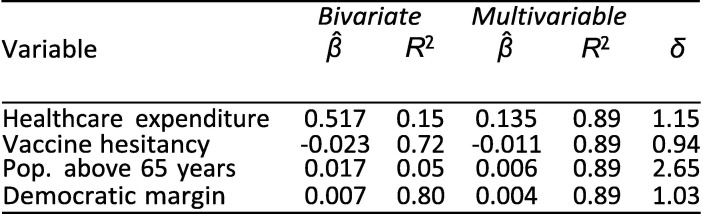
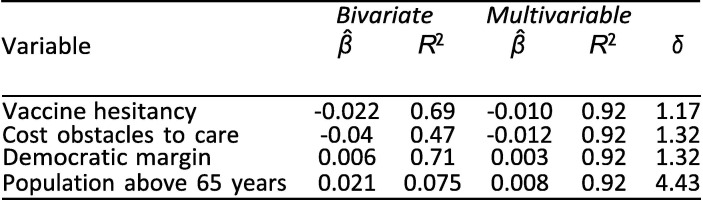
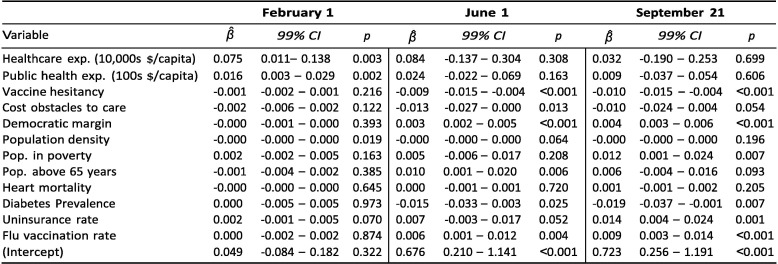
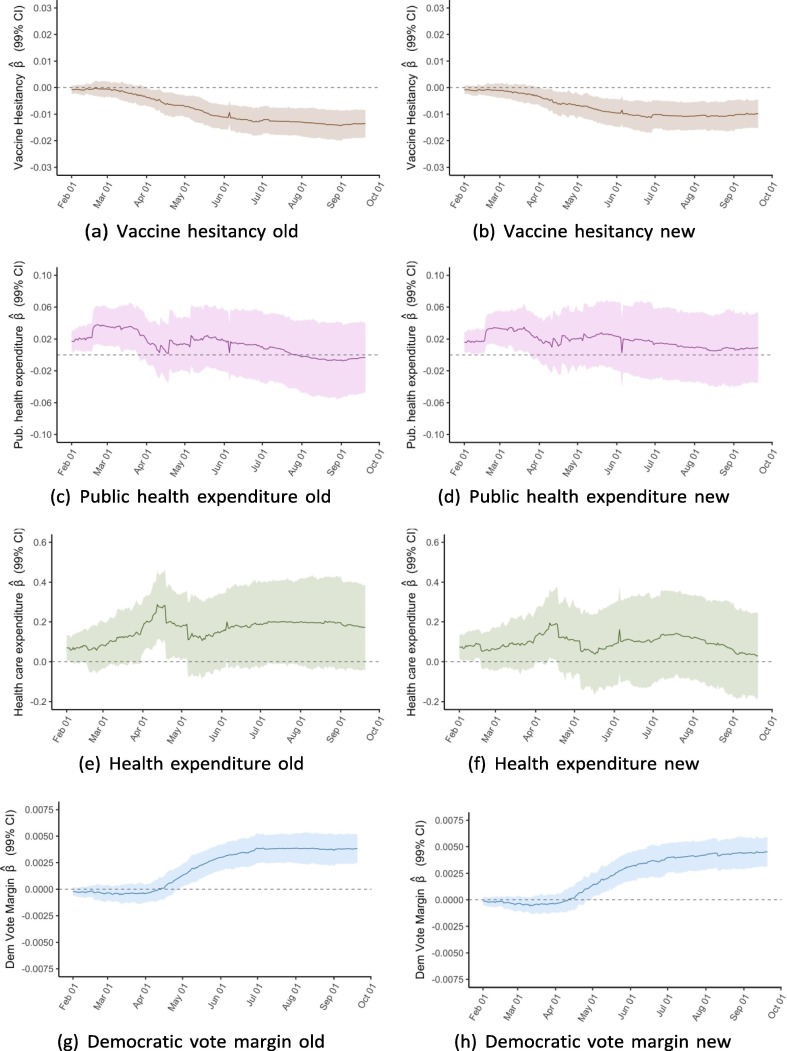
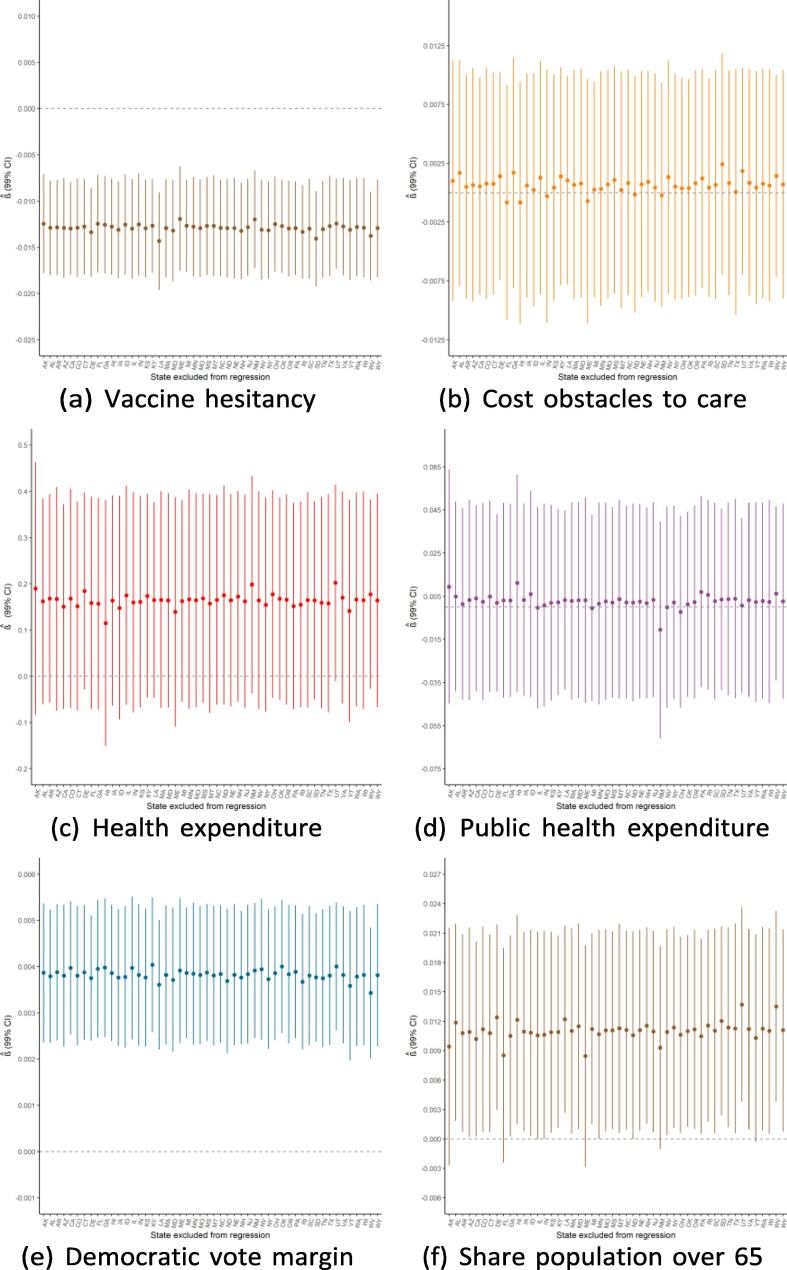
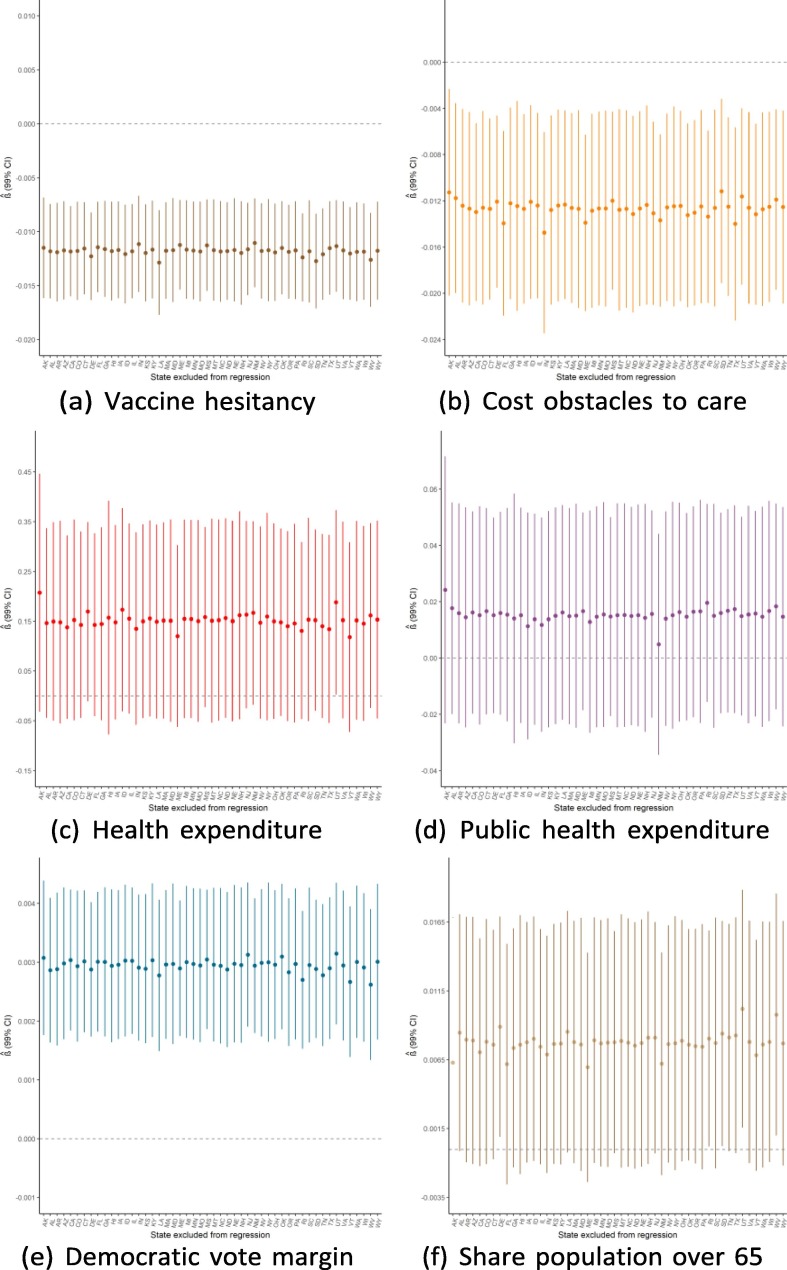
We identify associations between vaccination rates and several state characteristics, including health expenditure, vaccine hesitancy, cost obstacles to care, Democratic voting, and elderly population share. We show that the determinants of vaccination rates have evolved: while supply-side factors were most clearly associated with early vaccination uptake, demand-side factors have become increasingly salient over time. We find that our results are generally robust to a range of alternative specifications.
Both supply and demand-side factors relate to vaccination coverage and the determinants of success have changed over time.
Investing in health capacity may improve early vaccine distribution and administration, while overcoming vaccine hesitancy and cost obstacles to care may be crucial for later immunisation campaign stages.
在 2021 年前九个月期间,研究州级 COVID-19 疫苗接种率的预测因素。
使用公开可用的数据,我们采用稳健的、迭代重新加权最小二乘多元回归,以州特征作为自变量,人均接种量作为因变量。我们在 2 月 1 日至 9 月 21 日(疫苗加强针推出前的最后一天)期间的每一天运行此回归。
我们发现疫苗接种率与一些州特征之间存在关联,包括卫生支出、疫苗犹豫、医疗费用障碍、民主投票和老年人口比例。我们表明,疫苗接种率的决定因素已经发生了变化:虽然供应方面的因素与早期接种率的上升最明显相关,但需求方面的因素随着时间的推移变得越来越重要。我们发现,我们的结果在一系列替代规范下通常是稳健的。
供应和需求方面的因素都与疫苗接种覆盖率有关,成功的决定因素随着时间的推移而发生了变化。
投资于卫生能力可能会改善早期疫苗的分配和管理,而克服疫苗犹豫和医疗费用障碍对于后期的免疫接种活动阶段可能至关重要。