Kaimori Ryo, Nishida Haruto, Uchida Tomohisa, Tamura Mari, Kuroki Kohji, Murata Kumi, Hatakeyama Kinta, Ikeda Yoshihiko, Amemiya Kisaki, Nishizono Akira, Daa Tsutomu, Mori Shinjiro
Department of Forensic Medicine, Faculty of Medicine, Oita University, 1-1 Idaigaoka, Hasama-machi, Yufu, Oita, 879-5593, Japan.
Department of Diagnostic Pathology, Faculty of Medicine, Oita University, 1-1 Idaigaoka, Hasama-machi, Yufu, Oita, 879-5593, Japan.
Thromb J. 2022 Oct 6;20(1):61. doi: 10.1186/s12959-022-00418-7.
Coronavirus disease 2019 (COVID-19) has spread worldwide. Vaccination is now recommended as one of the effective countermeasures to control the pandemic or prevent the worsening of symptoms. However, its adverse effects have been attracting attention. Here, we report an autopsy case of multiple thromboses after receiving the first dose of the BNT162b2 mRNA vaccine (Comirnaty, Pfizer/BioNTech) in an elderly woman.
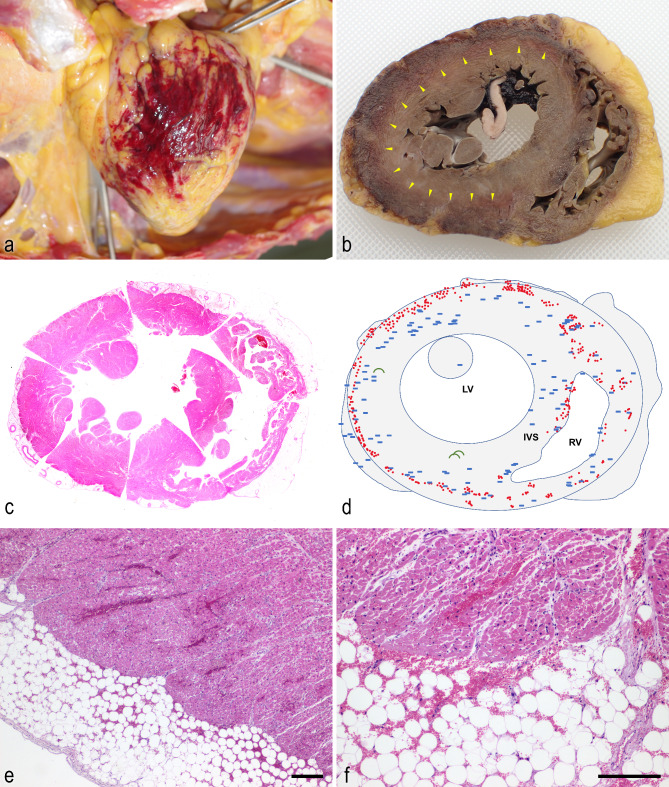
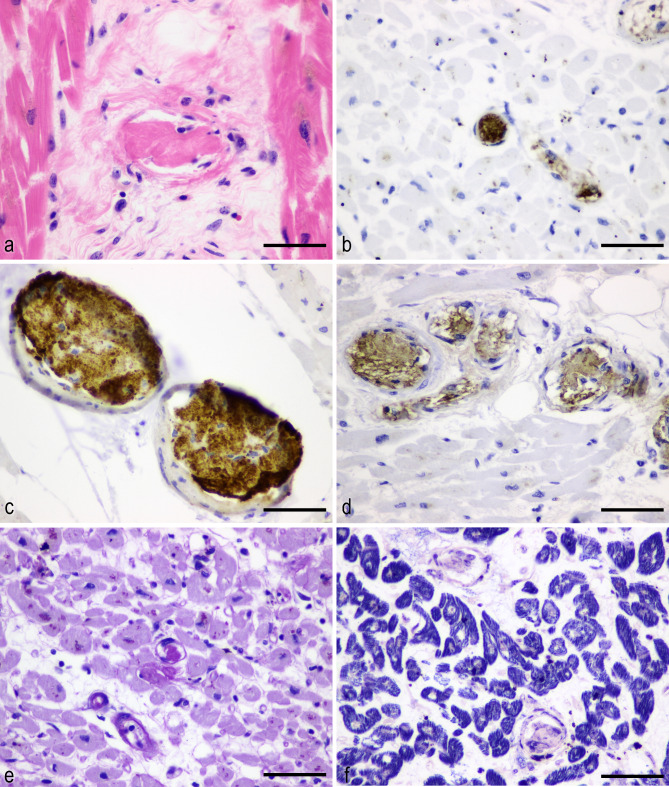
A 72-year-old woman with a history of diffuse large B-cell lymphoma in the stomach and hyperthyroidism received the first dose of the BNT162b2 mRNA vaccine and died 2 days later. The autopsy revealed multiple microthrombi in the heart, brain, liver, kidneys, and adrenal glands. The thrombi were CD61 and CD42b positive and were located in the blood vessels primarily in the pericardial aspect of the myocardium and subcapsular region of the adrenal glands; their diameters were approximately 5-40 μm. Macroscopically, a characteristic myocardial haemorrhage was observed, and the histopathology of the characteristic thrombus distribution, which differed from that of haemolytic uraemic syndrome and disseminated intravascular coagulation, suggested that the underlying pathophysiology may have been similar to that of thrombotic microangiopathy (TMA).
This is the first report on a post-mortem case of multiple thromboses after the BNT162b2 mRNA vaccine. The component thrombus and characteristic distribution of the thrombi were similar to those of TMA, which differs completely from haemolytic uraemic syndrome or disseminated intravascular coagulation, after vaccination. Although rare, it is important to consider that fatal adverse reactions may occur after vaccination and that it is vital to conduct careful follow-up.
2019冠状病毒病(COVID-19)已在全球范围内传播。目前推荐接种疫苗作为控制疫情或预防症状恶化的有效对策之一。然而,其不良反应一直备受关注。在此,我们报告一例老年女性在接种第一剂BNT162b2 mRNA疫苗(Comirnaty,辉瑞/生物新技术公司)后发生多发性血栓形成的尸检病例。
一名72岁女性,有胃弥漫性大B细胞淋巴瘤病史和甲状腺功能亢进,接种了第一剂BNT162b2 mRNA疫苗,2天后死亡。尸检发现心脏、大脑、肝脏、肾脏和肾上腺有多个微血栓。血栓CD61和CD42b呈阳性,主要位于心肌心包面和肾上腺被膜下区域的血管内;其直径约为5-40μm。宏观上,观察到特征性的心肌出血,特征性血栓分布的组织病理学与溶血性尿毒症综合征和弥散性血管内凝血不同,提示其潜在病理生理学可能与血栓性微血管病(TMA)相似。
这是首例关于BNT162b2 mRNA疫苗接种后多发性血栓形成的尸检病例报告。血栓的组成成分和特征性分布与TMA相似,与接种疫苗后的溶血性尿毒症综合征或弥散性血管内凝血完全不同。尽管罕见,但必须考虑到接种疫苗后可能发生致命不良反应,并且进行仔细随访至关重要。