
AAV 载体:人类基因治疗的魔方。
AAV vectors: The Rubik's cube of human gene therapy.
机构信息
R&D Department, Asklepios BioPharmaceutical, Inc. (AskBio), 20 T.W. Alexander, Suite 110 RTP, Durham, NC 27709, USA.
Viralgen. Parque Tecnológico de Guipuzkoa, Edificio Kuatro, Paseo Mikeletegui, 83, 20009 San Sebastián, Spain.
出版信息
Mol Ther. 2022 Dec 7;30(12):3515-3541. doi: 10.1016/j.ymthe.2022.09.015. Epub 2022 Oct 5.
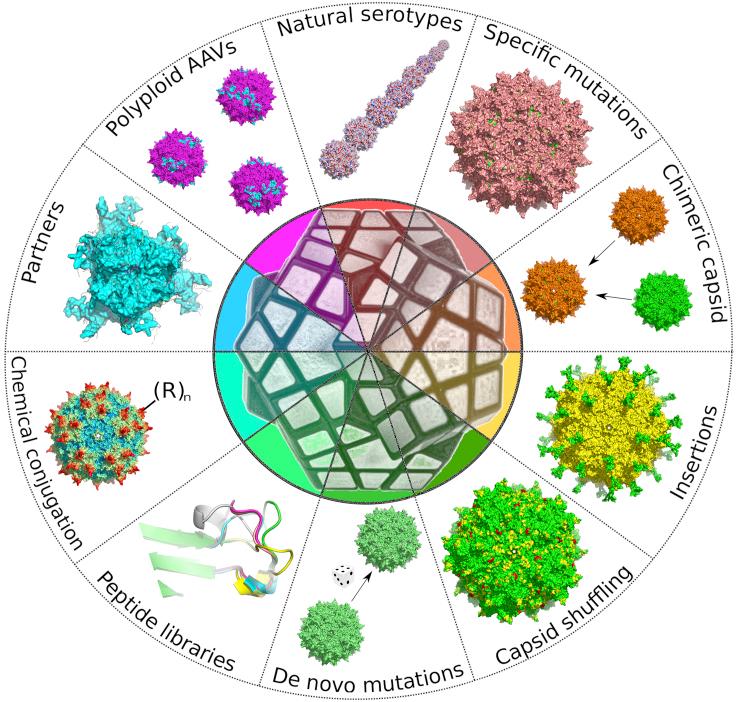
Defective genes account for ∼80% of the total of more than 7,000 diseases known to date. Gene therapy brings the promise of a one-time treatment option that will fix the errors in patient genetic coding. Recombinant viruses are highly efficient vehicles for in vivo gene delivery. Adeno-associated virus (AAV) vectors offer unique advantages, such as tissue tropism, specificity in transduction, eliciting of a relatively low immune responses, no incorporation into the host chromosome, and long-lasting delivered gene expression, making them the most popular viral gene delivery system in clinical trials, with three AAV-based gene therapy drugs already approved by the US Food and Drug Administration (FDA) or European Medicines Agency (EMA). Despite the success of AAV vectors, their usage in particular scenarios is still limited due to remaining challenges, such as poor transduction efficiency in certain tissues, low organ specificity, pre-existing humoral immunity to AAV capsids, and vector dose-dependent toxicity in patients. In the present review, we address the different approaches to improve AAV vectors for gene therapy with a focus on AAV capsid selection and engineering, strategies to overcome anti-AAV immune response, and vector genome design, ending with a glimpse at vector production methods and the current state of recombinant AAV (rAAV) at the clinical level.
缺陷基因占目前已知的 7000 多种疾病总数的约 80%。基因治疗带来了一次性治疗选择的希望,将纠正患者遗传编码中的错误。重组病毒是体内基因传递的高效载体。腺相关病毒 (AAV) 载体具有独特的优势,如组织嗜性、转导特异性、引起相对较低的免疫反应、不整合到宿主染色体中以及持久的基因表达,使其成为临床试验中最受欢迎的病毒基因传递系统,已有三种基于 AAV 的基因治疗药物获得美国食品和药物管理局 (FDA) 或欧洲药品管理局 (EMA) 的批准。尽管 AAV 载体取得了成功,但由于仍然存在一些挑战,如在某些组织中转导效率低、器官特异性低、对 AAV 衣壳的体液免疫预先存在以及载体剂量依赖性毒性等,其在特定情况下的使用仍然受到限制。在本综述中,我们讨论了改进 AAV 载体用于基因治疗的不同方法,重点是 AAV 衣壳的选择和工程、克服抗 AAV 免疫反应的策略以及载体基因组设计,最后简要介绍了载体生产方法和临床水平的重组 AAV(rAAV)的现状。

 Zotero 插件