Institute of Infection, Veterinary and Ecological Sciences, University of Liverpool, Liverpool, United Kingdom.
TopMD Precision Medicine Ltd, Southampton, United Kingdom.
Front Immunol. 2022 Sep 20;13:988685. doi: 10.3389/fimmu.2022.988685. eCollection 2022.
The COVID-19 pandemic has created pressure on healthcare systems worldwide. Tools that can stratify individuals according to prognosis could allow for more efficient allocation of healthcare resources and thus improved patient outcomes. It is currently unclear if blood gene expression signatures derived from patients at the point of admission to hospital could provide useful prognostic information.
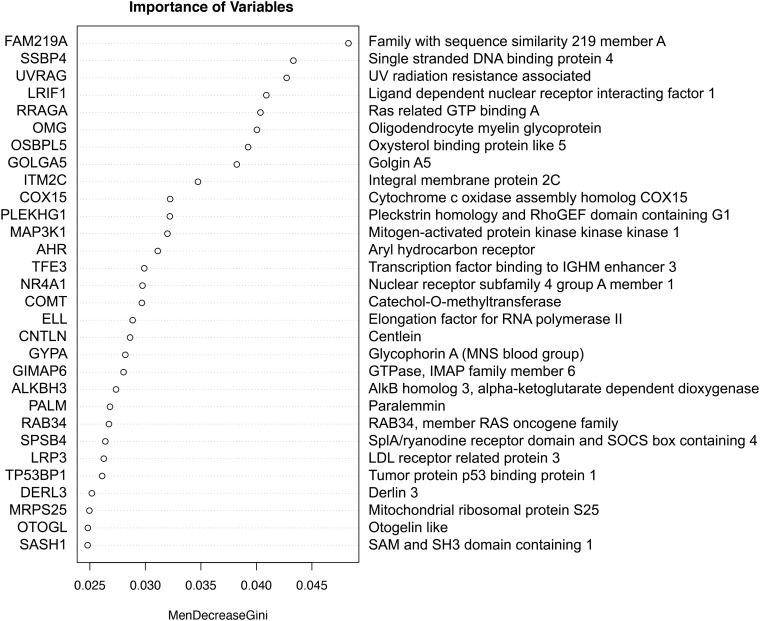
Gene expression of whole blood obtained at the point of admission from a cohort of 78 patients hospitalised with COVID-19 during the first wave was measured by high resolution RNA sequencing. Gene signatures predictive of admission to Intensive Care Unit were identified and tested using machine learning and topological data analysis, TopMD.
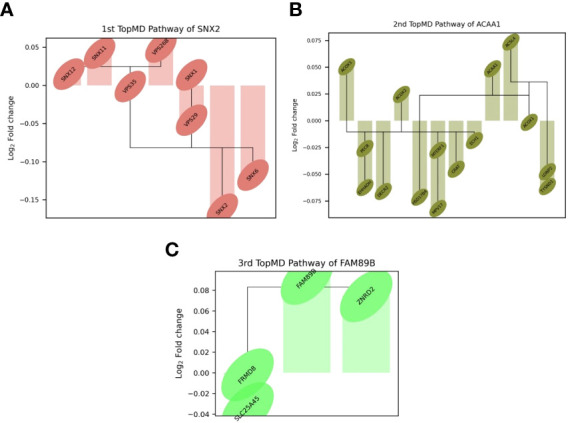
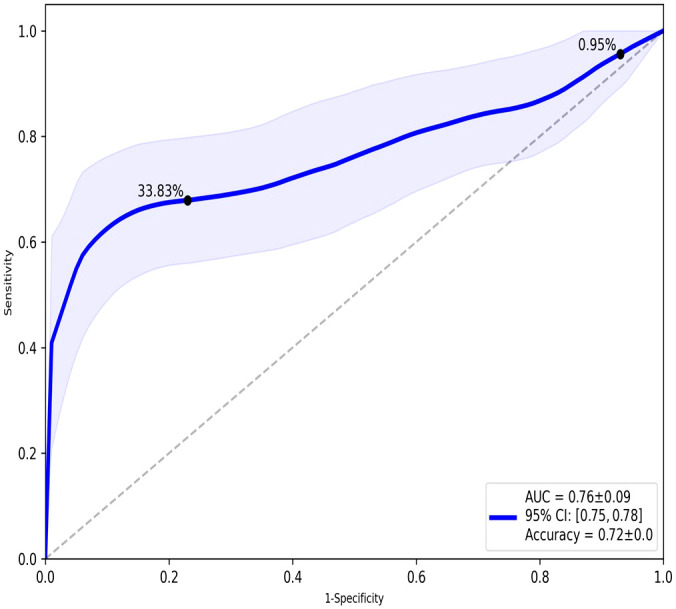
The best gene expression signature predictive of ICU admission was defined using topological data analysis with an accuracy: 0.72 and ROC AUC: 0.76. The gene signature was primarily based on differentially activated pathways controlling epidermal growth factor receptor (EGFR) presentation, Peroxisome proliferator-activated receptor alpha (PPAR-α) signalling and Transforming growth factor beta (TGF-β) signalling.
Gene expression signatures from blood taken at the point of admission to hospital predicted ICU admission of treatment naïve patients with COVID-19.
COVID-19 大流行给全球医疗体系带来了压力。能够根据预后对个体进行分层的工具可以更有效地分配医疗资源,从而改善患者的预后。目前尚不清楚患者入院时的血液基因表达特征是否能提供有用的预后信息。
通过高分辨率 RNA 测序测量了在 COVID-19 第一波期间住院的 78 名患者入院时采集的全血的基因表达。使用机器学习和拓扑数据分析(TopMD)识别并测试了预测入住重症监护病房(ICU)的基因特征。
使用拓扑数据分析定义了预测 ICU 入院的最佳基因表达特征,其准确性为 0.72,ROC AUC 为 0.76。该基因特征主要基于控制表皮生长因子受体(EGFR)呈现、过氧化物酶体增殖物激活受体α(PPAR-α)信号和转化生长因子β(TGF-β)信号的差异激活途径。
从入院时采集的血液中的基因表达特征预测了 COVID-19 治疗初治患者的 ICU 入院。