Hu Lin, Wu Xin, Chen Dongjie, Cao Zhenyu, Li Zian, Liu Yanmin, Zhao Qiangqiang
Department of Pediatrics, The Third Xiangya Hospital, Central South University, Changsha, China.
Department of Spine Surgery, Third Xiangya Hospital, Central South University, Changsha, China.
Front Cell Dev Biol. 2022 Sep 20;10:814722. doi: 10.3389/fcell.2022.814722. eCollection 2022.
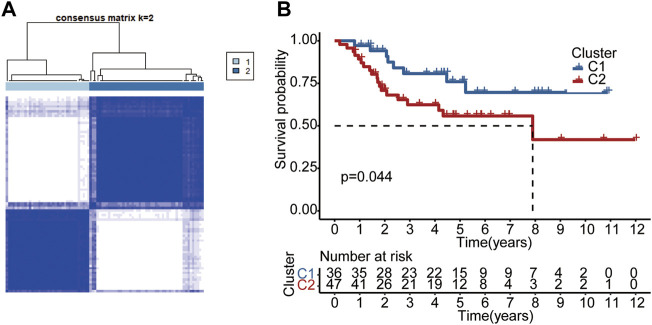
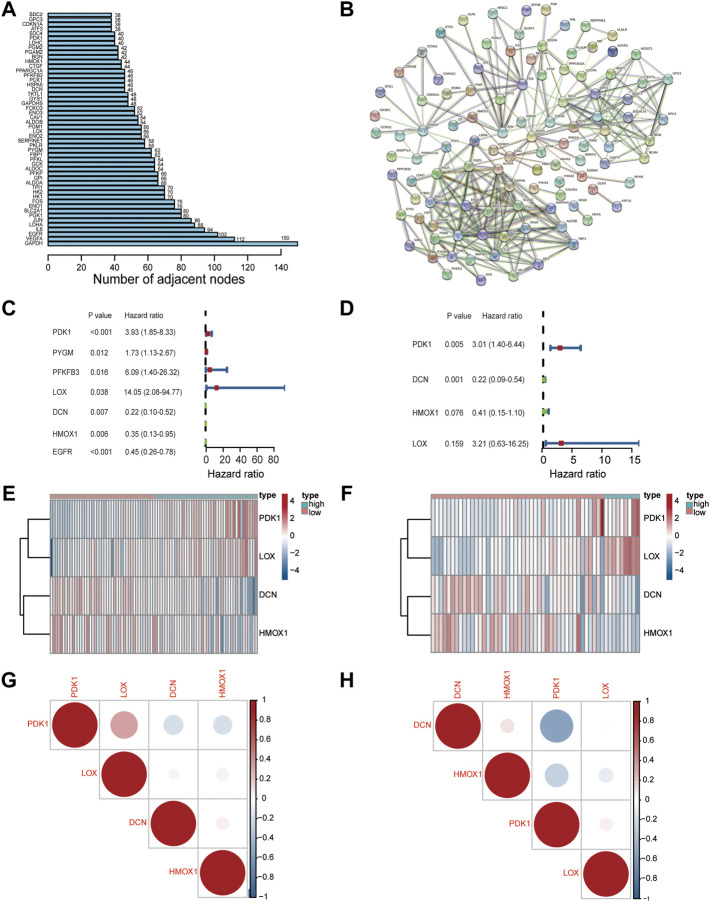
Osteosarcoma (OS) is one of the most common types of solid sarcoma with a poor prognosis. Solid tumors are often exposed to hypoxic conditions, while hypoxia is regarded as a driving force in tumor recurrence, metastasis, progression, low chemosensitivity and poor prognosis. Pytoptosis is a gasdermin-mediated inflammatory cell death that plays an essential role in host defense against tumorigenesis. However, few studies have reported relationships among hypoxia, pyroptosis, tumor immune microenvironment, chemosensitivity, and prognosis in OS. In this study, gene and clinical data from Therapeutically Applicable Research to Generate Effective Treatments (TARGET) and Gene Expression Omnibus (GEO) databases were merged to develop a hypoxia risk model comprising four genes ( and ). The high hypoxia risk group had a poor prognosis and immunosuppressive status. Meanwhile, the infiltration of CD8 T cells, activated memory CD4 T cells, and related chemokines and genes were associated with clinical survival outcomes or chemosensitivity, the possible crucial driving forces of the OS hypoxia immune microenvironment that affect the development of pyroptosis. We established a pyroptosis risk model based on 14 pyroptosis-related genes to independently predict not only the prognosis but also the chemotherapy sensitivities. By exploring the various connections between the hypoxic immune microenvironment and pyroptosis, this study indicates that hypoxia could influence tumor immune microenvironment (TIM) remodeling and promote pyroptosis leading to poor prognosis and low chemosensitivity.
骨肉瘤(OS)是实体肉瘤中最常见的类型之一,预后较差。实体瘤常处于缺氧状态,而缺氧被认为是肿瘤复发、转移、进展、化疗敏感性低和预后不良的驱动因素。焦亡是一种由gasdermin介导的炎症性细胞死亡,在宿主抵御肿瘤发生中起重要作用。然而,很少有研究报道骨肉瘤中缺氧、焦亡、肿瘤免疫微环境、化疗敏感性和预后之间的关系。在本研究中,将来自“生成有效治疗的治疗应用研究”(TARGET)和基因表达综合数据库(GEO)的基因和临床数据合并,以开发一个包含四个基因(和)的缺氧风险模型。高缺氧风险组预后较差且处于免疫抑制状态。同时,CD8 T细胞、活化记忆CD4 T细胞以及相关趋化因子和基因的浸润与临床生存结果或化疗敏感性相关,这些可能是骨肉瘤缺氧免疫微环境影响焦亡发生发展的关键驱动因素。我们基于14个焦亡相关基因建立了一个焦亡风险模型,不仅可以独立预测预后,还可以预测化疗敏感性。通过探索缺氧免疫微环境与焦亡之间的各种联系,本研究表明缺氧可能影响肿瘤免疫微环境(TIM)重塑并促进焦亡,导致预后不良和化疗敏感性低。