Fang Chao, Sun Jian, Qian Jun, Shen Cai-Liang
Department of Orthopedics & Spine Surgery, The First Affiliated Hospital of Anhui Medical University, Hefei, Anhui Province, China.
Department of Orthopedics, The Second Affiliated Hospital of Anhui Medical University, Hefei, Anhui Province, China.
Neural Regen Res. 2023 Apr;18(4):895-900. doi: 10.4103/1673-5374.353505.
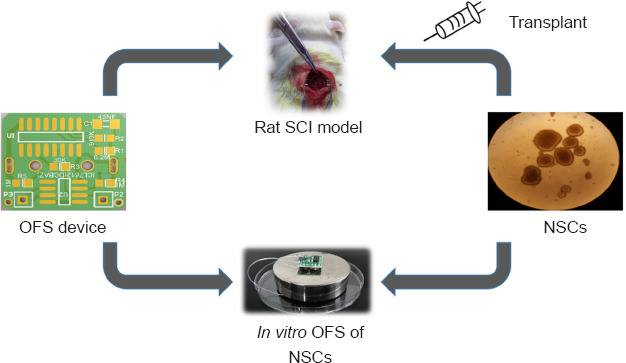
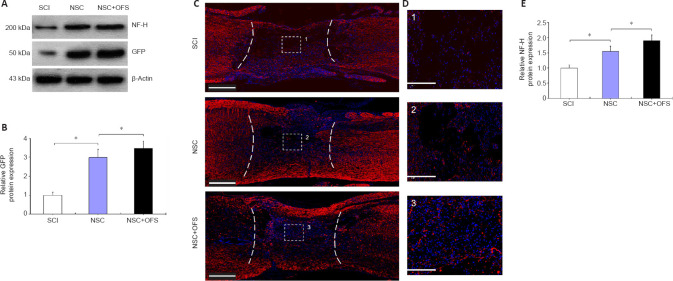
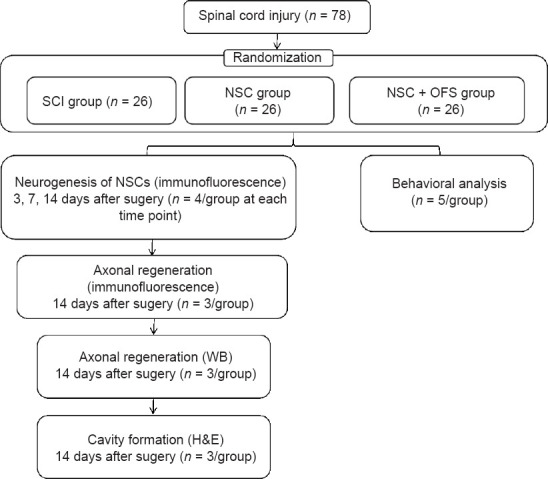
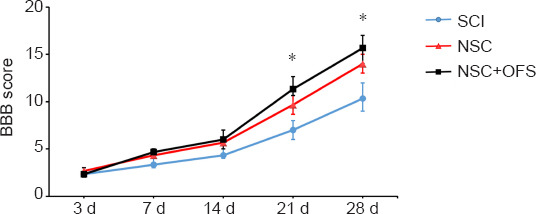
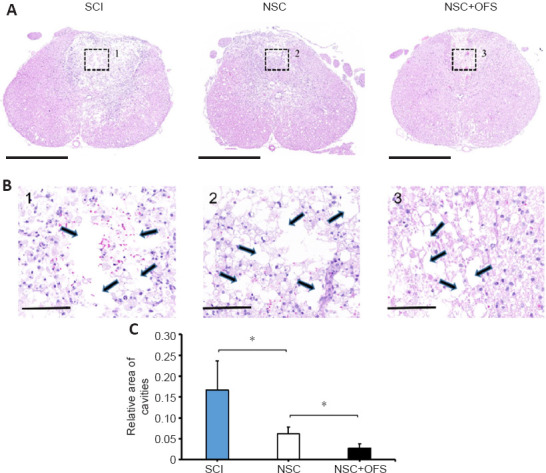
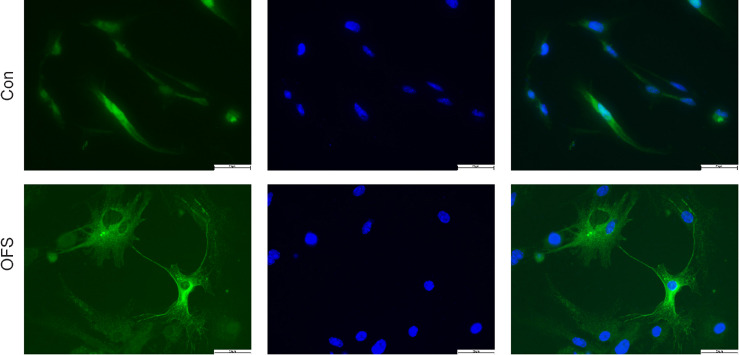
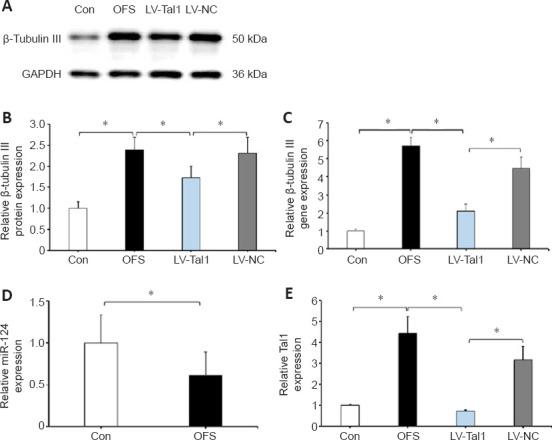
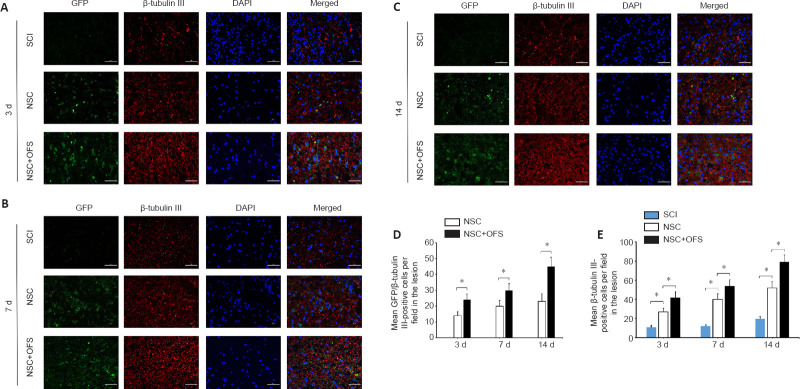
Spinal cord injury often leads to severe motor and sensory deficits, and prognosis using the currently available therapies remains poor. Therefore, we aimed to explore a novel therapeutic approach for improving the prognosis of spinal cord injury. In this study, we implanted oscillating field stimulation devices and transplanted neural stem cells into the thoracic region (T9-T10) of rats with a spinal cord contusion. Basso-Beattie-Bresnahan scoring revealed that oscillating field stimulation combined with neural stem cells transplantation promoted motor function recovery following spinal cord injury. In addition, we investigated the regulation of oscillating field stimulation on the miR-124/Tal1 axis in neural stem cells. Transfection of lentivirus was performed to investigate the role of Tal1 in neurogenesis of neural stem cells induced by oscillating field stimulation. Quantitative reverse transcription-polymerase chain reaction, immunofluorescence and western blotting showed that oscillating field stimulation promoted neurogenesis of neural stem cells in vitro and in vivo. Hematoxylin and eosin staining showed that oscillating field stimulation combined with neural stem cells transplantation alleviated cavities formation after spinal cord injury. Taking the results together, we concluded that oscillating field stimulation decreased miR-124 expression and increased Tal1 content, thereby promoting the neurogenesis of neural stem cells. The combination of oscillating field stimulation and neural stem cells transplantation improved neurogenesis, and thereby promoted structural and functional recovery after spinal cord injury.
脊髓损伤常导致严重的运动和感觉功能障碍,且目前可用疗法的预后仍然较差。因此,我们旨在探索一种改善脊髓损伤预后的新型治疗方法。在本研究中,我们将振荡场刺激装置植入脊髓挫伤大鼠的胸段(T9 - T10)并移植神经干细胞。Basso - Beattie - Bresnahan评分显示,振荡场刺激联合神经干细胞移植可促进脊髓损伤后运动功能恢复。此外,我们研究了振荡场刺激对神经干细胞中miR - 124/Tal1轴的调控作用。通过慢病毒转染来研究Tal1在振荡场刺激诱导的神经干细胞神经发生中的作用。定量逆转录 - 聚合酶链反应、免疫荧光和蛋白质印迹分析表明,振荡场刺激在体外和体内均促进神经干细胞的神经发生。苏木精 - 伊红染色显示,振荡场刺激联合神经干细胞移植可减轻脊髓损伤后的空洞形成。综合这些结果,我们得出结论:振荡场刺激降低miR - 124表达并增加Tal1含量,从而促进神经干细胞的神经发生。振荡场刺激与神经干细胞移植相结合可改善神经发生,进而促进脊髓损伤后的结构和功能恢复。