Wang Yingdan, Zhang Xiang, Ma Yunping, Wang Yanqun, Zhan Wuqiang, Zheng Qinwen, Zhang Meng, Ji Ping, Liu Mei, Liu Qianying, Sun Tingting, Zhu Tongyu, Wen Yumei, Sun Lei, Zhao Jincun, Wu Fan, Chen Zhenguo, Huang Jinghe
Key Laboratory of Medical Molecular Virology (MOE/NHC/CAMS) and Shanghai Institute of Infectious Disease and Biosecurity, the Fifth People's Hospital of Shanghai, Shanghai Public Health Clinical Center, Institutes of Biomedical Sciences, School of Basic Medical Sciences, Fudan University, Shanghai, China.
Shanghai Immune Therapy Institute, Shanghai Jiao Tong University School of Medicine Affiliated Renji Hospital, Shanghai, China.
Cell Discov. 2022 Oct 7;8(1):104. doi: 10.1038/s41421-022-00463-6.
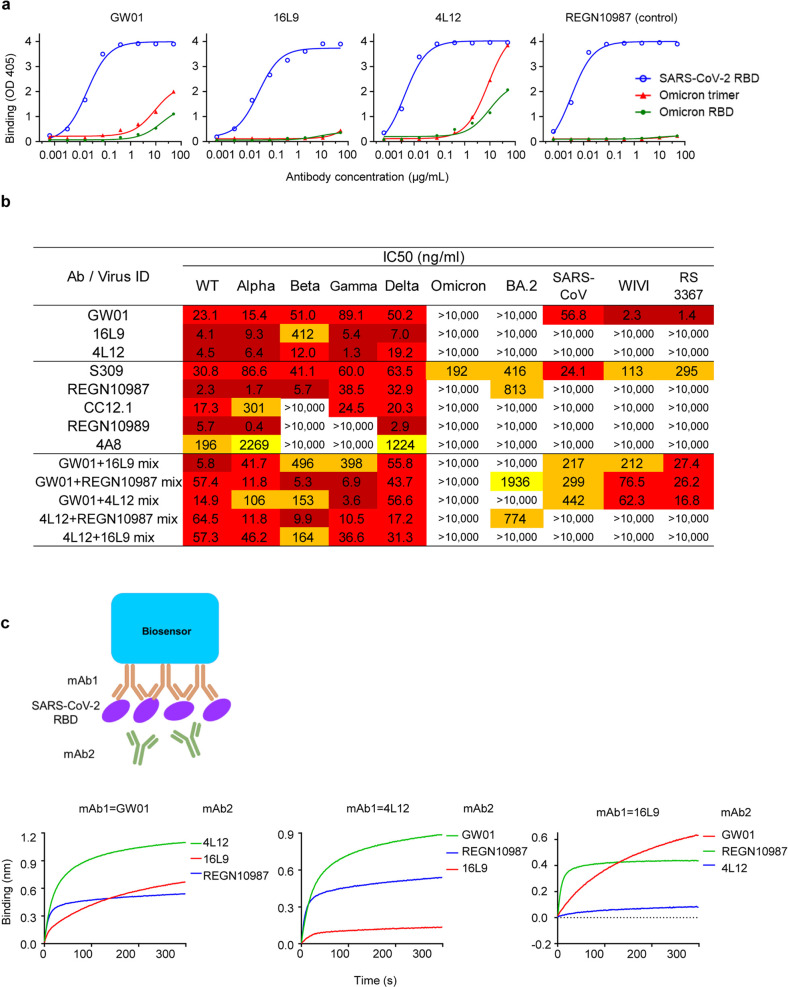
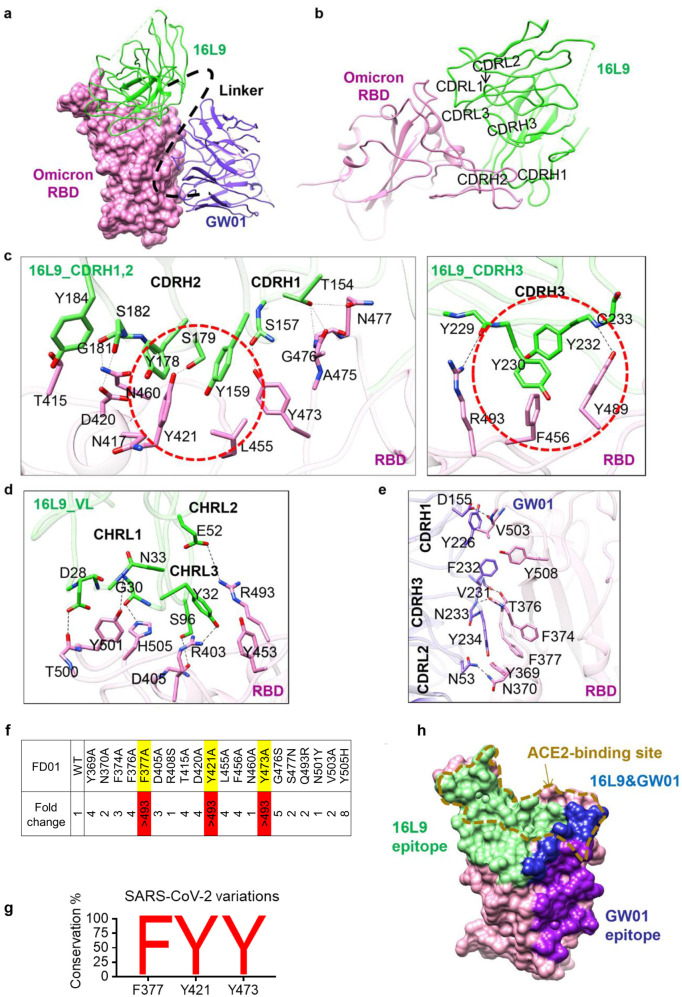
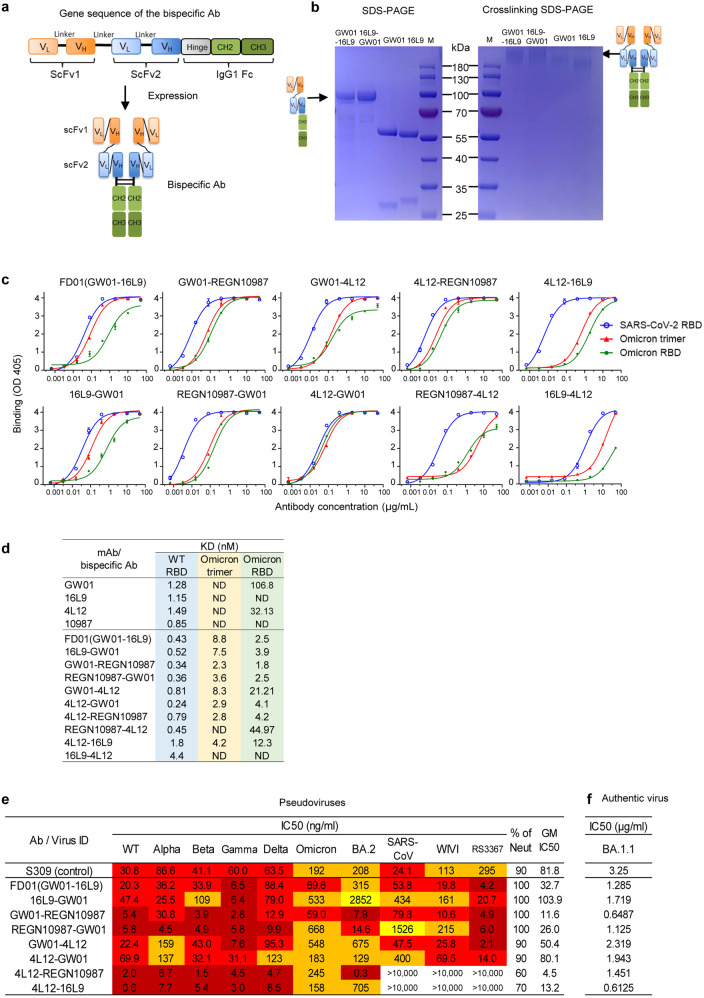
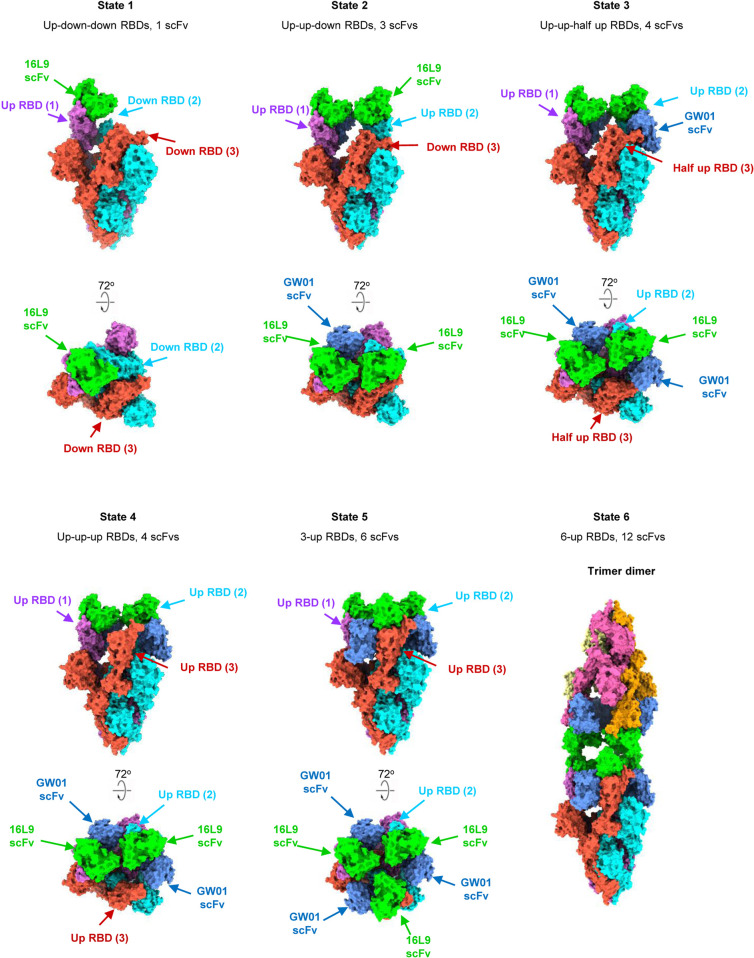
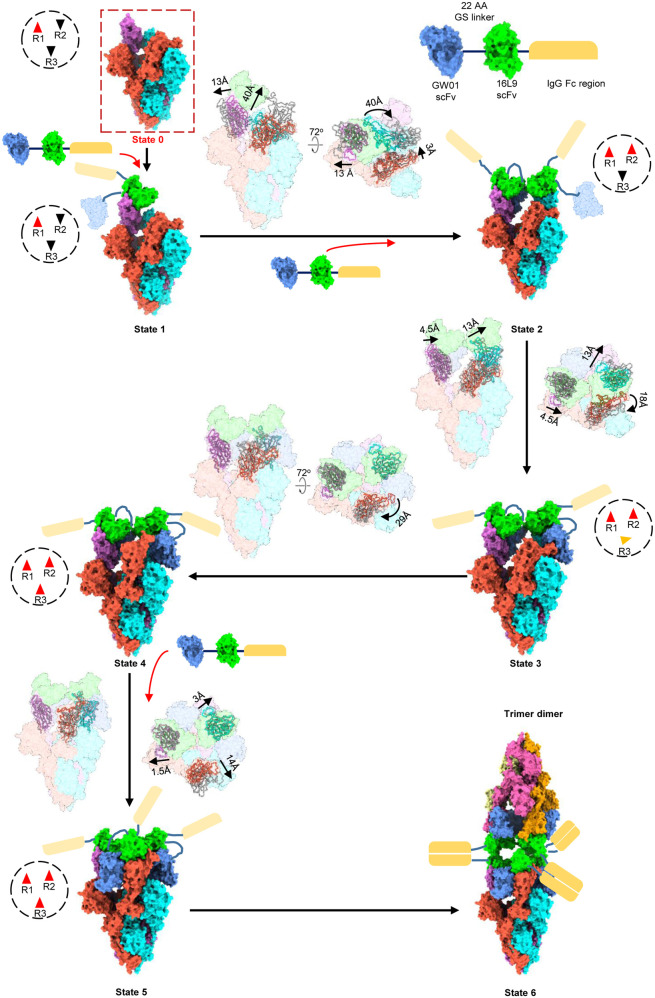
The highly mutated and transmissible Omicron (BA.1) and its more contagious lineage BA.2 have provoked serious concerns over their decreased sensitivity to the current COVID-19 vaccines and evasion from most anti-SARS-CoV-2 neutralizing antibodies (NAbs). In this study, we explored the possibility of combating the Omicron and BA.2 by constructing bispecific antibodies based on non-Omicron NAbs. We engineered 10 IgG-like bispecific antibodies with non-Omicron NAbs named GW01, 16L9, 4L12, and REGN10987 by fusing the single-chain variable fragments (scFvs) of two antibodies through a linker and then connecting them to the Fc region of IgG1. Surprisingly, 8 out of 10 bispecific antibodies showed high binding affinities to the Omicron receptor-binding domain (RBD) and exhibited extreme breadth and potency against pseudotyped SARS-CoV-2 variants of concern (VOCs) including Omicron and BA.2, with geometric mean of 50% inhibitory concentration (GM IC) values ranging from 4.5 ng/mL to 103.94 ng/mL, as well as the authentic BA.1.1. Six bispecific antibodies containing the cross-NAb GW01 not only neutralized Omicron and BA.2, but also neutralized the sarbecoviruses including SARS-CoV and SARS-related coronaviruses (SARSr-CoVs) RS3367 and WIV1, with GM IC ranging from 11.6 ng/mL to 103.9 ng/mL. Mapping analyses of 42 spike (S) variant single mutants of Omicron and BA.2 elucidated that these bispecific antibodies accommodated the S371L/F mutations, which were resistant to most of the non-Omicron NAbs. A cryo-electron microscopy (cryo-EM) structure study of the representative bispecific antibody GW01-16L9 (FD01) in its native full-length IgG form in complex with the Omicron S trimer revealed 5 distinct trimers and one novel trimer dimer conformation. 16L9 scFv binds the receptor-binding motif (RBM), while GW01 scFv binds a epitope outside the RBM. Two scFvs of the bispecific antibody synergistically induced the RBD-down conformation into 3 RBD-up conformation, improved the affinity between IgG and the Omicron RBD, induced the formation of trimer dimer, and inhibited RBD binding to ACE2. The trimer dimer conformation might induce the aggregation of virions and contribute to the neutralization ability of FD01. These novel bispecific antibodies are strong candidates for the treatment and prevention of infection with the Omicron, BA.2, VOCs, and other sarbecoviruses. Engineering bispecific antibodies based on non-Omicron NAbs could turn the majority of NAbs into a powerful arsenal to aid the battle against the pandemic.
高度变异且具有传染性的奥密克戎(BA.1)及其传染性更强的分支BA.2,因其对当前新冠疫苗的敏感性降低以及能逃避大多数抗严重急性呼吸综合征冠状病毒2(SARS-CoV-2)中和抗体(NAbs)而引发了严重担忧。在本研究中,我们探索了基于非奥密克戎NAbs构建双特异性抗体来对抗奥密克戎和BA.2的可能性。我们通过连接子融合两种抗体的单链可变片段(scFvs),然后将它们连接到IgG1的Fc区域,设计了10种具有非奥密克戎NAbs的IgG样双特异性抗体,命名为GW01、16L9、4L12和REGN10987。令人惊讶的是,10种双特异性抗体中有8种对奥密克戎受体结合域(RBD)表现出高结合亲和力,并且对包括奥密克戎和BA.2在内的关注的伪型SARS-CoV-2变异株(VOCs)以及真实的BA.1.1表现出极强的广度和效力,其50%抑制浓度(GM IC)值的几何平均值在4.5纳克/毫升至103.94纳克/毫升之间。六种含有交叉NAb GW01的双特异性抗体不仅中和了奥密克戎和BA.2,还中和了包括SARS-CoV和SARS相关冠状病毒(SARSr-CoVs)RS3367和WIV1在内的沙贝病毒,GM IC值在11.6纳克/毫升至103.9纳克/毫升之间。对奥密克戎和BA.2的42个刺突(S)变异单突变体的图谱分析表明,这些双特异性抗体能适应S371L/F突变,而大多数非奥密克戎NAbs对该突变具有抗性。对代表性双特异性抗体GW01-16L9(FD01)与奥密克戎S三聚体复合物的天然全长IgG形式进行的冷冻电子显微镜(cryo-EM)结构研究揭示了5种不同的三聚体和一种新的三聚体二聚体构象。16L9 scFv结合受体结合基序(RBM),而GW01 scFv结合RBM之外的一个表位。双特异性抗体的两个scFvs协同诱导RBD向下构象转变为3个RBD向上构象,提高了IgG与奥密克戎RBD之间的亲和力,诱导三聚体二聚体的形成,并抑制RBD与血管紧张素转换酶2(ACE2)的结合。三聚体二聚体构象可能诱导病毒粒子聚集,并有助于FD01的中和能力。这些新型双特异性抗体是治疗和预防奥密克戎、BA.2、VOCs及其他沙贝病毒感染的有力候选药物。基于非奥密克戎NAbs设计双特异性抗体可以将大多数NAbs转变为对抗疫情的强大武器库。