Department of Pharmacy, Pharmaceutical Technology and Biopharmacy, Ludwig-Maximilians Universität München, 81377, Munich, Germany.
Institute of Polymer Chemistry, Chair of Macromolecular Materials and Fiber Chemistry, University of Stuttgart, Stuttgart, Germany.
Drug Deliv Transl Res. 2023 Mar;13(3):822-838. doi: 10.1007/s13346-022-01245-z. Epub 2022 Oct 7.
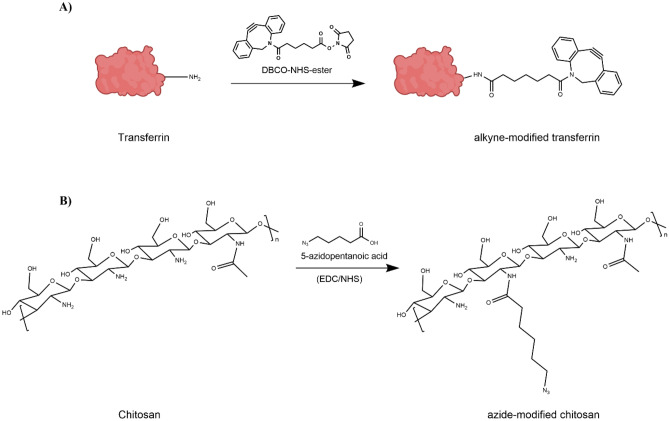
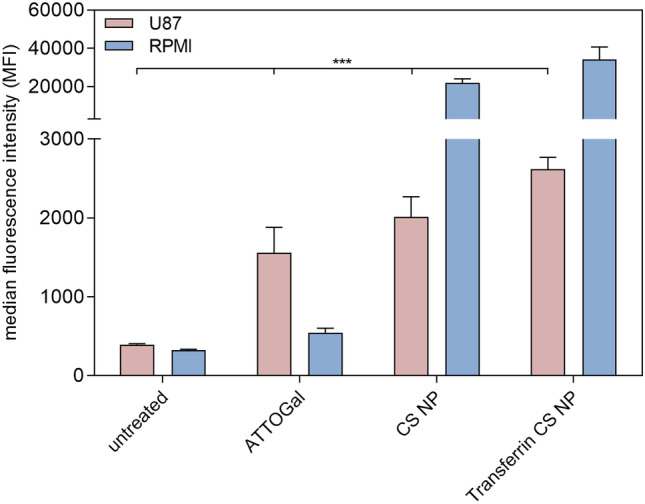
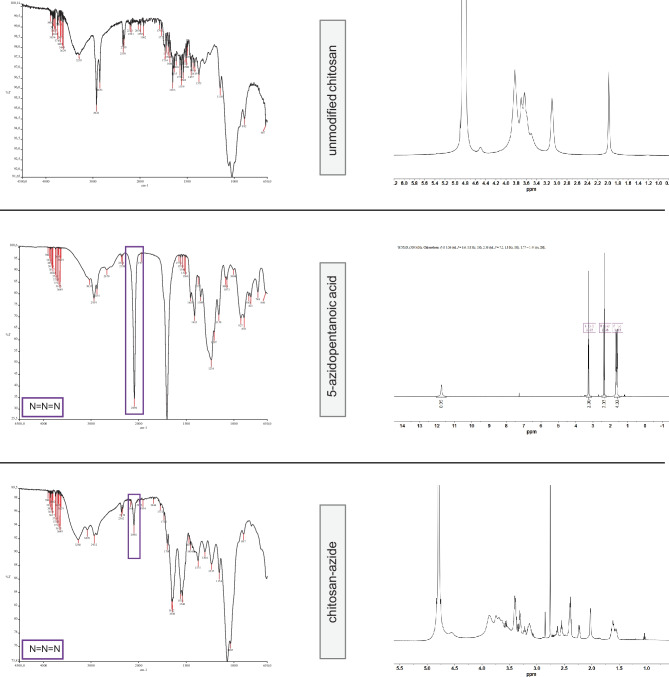
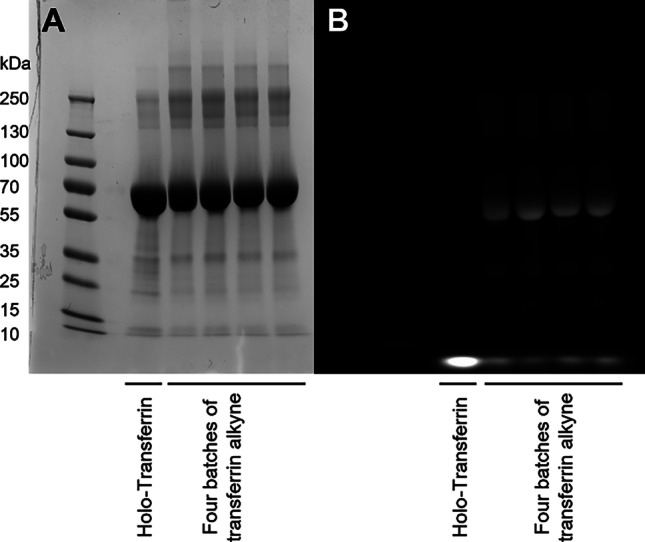
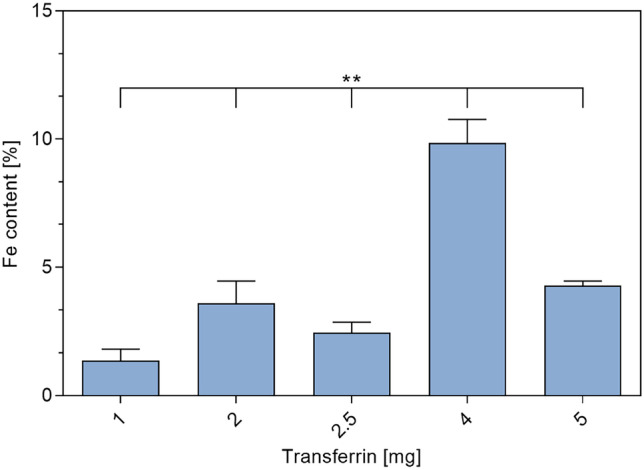
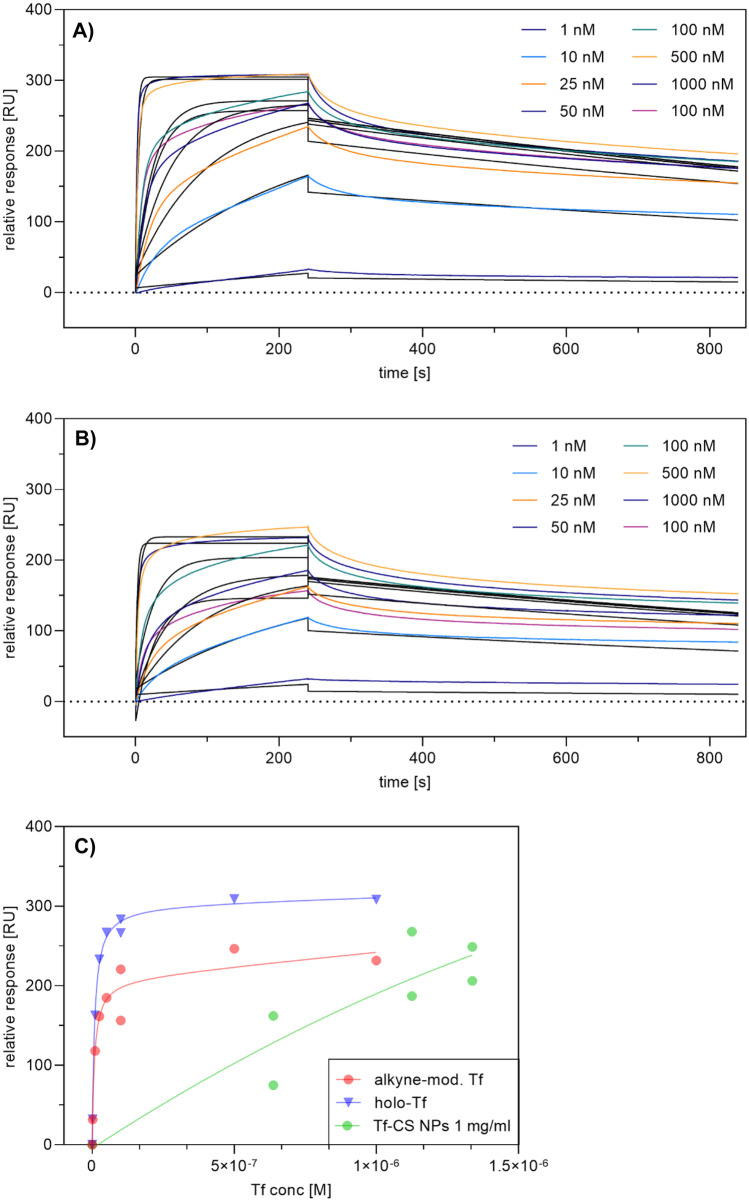
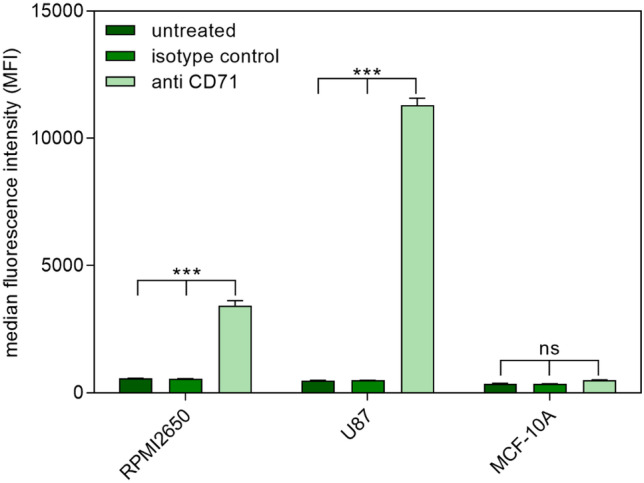
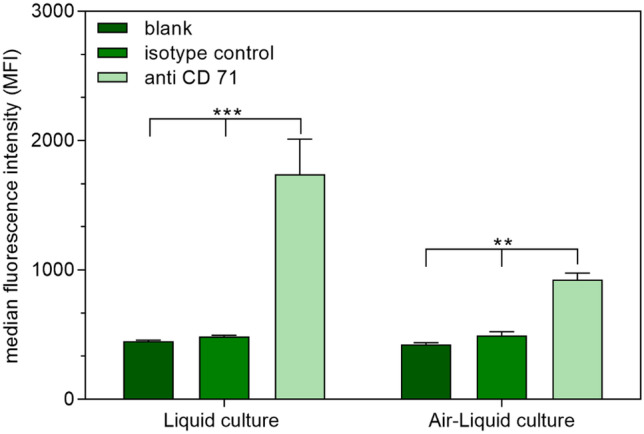
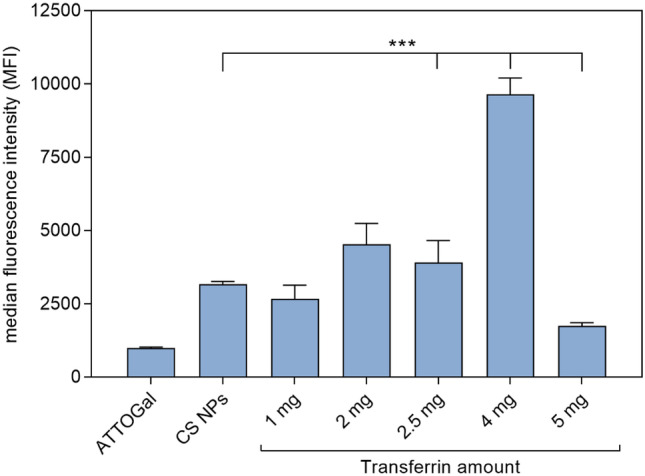
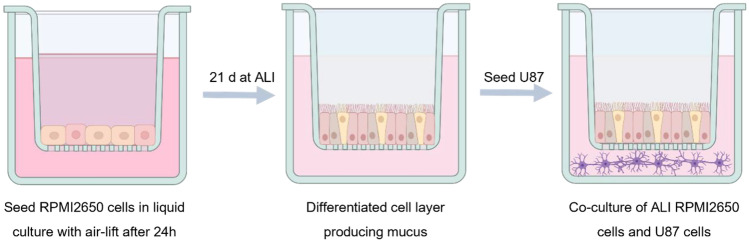
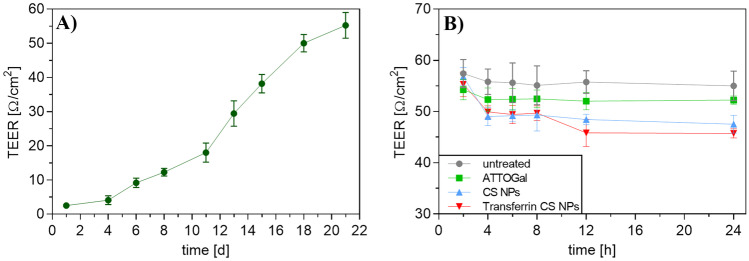
Nose-to-brain delivery presents a promising alternative route compared to classical blood-brain barrier passage, especially for the delivery of high molecular weight drugs. In general, macromolecules are rapidly degraded in physiological environment. Therefore, nanoparticulate systems can be used to protect biomolecules from premature degradation. Furthermore, targeting ligands on the surface of nanoparticles are able to improve bioavailability by enhancing cellular uptake due to specific binding and longer residence time. In this work, transferrin-decorated chitosan nanoparticles are used to evaluate the passage of a model protein through the nasal epithelial barrier in vitro. It was demonstrated that strain-promoted azide-alkyne cycloaddition reaction can be utilized to attach a functional group to both transferrin and chitosan enabling a rapid covalent surface-conjugation under mild reaction conditions after chitosan nanoparticle preparation. The intactness of transferrin and its binding efficiency were confirmed via SDS-PAGE and SPR measurements. Resulting transferrin-decorated nanoparticles exhibited a size of about 110-150 nm with a positive surface potential. Nanoparticles with the highest amount of surface bound targeting ligand also displayed the highest cellular uptake into a human nasal epithelial cell line (RPMI 2650). In an air-liquid interface co-culture model with glioblastoma cells (U87), transferrin-decorated nanoparticles showed a faster passage through the epithelial cell layer as well as increased cellular uptake into glioblastoma cells. These findings demonstrate the beneficial characteristics of a specific targeting ligand. With this chemical and technological formulation concept, a variety of targeting ligands can be attached to the surface after nanoparticle formation while maintaining cargo integrity.
与经典的血脑屏障途径相比,鼻腔递药为高相对分子质量药物的递药提供了一种很有前途的替代途径。通常情况下,生物大分子在生理环境中会迅速降解。因此,可以使用纳米颗粒系统来保护生物分子免受过早降解。此外,纳米颗粒表面的靶向配体能够通过增强细胞摄取来提高生物利用度,因为其具有特异性结合和更长的停留时间。在这项工作中,转铁蛋白修饰的壳聚糖纳米颗粒被用于评估模型蛋白通过体外鼻上皮屏障的传递。结果表明,应变促进的叠氮-炔环加成反应可用于将功能基团连接到转铁蛋白和壳聚糖上,从而在壳聚糖纳米颗粒制备后,在温和的反应条件下实现快速的共价表面偶联。通过 SDS-PAGE 和 SPR 测量证实了转铁蛋白的完整性及其结合效率。所得的转铁蛋白修饰的纳米颗粒的粒径约为 110-150nm,表面带正电。具有最高表面结合靶向配体数量的纳米颗粒也显示出对人鼻腔上皮细胞系(RPMI 2650)的最高细胞摄取。在具有神经胶质瘤细胞(U87)的气液界面共培养模型中,转铁蛋白修饰的纳米颗粒在穿过上皮细胞层时表现出更快的传递速度,并增加了对神经胶质瘤细胞的摄取。这些发现证明了特定靶向配体的有益特性。通过这种化学和技术配方概念,可以在纳米颗粒形成后将各种靶向配体连接到表面,同时保持货物的完整性。