
内源性大麻素系统在子宫内膜异位症病理生理学中的作用及治疗意义。
Role of the endocannabinoid system in the pathophysiology of endometriosis and therapeutic implications.
作者信息
Lingegowda Harshavardhan, Williams Bailey J, Spiess Katherine G, Sisnett Danielle J, Lomax Alan E, Koti Madhuri, Tayade Chandrakant
机构信息
Department of Biomedical and Molecular Sciences, Queen's University, Kingston, ON, K7L 3N6, Canada.
Gastrointestinal Disease Research Unit (GIDRU), Queen's University, Kingston, ON, Canada.
出版信息
J Cannabis Res. 2022 Oct 7;4(1):54. doi: 10.1186/s42238-022-00163-8.
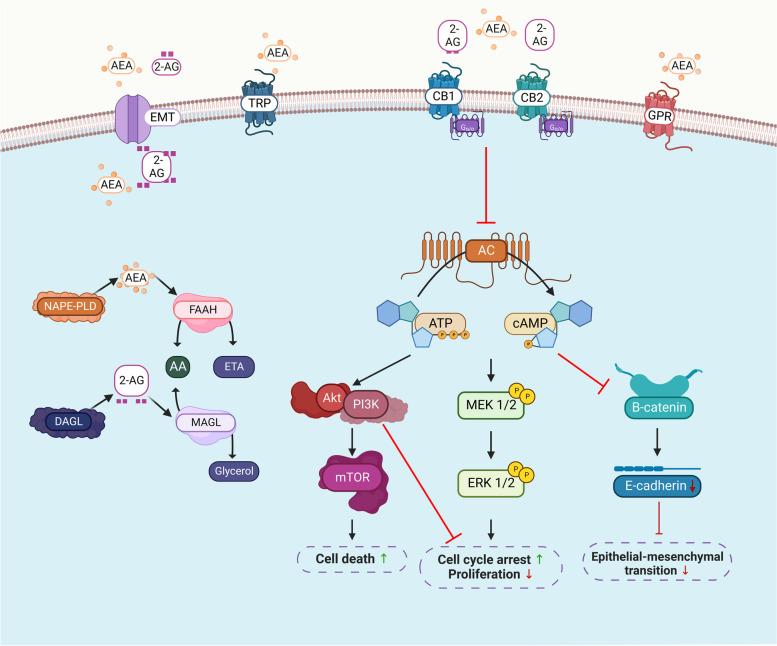
Endometriosis patients experience debilitating chronic pain, and the first-line treatment is ineffective at managing symptoms. Although surgical removal of the lesions provides temporary relief, more than 50% of the patients experience disease recurrence. Despite being a leading cause of hysterectomy, endometriosis lacks satisfactory treatments and a cure. Another challenge is the poor understanding of disease pathophysiology which adds to the delays in diagnosis and overall compromised quality of life. Endometriosis patients are in dire need of an effective therapeutic strategy that is both economical and effective in managing symptoms, while fertility is unaffected. Endocannabinoids and phytocannabinoids possess anti-inflammatory, anti-nociceptive, and anti-proliferative properties that may prove beneficial for endometriosis management, given that inflammation, vascularization, and pain are hallmark features of endometriosis. Endocannabinoids are a complex network of molecules that play a central role in physiological processes including homeostasis and tissue repair, but endocannabinoids have also been associated in the pathophysiology of several chronic inflammatory diseases including endometriosis and cancers. The lack of satisfactory treatment options combined with the recent legalization of recreational cannabinoids in some parts of the world has led to a rise in self-management strategies including the use of cannabinoids for endometriosis-related pain and other symptoms. In this review, we provide a comprehensive overview of endocannabinoids with a focus on their potential roles in the pathophysiology of endometriosis. We further provide evidence-driven perspectives on the current state of knowledge on endometriosis-associated pain, inflammation, and therapeutic avenues exploiting the endocannabinoid system for its management.
子宫内膜异位症患者会经历使人衰弱的慢性疼痛,一线治疗在控制症状方面效果不佳。尽管手术切除病灶能提供暂时缓解,但超过50%的患者会出现疾病复发。尽管子宫内膜异位症是子宫切除的主要原因之一,但它缺乏令人满意的治疗方法和治愈手段。另一个挑战是对疾病病理生理学的了解不足,这导致诊断延迟,整体生活质量受损。子宫内膜异位症患者迫切需要一种经济有效的治疗策略,既能有效控制症状,又不影响生育能力。内源性大麻素和植物性大麻素具有抗炎、抗伤害感受和抗增殖特性,鉴于炎症、血管生成和疼痛是子宫内膜异位症的标志性特征,这些特性可能对子宫内膜异位症的治疗有益。内源性大麻素是一个复杂的分子网络,在包括体内平衡和组织修复在内的生理过程中发挥核心作用,但内源性大麻素也与包括子宫内膜异位症和癌症在内的几种慢性炎症性疾病的病理生理学有关。缺乏令人满意的治疗选择,再加上最近世界上一些地区娱乐用大麻素的合法化,导致自我管理策略有所增加,包括使用大麻素治疗与子宫内膜异位症相关的疼痛和其他症状。在这篇综述中,我们全面概述了内源性大麻素,重点关注它们在子宫内膜异位症病理生理学中的潜在作用。我们还基于证据,对子宫内膜异位症相关疼痛、炎症的现有知识状态以及利用内源性大麻素系统进行治疗的途径提供观点。


 Zotero 插件