University of Michigan, Ann Arbor, USA.
Foundation Medicine, Cambridge, USA.
Ann Oncol. 2023 Jan;34(1):111-120. doi: 10.1016/j.annonc.2022.09.163. Epub 2022 Oct 5.
Genomic analysis of circulating tumor DNA (ctDNA) is increasingly incorporated into the clinical management of patients with advanced cancer. Beyond tumor profiling, ctDNA analysis also can enable calculation of circulating tumor fraction (TF), which has previously been found to be prognostic. While most prognostic models in metastatic cancer are tumor type specific and require significant patient-level data, quantification of TF in ctDNA has the potential to serve as a pragmatic, tumor-agnostic prognostic tool.
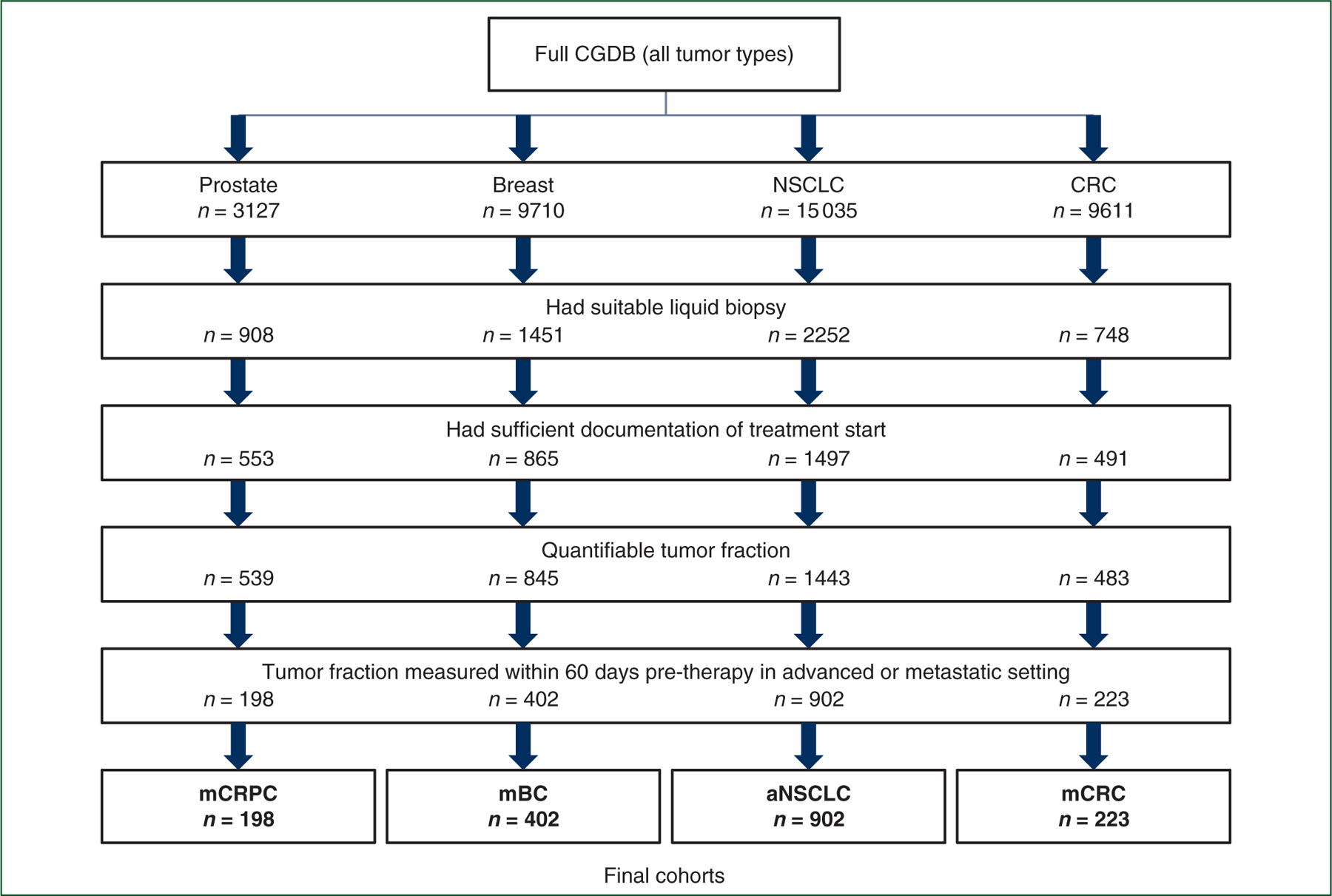
This study utilized a cohort of patients in a nationwide de-identified clinico-genomic database with metastatic castration-resistant prostate cancer (mCRPC), metastatic breast cancer (mBC), advanced non-small-cell lung cancer (aNSCLC), or metastatic colorectal cancer (mCRC) undergoing liquid biopsy testing as part of routine care. TF was calculated based on single-nucleotide polymorphism aneuploidy across the genome. Clinical, disease, laboratory, and treatment data were captured from the electronic health record. Overall survival (OS) was evaluated by TF level while controlling for relevant covariables.
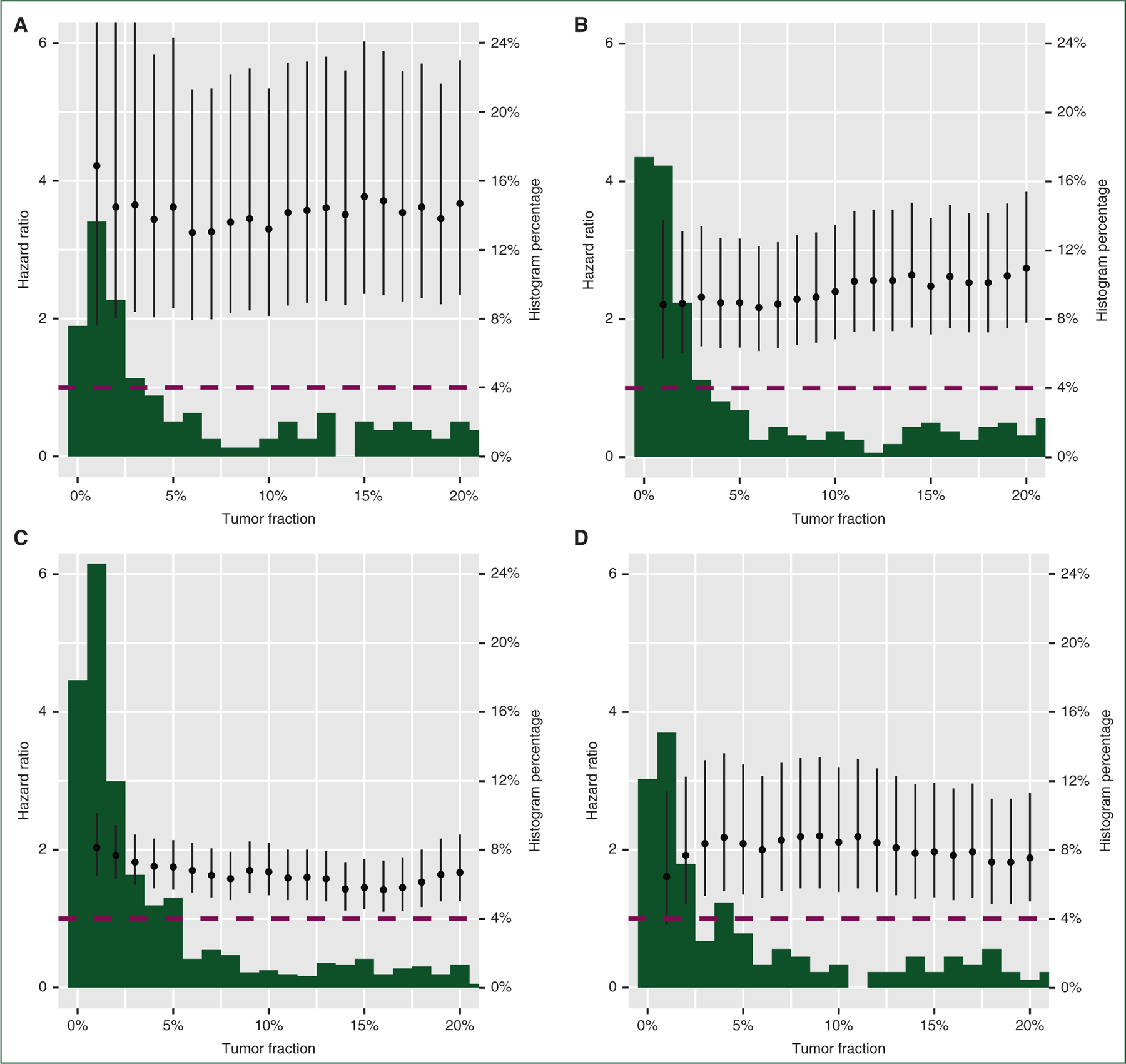
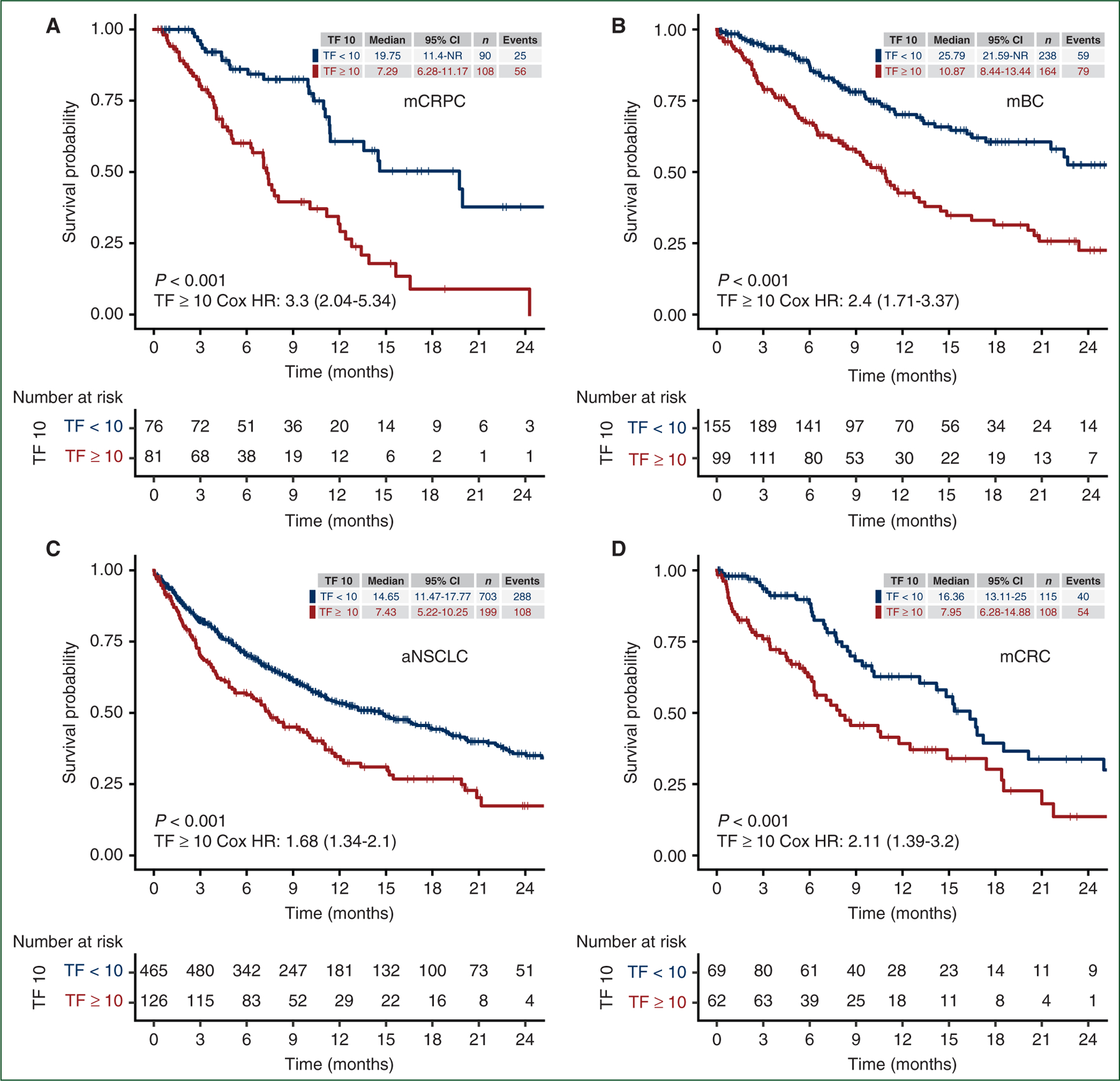
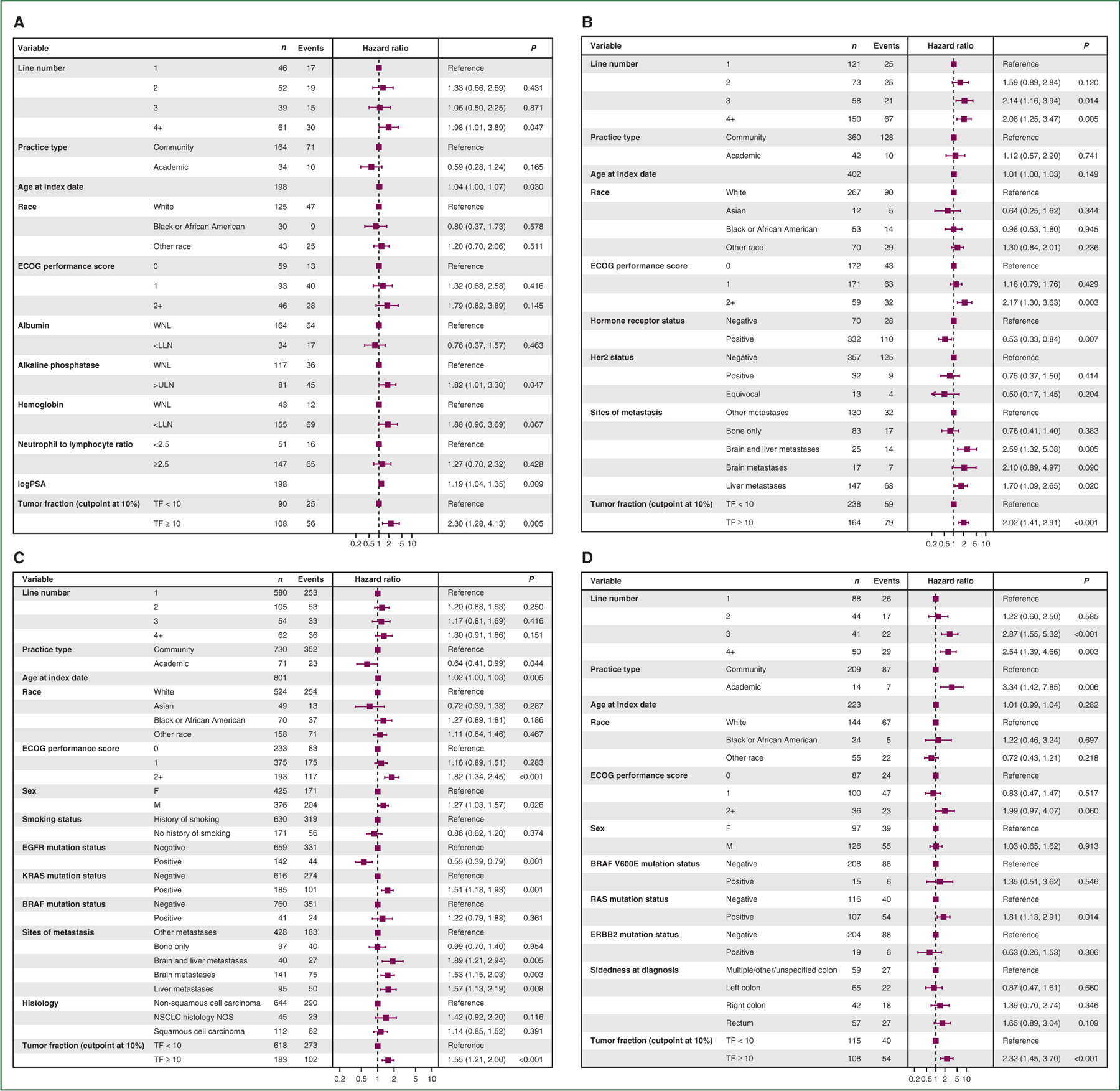
A total of 1725 patients were included: 198 mCRPC, 402 mBC, 902 aNSCLC, and 223 mCRC. TF ≥10% was highly correlated with OS in univariable analyses for all cancer types: mCRPC [hazard ratio (HR) 3.3, 95% confidence interval (CI) 2.04-5.34, P < 0.001], mBC (HR 2.4, 95% CI 1.71-3.37, P < 0.001), aNSCLC (HR 1.68, 95% CI 1.34-2.1, P < 0.001), and mCRC (HR 2.11, 95% CI 1.39-3.2, P < 0.001). Multivariable assessments of TF had similar point estimates and CIs, suggesting a consistent and independent association with survival. Exploratory analysis showed that TF remained consistently prognostic across a wide range of cutpoints.
Plasma ctDNA TF is a pragmatic, independent prognostic biomarker across four advanced cancers with potential to guide clinical conversations around expected treatment outcomes. With further prospective validation, ctDNA TF could be incorporated into care paradigms to enable precision escalation and de-escalation of cancer therapy based on patient-level tumor biology.
循环肿瘤 DNA(ctDNA)的基因组分析越来越多地被纳入晚期癌症患者的临床管理中。除了肿瘤分析外,ctDNA 分析还可以计算循环肿瘤分数(TF),这一分数以前被发现具有预后意义。虽然转移性癌症的大多数预后模型都是肿瘤类型特异性的,需要大量的患者水平数据,但 ctDNA 中 TF 的定量有可能成为一种实用的、肿瘤无关的预后工具。
本研究利用了一个全国性去识别临床基因组数据库中的患者队列,这些患者患有转移性去势抵抗性前列腺癌(mCRPC)、转移性乳腺癌(mBC)、晚期非小细胞肺癌(aNSCLC)或转移性结直肠癌(mCRC),他们正在接受液体活检检测作为常规护理的一部分。TF 是根据全基因组的单核苷酸多态性非整倍性计算得出的。临床、疾病、实验室和治疗数据是从电子健康记录中捕获的。通过控制相关协变量,评估 TF 水平对总生存(OS)的影响。
共纳入 1725 名患者:198 名 mCRPC、402 名 mBC、902 名 aNSCLC 和 223 名 mCRC。在所有癌症类型的单变量分析中,TF≥10%与 OS 高度相关:mCRPC[风险比(HR)3.3,95%置信区间(CI)2.04-5.34,P<0.001]、mBC(HR 2.4,95%CI 1.71-3.37,P<0.001)、aNSCLC(HR 1.68,95%CI 1.34-2.1,P<0.001)和 mCRC(HR 2.11,95%CI 1.39-3.2,P<0.001)。TF 的多变量评估具有相似的点估计值和 CI,表明其与生存具有一致和独立的关联。探索性分析表明,TF 在广泛的截断值范围内仍然具有一致性的预后价值。
血浆 ctDNA TF 是一种实用的、独立的预后生物标志物,适用于四种晚期癌症,有可能指导关于预期治疗结果的临床对话。随着进一步的前瞻性验证,ctDNA TF 可以纳入护理模式,根据患者的肿瘤生物学水平,实现癌症治疗的精确升级和降级。