Immunosciences Lab, Los Angeles, CA, United States.
Cyrex Laboratories, Limited Liability Company (LLC), Phoenix, AZ, United States.
Front Immunol. 2022 Sep 23;13:1003094. doi: 10.3389/fimmu.2022.1003094. eCollection 2022.
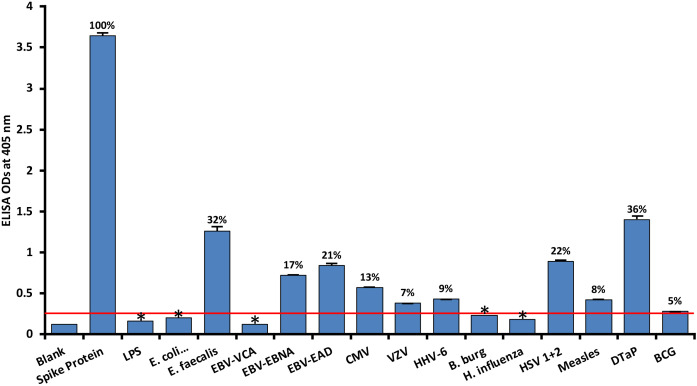
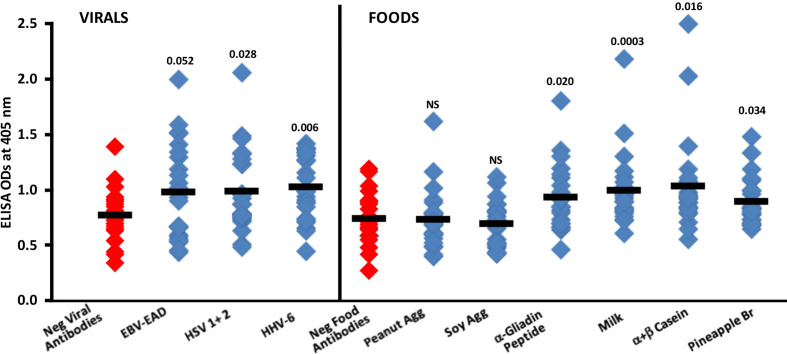
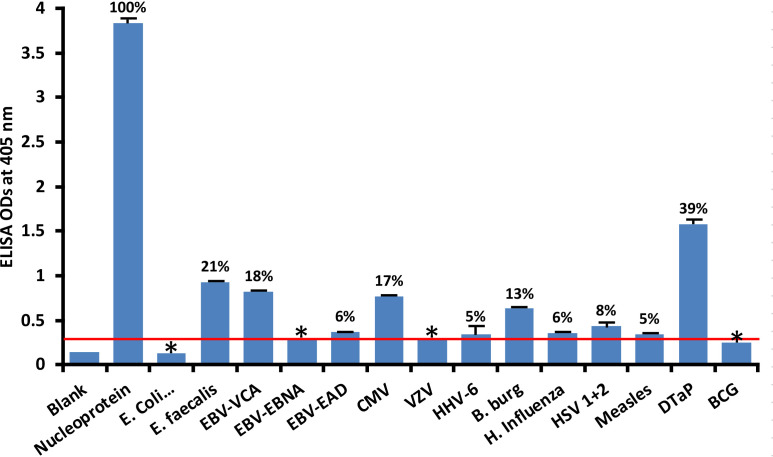
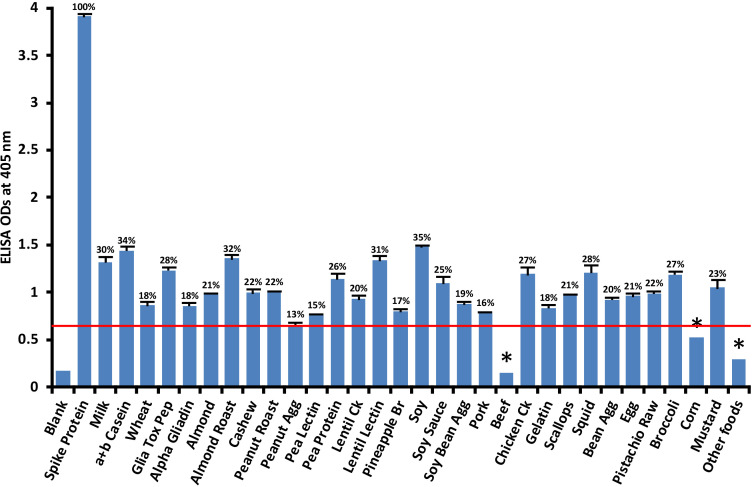
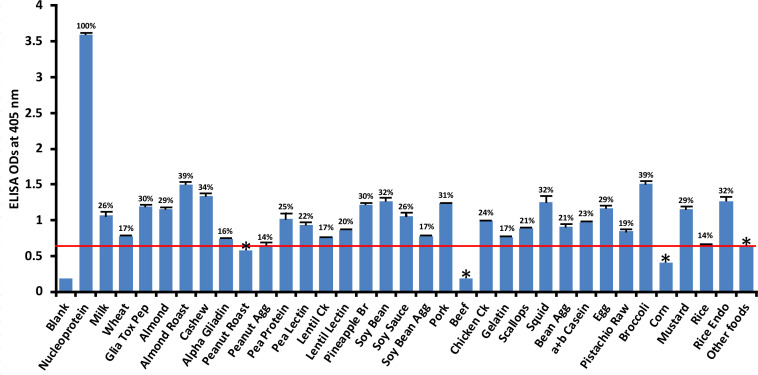
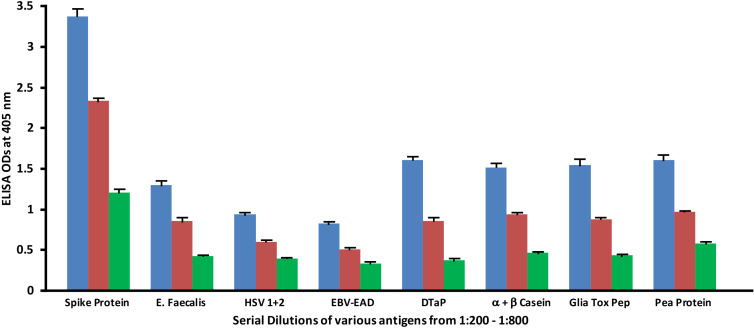
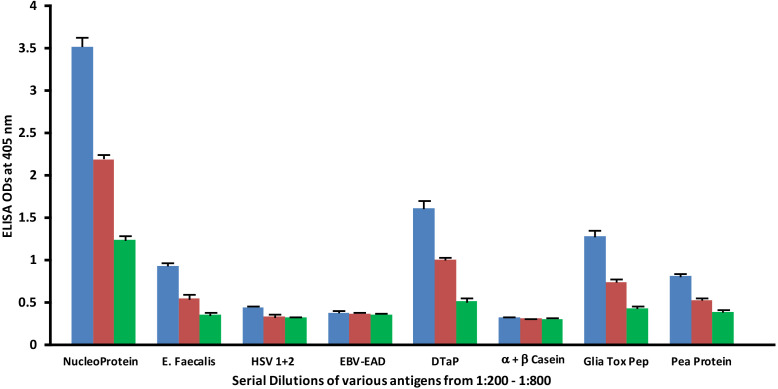
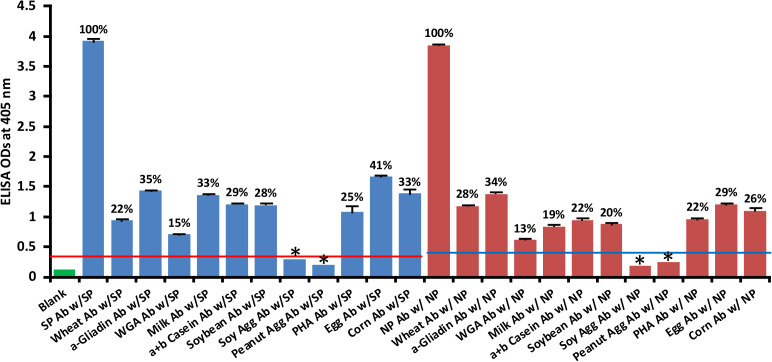
It has been shown that SARS-CoV-2 shares homology and cross-reacts with vaccines, other viruses, common bacteria and many human tissues. We were inspired by these findings, firstly, to investigate the reaction of SARS-CoV-2 monoclonal antibody with different pathogens and vaccines, particularly DTaP. Additionally, since our earlier studies have shown immune reactivity by antibodies made against pathogens and autoantigens towards different food antigens, we also studied cross-reaction between SARS-CoV-2 and common foods. For this, we reacted monoclonal and polyclonal antibodies against SARS-CoV-2 spike protein and nucleoprotein with 15 different bacterial and viral antigens and 2 different vaccines, BCG and DTaP, as well as with 180 different food peptides and proteins. The strongest reaction by SARS-CoV-2 antibodies were with DTaP vaccine antigen, , roasted almond, broccoli, soy, cashew, α+β casein and milk, pork, rice endochitinase, pineapple bromelain, and lentil lectin. Because the immune system tends to form immune responses towards the original version of an antigen that it has encountered, this cross-reactivity may have its advantages with regards to immunity against SARS-CoV-2, where the SARS-CoV-2 virus may elicit a "remembered" immune response because of its structural similarity to a pathogen or food antigen to which the immune system was previously exposed. Our findings indicate that cross-reactivity elicited by DTaP vaccines in combination with common herpesviruses, bacteria that are part of our normal flora such as , and foods that we consume on a daily basis should be investigated for possible cross-protection against COVID-19. Additional experiments would be needed to clarify whether or not this cross-protection is due to cross-reactive antibodies or long-term memory T and B cells in the blood.
研究表明,SARS-CoV-2 与疫苗、其他病毒、常见细菌和许多人体组织具有同源性和交叉反应性。受这些发现的启发,我们首先研究了 SARS-CoV-2 单克隆抗体与不同病原体和疫苗(特别是 DTaP)的反应。此外,由于我们之前的研究表明针对病原体和自身抗原的抗体对不同食物抗原具有免疫反应性,我们还研究了 SARS-CoV-2 与常见食物之间的交叉反应。为此,我们用 15 种不同的细菌和病毒抗原和 2 种不同的疫苗(BCG 和 DTaP)以及 180 种不同的食物肽和蛋白质来反应针对 SARS-CoV-2 刺突蛋白和核蛋白的单克隆和多克隆抗体。SARS-CoV-2 抗体的最强反应是与 DTaP 疫苗抗原、烤杏仁、西兰花、大豆、腰果、α+β 酪蛋白和牛奶、猪肉、大米几丁质酶、菠萝蛋白酶和扁豆凝集素。由于免疫系统倾向于对其遇到的抗原的原始版本形成免疫反应,这种交叉反应性可能在针对 SARS-CoV-2 的免疫方面具有优势,因为 SARS-CoV-2 病毒由于其与免疫系统之前暴露过的病原体或食物抗原的结构相似性,可能会引发“记忆”免疫反应。我们的研究结果表明,与常见疱疹病毒、我们正常菌群的一部分细菌(如)和我们日常食用的食物联合使用的 DTaP 疫苗引起的交叉反应性应该针对 COVID-19 进行可能的交叉保护作用进行调查。需要进一步的实验来澄清这种交叉保护作用是否是由于交叉反应性抗体还是血液中的长期记忆 T 和 B 细胞引起的。