Junxing L I, Aiqing Miao, Gangjun Zhao, Xiaoxi Liu, Haibin Wu, Jianning Luo, Hao Gong, Xiaoming Zheng, Liting Deng, Chengying Ma
Guangdong Key Laboratory for New Technology Research of Vegetables, Vegetable Research Institute, Guangdong Academy of Agricultural Sciences, Guangzhou, Guangdong 510640, People's Republic of China.
Guangdong Laboratory for Lingnan Modern Agriculture, Guangzhou, Guangdong 510640, People's Republic of China.
Food Chem X. 2022 Aug 23;15:100435. doi: 10.1016/j.fochx.2022.100435. eCollection 2022 Oct 30.
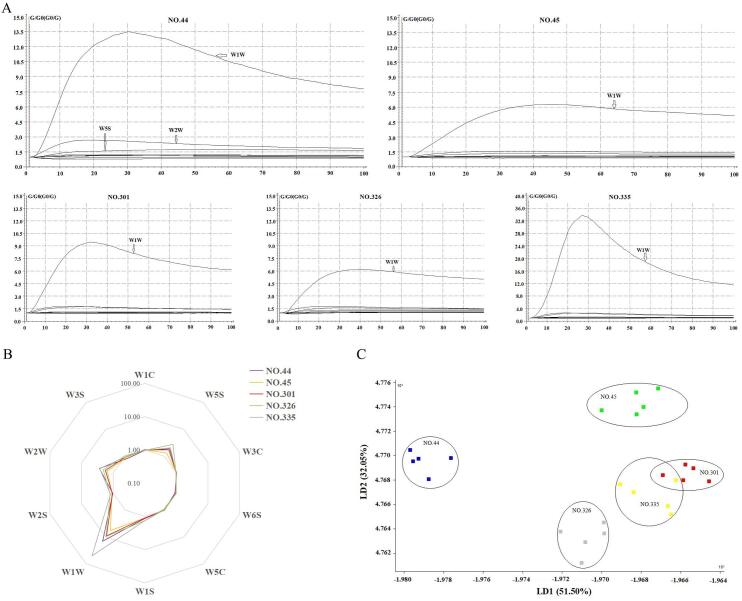
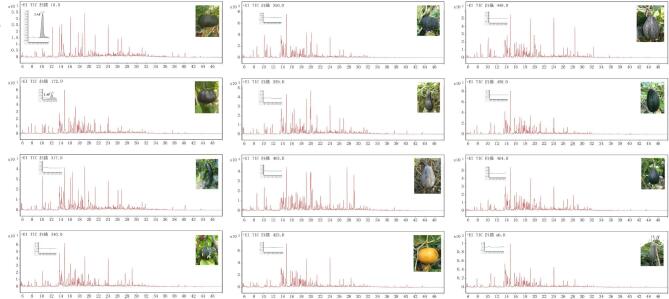
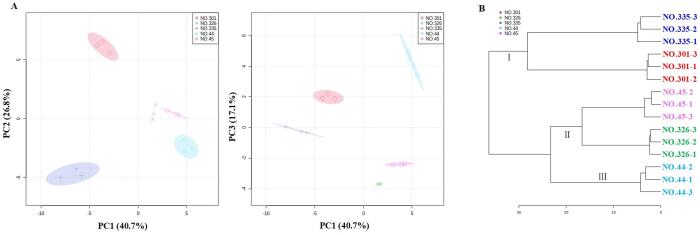
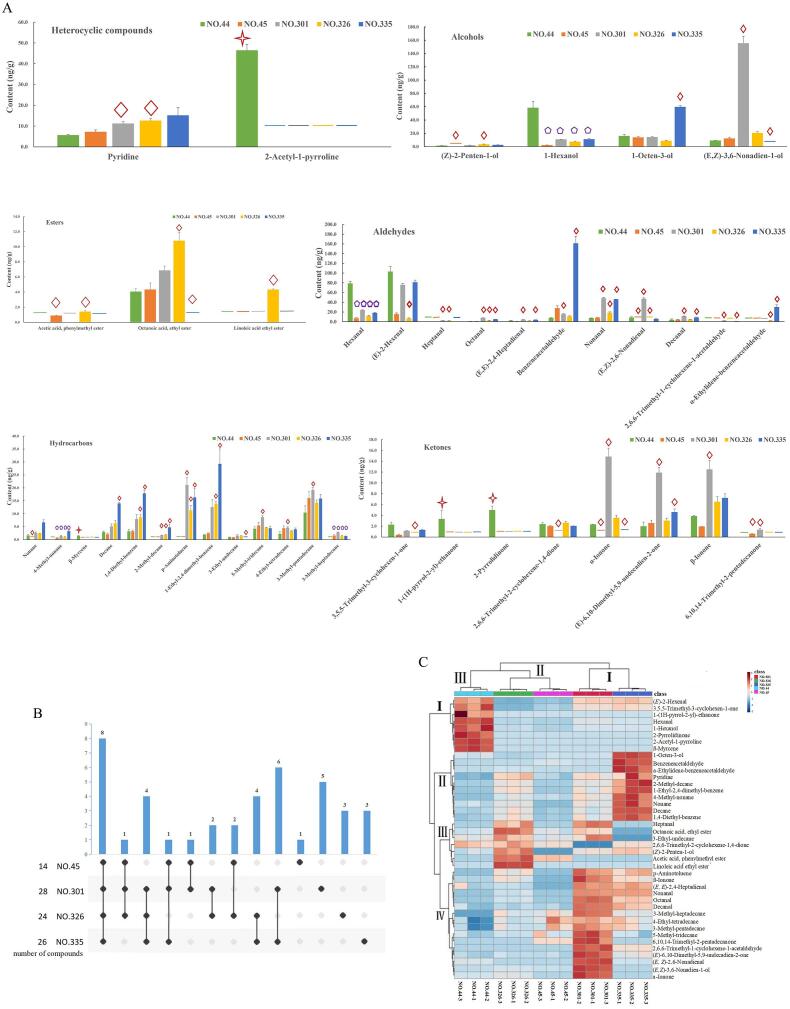
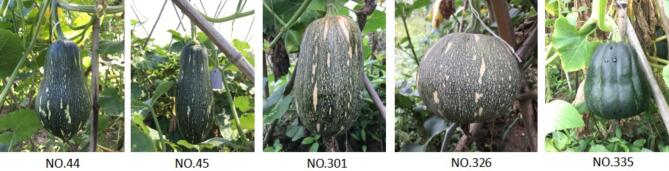
'Taro-like' aroma is a pleasant flavor and value-added trait in pumpkin species imparted by unknown key volatile compounds. In this study, we used the electronic nose (E-nose), gas chromatography-mass spectrometry (GC-MS), and GC-Olfactometry (GC-O) to study the aroma profile, volatile compounds, and key contributors, respectively. By E-nose and GC-MS, we found significant differences in the aroma profiles and volatile compounds between fruits from five samples with/without 'taro-like' aroma. According to the analysis of differential volatile compounds obtained from GC-MS and the GC-O analysis of the sample with 'taro-like' aroma, we found that 2-acetyl-1-pyrroline representing the 'taro' odor was only identified in the sample with 'taro-like' aroma. Therefore, we conclude that 2-acetyl-1-pyrroline is the key contributor to the 'taro-like' aroma. Moreover, the relationship between 2-acetyl-1-pyrroline and 'taro-like' aroma was further verified via other pumpkin samples. Our results provide a theoretical basis for understanding the aroma characteristics of pumpkin fruit.
“芋香”是南瓜品种中一种令人愉悦的风味和增值特性,由未知的关键挥发性化合物赋予。在本研究中,我们分别使用电子鼻(E-nose)、气相色谱-质谱联用仪(GC-MS)和气相色谱-嗅觉测量法(GC-O)来研究香气特征、挥发性化合物和关键成分。通过电子鼻和气相色谱-质谱联用仪,我们发现了五个有/无“芋香”样品的果实之间在香气特征和挥发性化合物上存在显著差异。根据气相色谱-质谱联用仪获得的差异挥发性化合物分析以及对有“芋香”样品的气相色谱-嗅觉测量法分析,我们发现代表“芋头”气味的2-乙酰基-1-吡咯啉仅在有“芋香”的样品中被鉴定出来。因此,我们得出结论,2-乙酰基-1-吡咯啉是“芋香”的关键成分。此外,通过其他南瓜样品进一步验证了2-乙酰基-1-吡咯啉与“芋香”之间的关系。我们的结果为理解南瓜果实的香气特征提供了理论依据。