Kis David, Szivos Laszlo, Rekecki Mark, Shukir Bayan Salam, Mate Adrienn, Hideghety Katalin, Barzo Pal
Department of Neurosurgery, Faculty of Medicine, University of Szeged, Szeged, Hungary.
Department of Oncology, Faculty of Medicine, University of Szeged, Szeged, Hungary.
Front Neurosci. 2022 Sep 21;16:886465. doi: 10.3389/fnins.2022.886465. eCollection 2022.
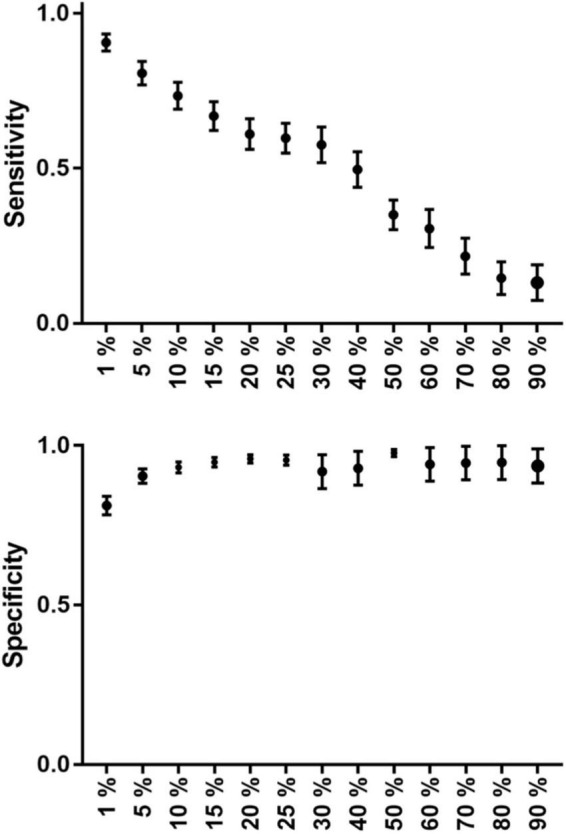
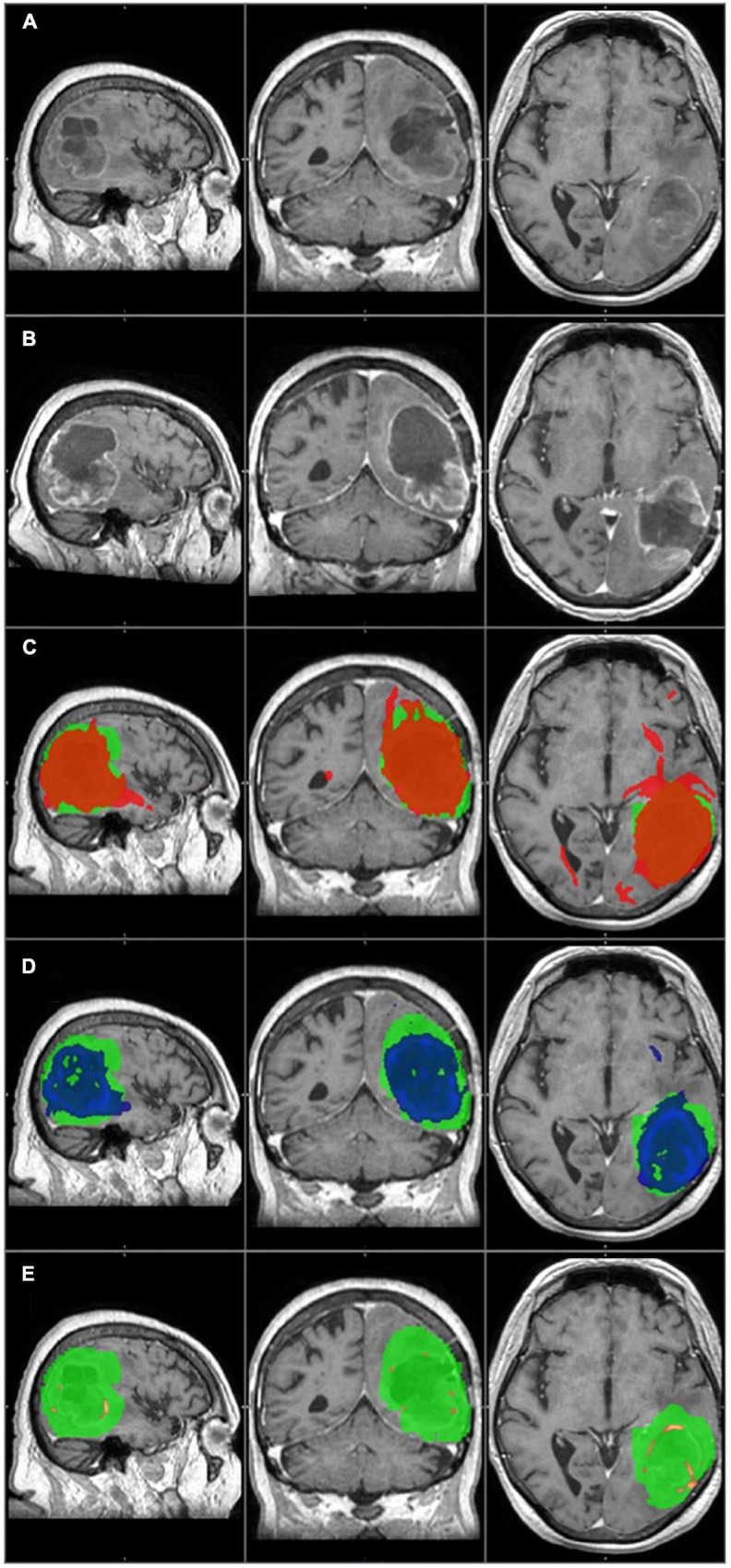
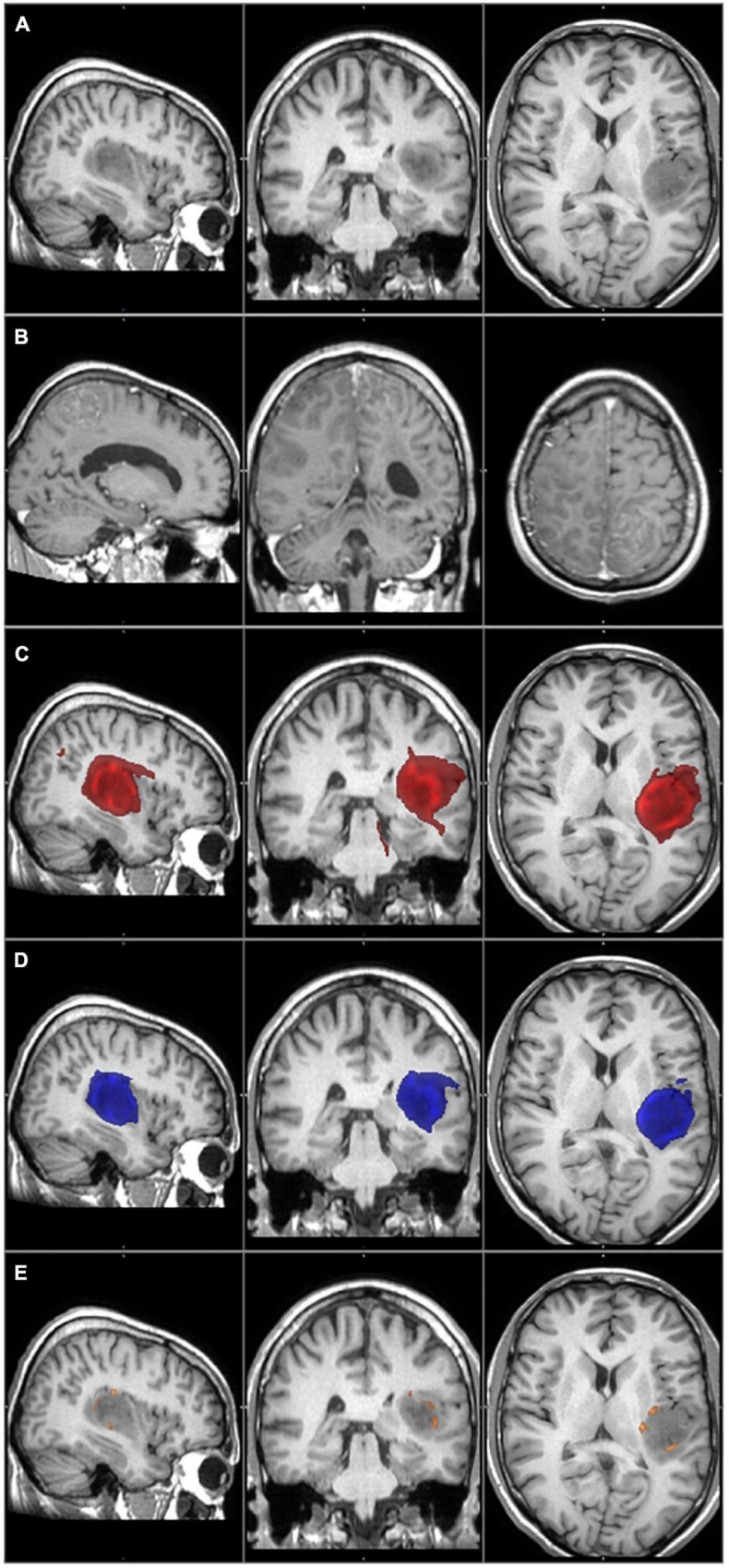
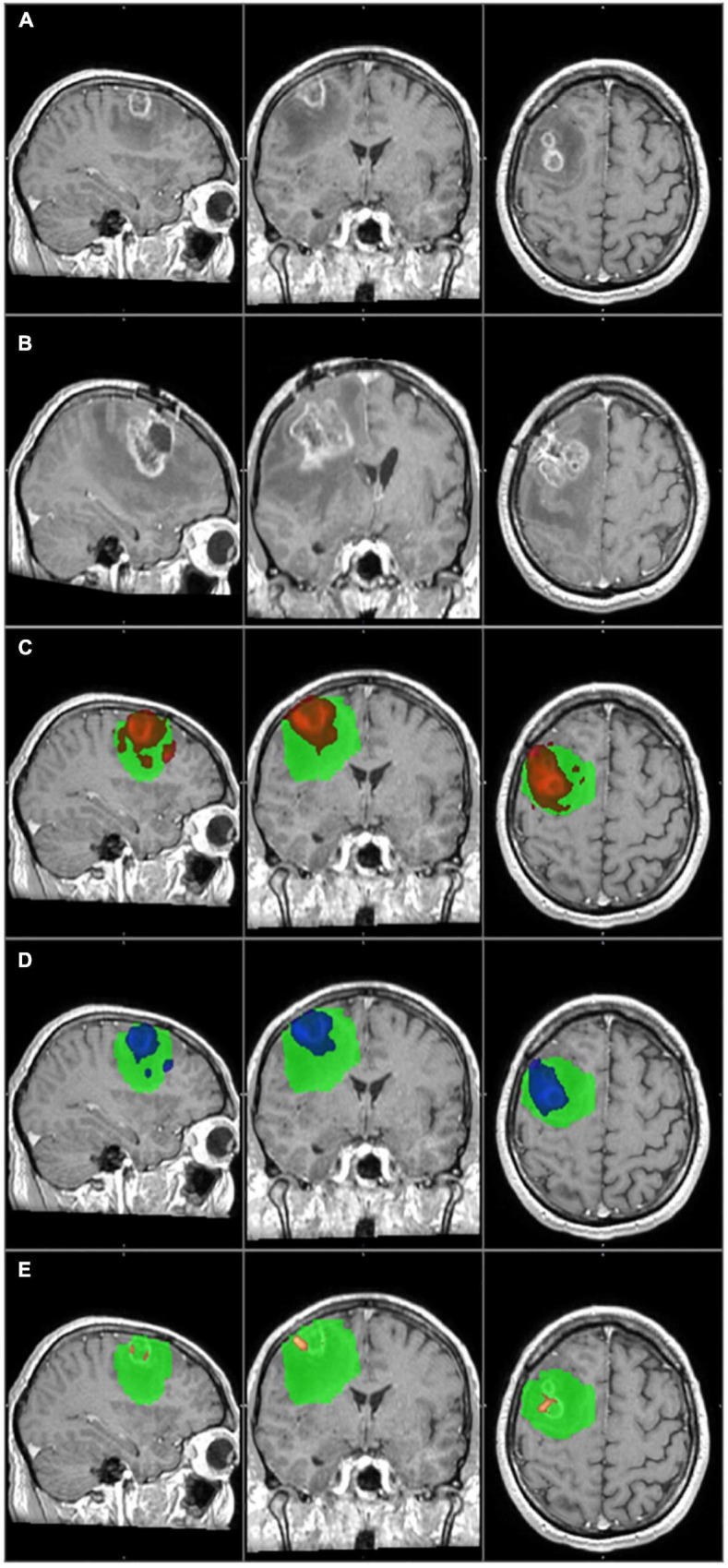
Glioblastoma is the most frequent type of primary brain tumors. Despite the advanced therapy, most of the patients die within 2 years after the diagnosis. The tumor has a typical appearance on MRI: a central hypointensity surrounded by an inhomogeneous, ring-shaped contrast enhancement along its border. Too small to be recognized by MRI, detached individual tumor cells migrate along white matter fiber tracts several centimeters away from the edge of the tumor. Usually these cells are the source of tumor recurrence. If the infiltrated brain areas could be identified, longer survival time could be achieved through supratotal resection and individually planned radiation therapy. Probabilistic tractography is an advanced imaging method that can potentially be used to identify infiltrated pathways, thus the real extent of the glioblastoma. Our study consisted of twenty high grade glioma patients. Probabilistic tractography was started from the tumor. The location of tumor recurrence on follow-up MRI was considered as the primary infiltrated white matter tracts. The results of probabilistic tractography were evaluated at thirteen different thresholds. The overlap with the tumor recurrence of each threshold level was then defined to calculate the sensitivity and specificity. In the group level, sensitivity (81%) and specificity (90%) were the most reliable at 5% threshold level. There were two outliers in the study group, both with high specificity and very low sensitivity. According to our results, probabilistic tractography can help to define the true extent of the glioblastoma at the time of diagnosis with high sensitivity and specificity. Individually planned surgery and irradiation could provide a better chance of survival in these patients.
胶质母细胞瘤是最常见的原发性脑肿瘤类型。尽管有先进的治疗方法,但大多数患者在诊断后2年内死亡。该肿瘤在磁共振成像(MRI)上有典型表现:中央低信号,周围沿边界有不均匀的环形对比增强。单个肿瘤细胞脱离肿瘤主体,体积过小以至于无法被MRI识别,它们沿着白质纤维束迁移至距离肿瘤边缘数厘米远的地方。通常这些细胞是肿瘤复发的根源。如果能够识别出肿瘤浸润的脑区,通过超全切除和个体化放疗计划,患者有望获得更长的生存时间。概率性纤维束成像技术是一种先进的成像方法,它有可能用于识别浸润路径,进而明确胶质母细胞瘤的实际范围。我们的研究纳入了20例高级别胶质瘤患者。从肿瘤部位开始进行概率性纤维束成像。将随访MRI上肿瘤复发的位置视为主要的浸润白质束。在13个不同阈值下评估概率性纤维束成像的结果。然后确定每个阈值水平与肿瘤复发的重叠情况,以计算敏感性和特异性。在组水平上,在5%阈值水平时,敏感性(81%)和特异性(90%)最为可靠。研究组中有两个异常值,特异性高但敏感性极低。根据我们的研究结果,概率性纤维束成像能够以高敏感性和特异性帮助在诊断时明确胶质母细胞瘤的实际范围。个体化的手术和放疗计划可以为这些患者提供更好的生存机会。