Centre de recherche, de l'Hôpital Maisonneuve-Rosemont, Montréal, Québec, Canada.
Genome Stability Laboratory, CHU de Québec Research Center, Oncology Division; Department of Molecular Biology, Medical Biochemistry and Pathology; Laval University Cancer Research Center, Québec City, Québec, Canada.
PLoS Biol. 2022 Oct 10;20(10):e3001543. doi: 10.1371/journal.pbio.3001543. eCollection 2022 Oct.
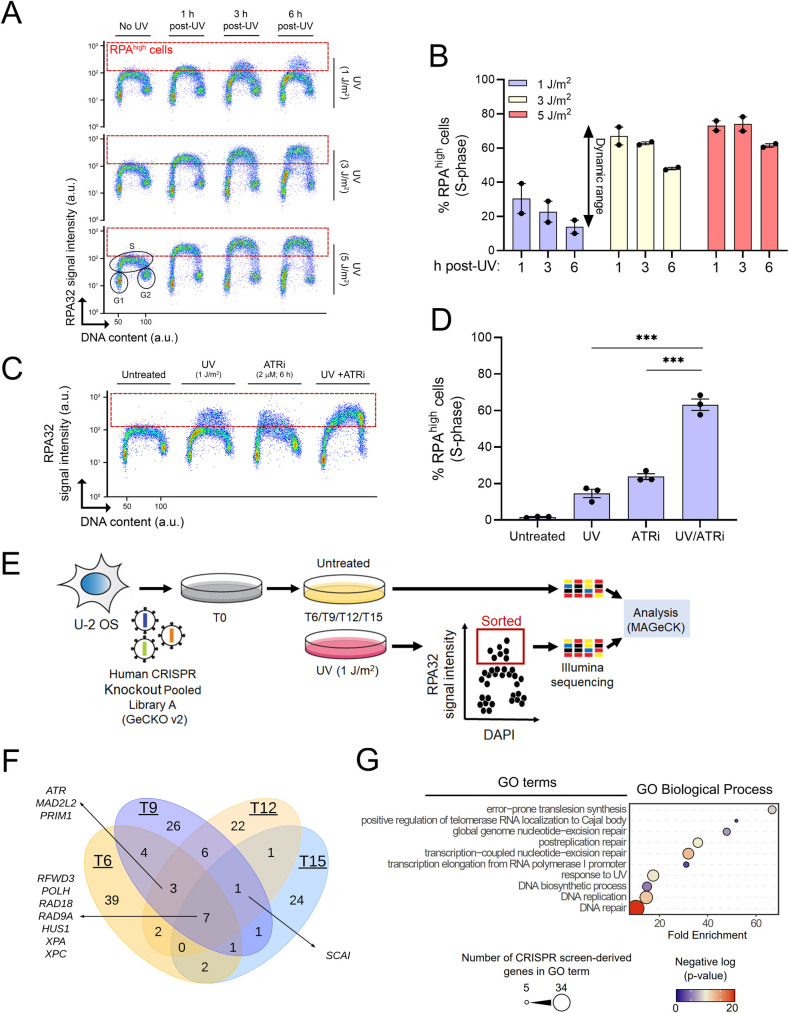
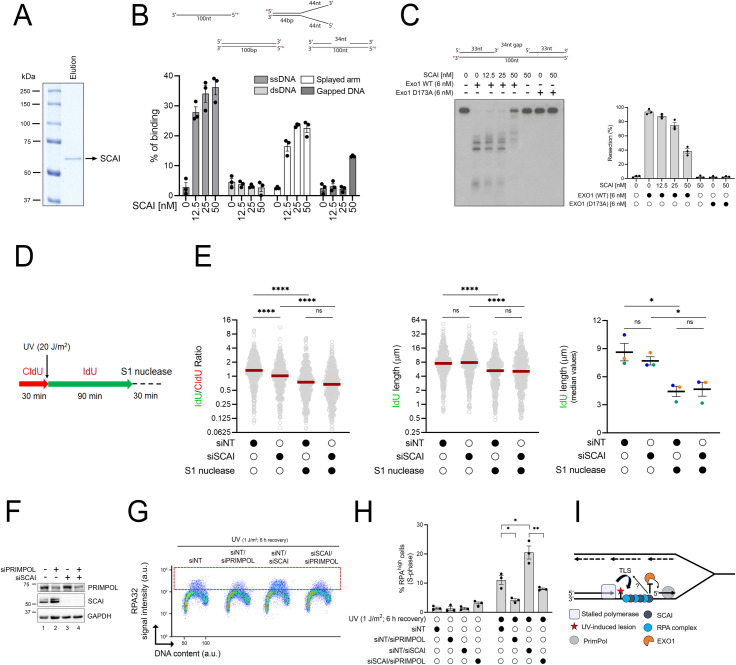
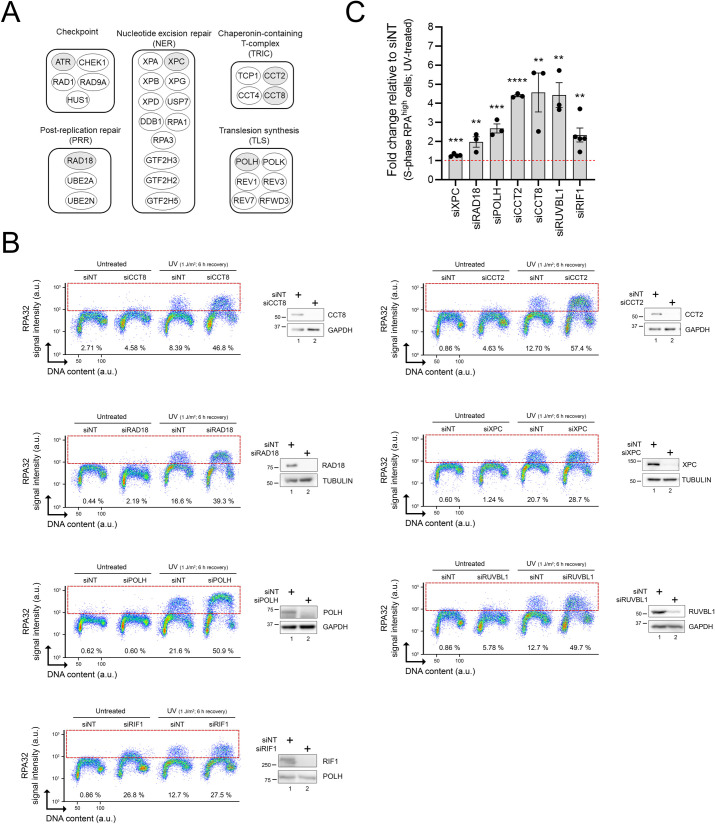
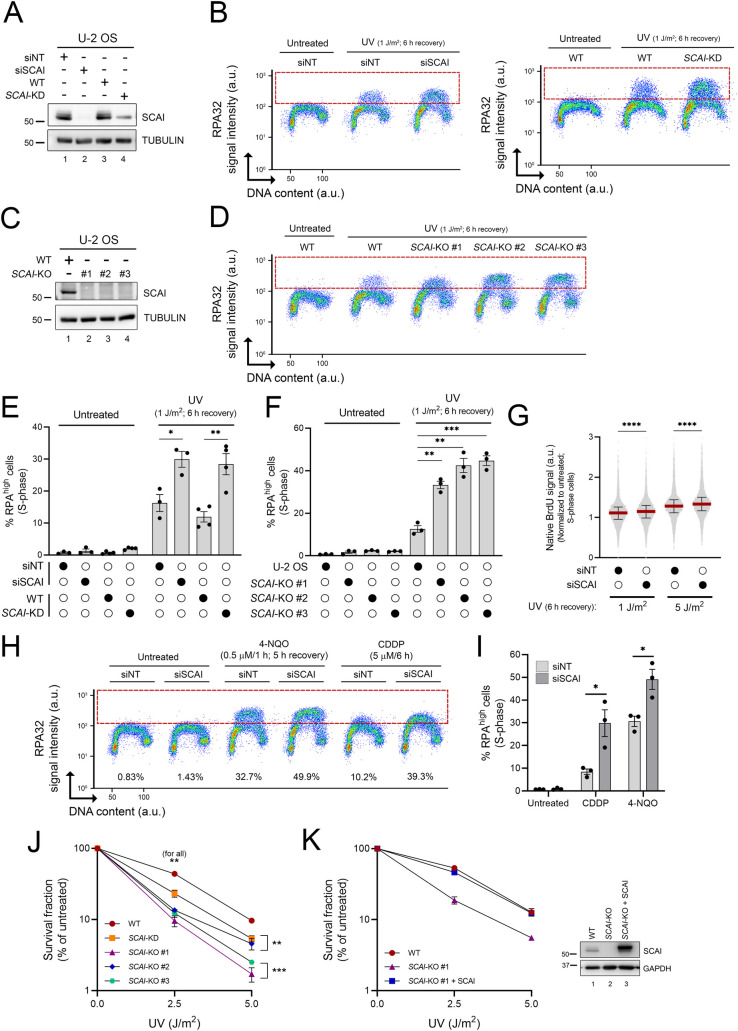
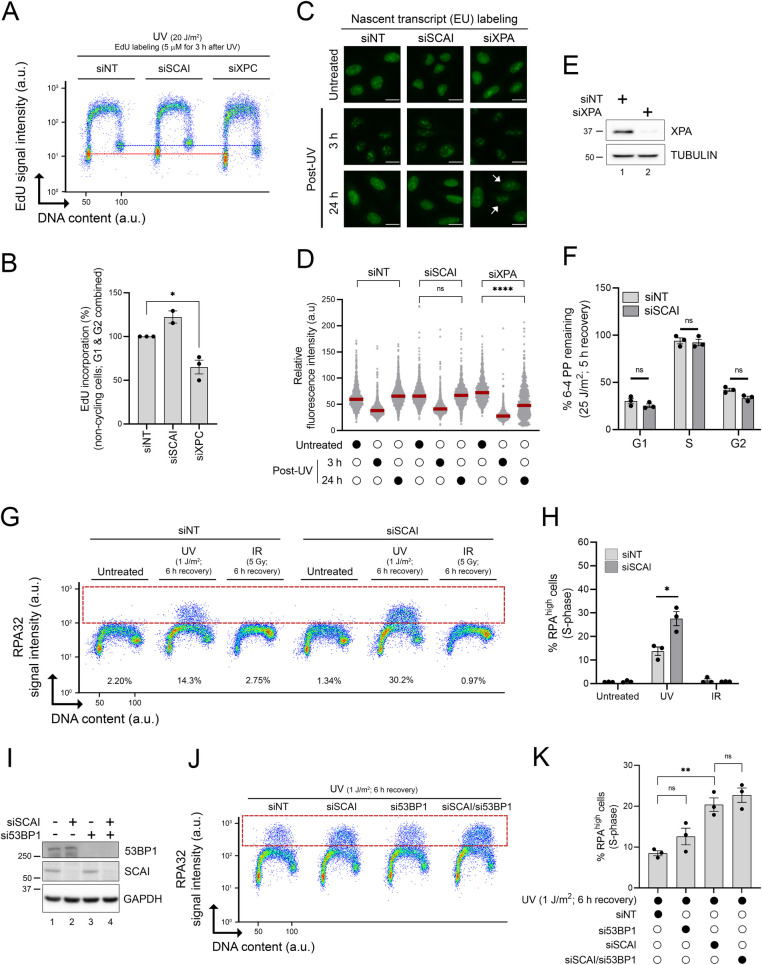
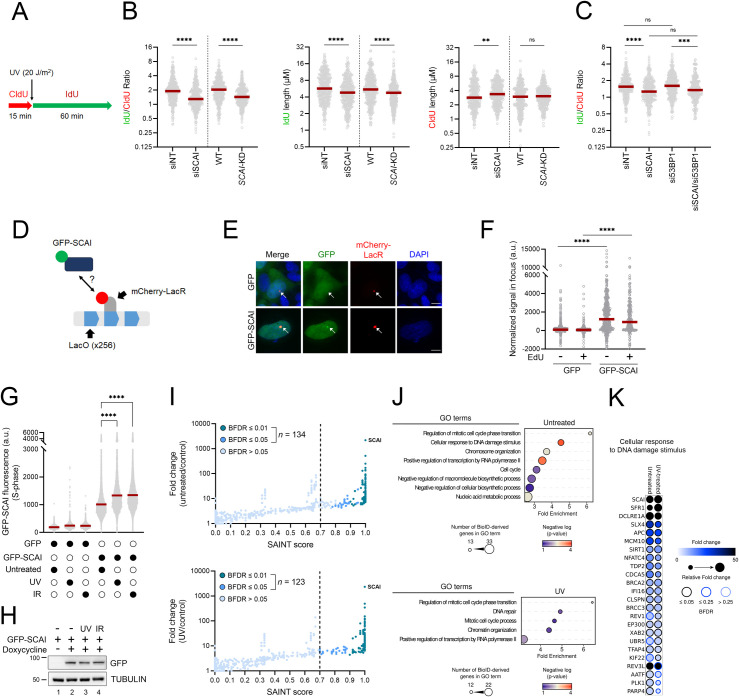
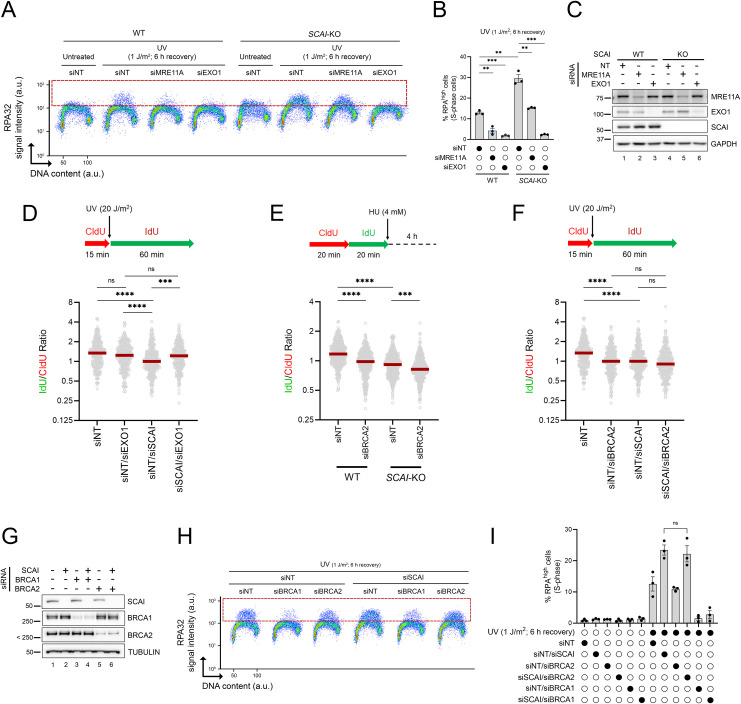
Helix-destabilizing DNA lesions induced by environmental mutagens such as UV light cause genomic instability by strongly blocking the progression of DNA replication forks (RFs). At blocked RF, single-stranded DNA (ssDNA) accumulates and is rapidly bound by Replication Protein A (RPA) complexes. Such stretches of RPA-ssDNA constitute platforms for recruitment/activation of critical factors that promote DNA synthesis restart. However, during periods of severe replicative stress, RPA availability may become limiting due to inordinate sequestration of this multifunctional complex on ssDNA, thereby negatively impacting multiple vital RPA-dependent processes. Here, we performed a genome-wide screen to identify factors that restrict the accumulation of RPA-ssDNA during UV-induced replicative stress. While this approach revealed some expected "hits" acting in pathways such as nucleotide excision repair, translesion DNA synthesis, and the intra-S phase checkpoint, it also identified SCAI, whose role in the replicative stress response was previously unappreciated. Upon UV exposure, SCAI knock-down caused elevated accumulation of RPA-ssDNA during S phase, accompanied by reduced cell survival and compromised RF progression. These effects were independent of the previously reported role of SCAI in 53BP1-dependent DNA double-strand break repair. We also found that SCAI is recruited to UV-damaged chromatin and that its depletion promotes nascent DNA degradation at stalled RF. Finally, we (i) provide evidence that EXO1 is the major nuclease underlying ssDNA formation and DNA replication defects in SCAI knockout cells and, consistent with this, (ii) demonstrate that SCAI inhibits EXO1 activity on a ssDNA gap in vitro. Taken together, our data establish SCAI as a novel regulator of the UV-induced replicative stress response in human cells.
环境诱变剂(如紫外线)引起的螺旋不稳定 DNA 损伤通过强烈阻止 DNA 复制叉(RF)的前进而导致基因组不稳定。在受阻的 RF 处,单链 DNA(ssDNA)积累并迅速被复制蛋白 A(RPA)复合物结合。这种 RPA-ssDNA 片段构成了募集/激活促进 DNA 合成重新启动的关键因素的平台。然而,在严重的复制应激期间,由于这种多功能复合物在 ssDNA 上的过度隔离,RPA 的可用性可能会受到限制,从而对多个重要的 RPA 依赖性过程产生负面影响。在这里,我们进行了全基因组筛选,以鉴定在 UV 诱导的复制应激期间限制 RPA-ssDNA 积累的因素。虽然这种方法揭示了一些预期的“命中”作用于核苷酸切除修复、跨损伤 DNA 合成和 S 期内检查点等途径,但它也鉴定了 SCAI,其在复制应激反应中的作用以前未被认识。在暴露于 UV 后,SCAI 敲低导致 S 期 RPA-ssDNA 的积累增加,同时细胞存活减少和 RF 进展受损。这些效应独立于 SCAI 在 53BP1 依赖性 DNA 双链断裂修复中的先前报道的作用。我们还发现 SCAI 被募集到 UV 损伤的染色质上,并且其耗尽促进停滞的 RF 处新生 DNA 的降解。最后,我们(i)提供证据表明 EXO1 是 SCAI 缺失细胞中 ssDNA 形成和 DNA 复制缺陷的主要核酸内切酶,并且与这一致,(ii)证明 SCAI 在体外抑制 EXO1 在 ssDNA 缺口上的活性。总之,我们的数据确立了 SCAI 作为人类细胞中 UV 诱导的复制应激反应的新型调节剂。