Department of Neurosurgery, Shenzhen Second People's Hospital/the First Affiliated Hospital of Shenzhen University Health Science Center, Shenzhen, 518035, China; The Center for Medical Genetics & Molecular Diagnosis, Shenzhen Second People's Hospital/the First Affiliated Hospital of Shenzhen University Health Science Center, Shenzhen, 518035, China.
Key Laboratory for Medical Virology and Viral Diseases, National Health Commission of the People's Republic of China, Beijing, 102206, China; National Institute for Viral Disease Control and Prevention, China CDC, Beijing, 102206, China.
Virol Sin. 2023 Feb;38(1):56-65. doi: 10.1016/j.virs.2022.09.010. Epub 2022 Oct 7.
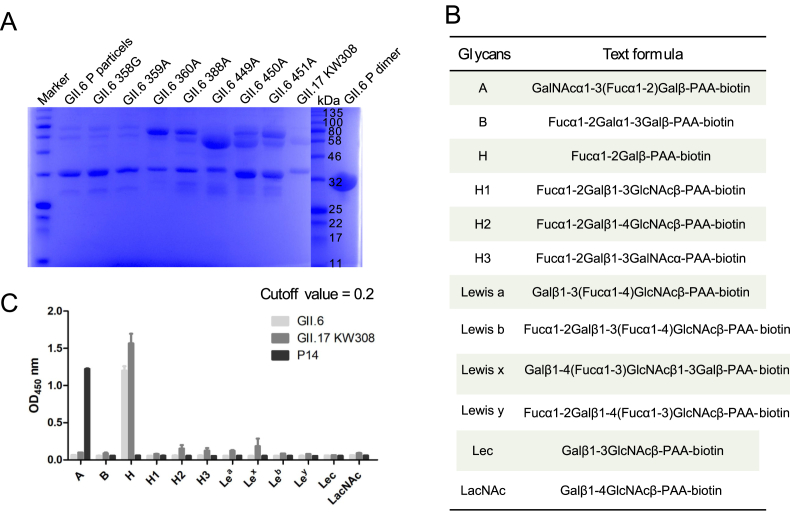
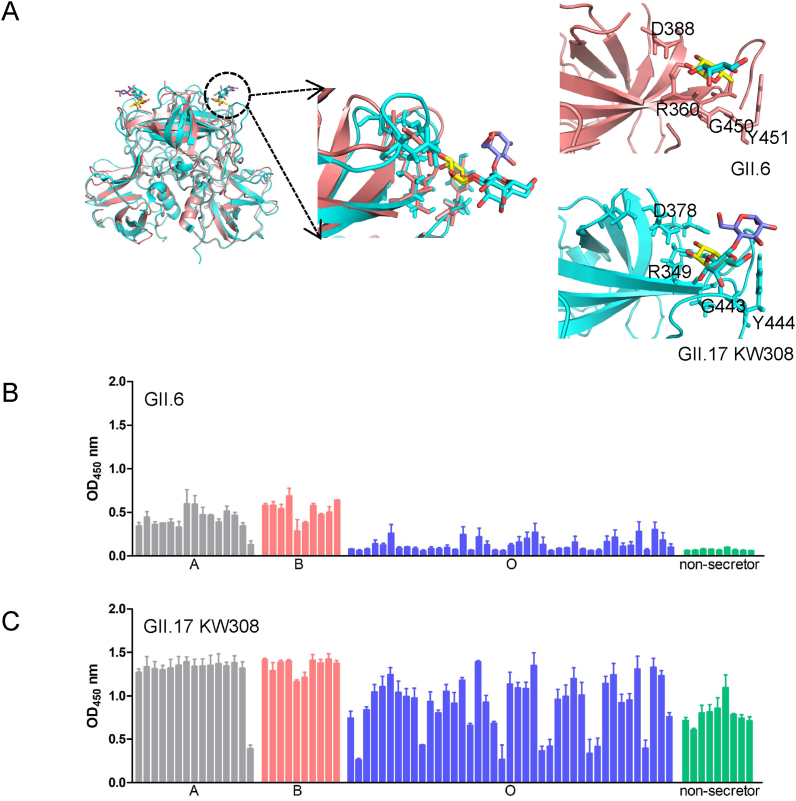
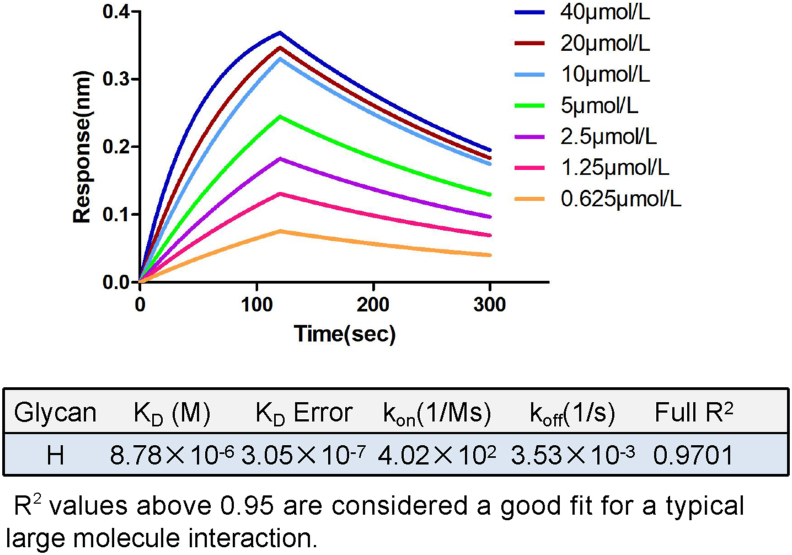
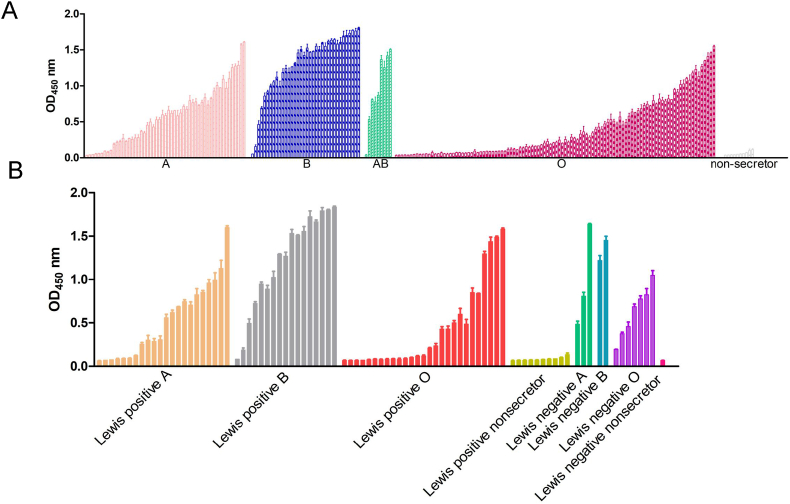
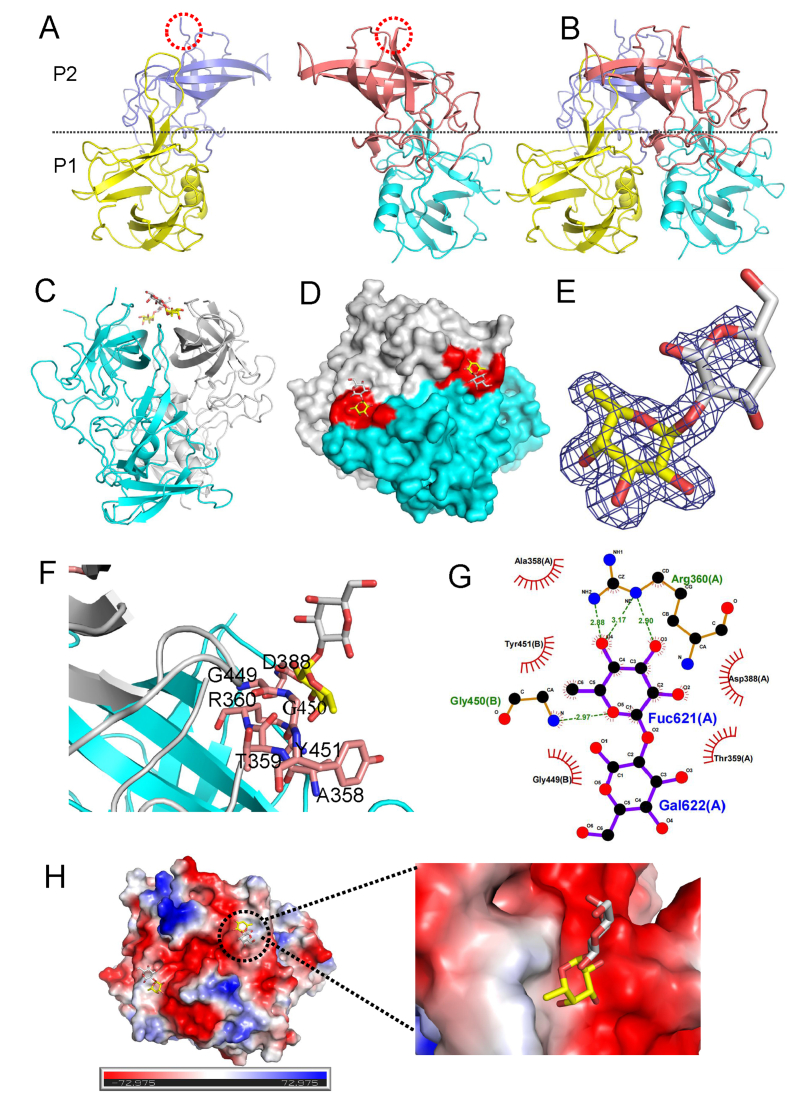
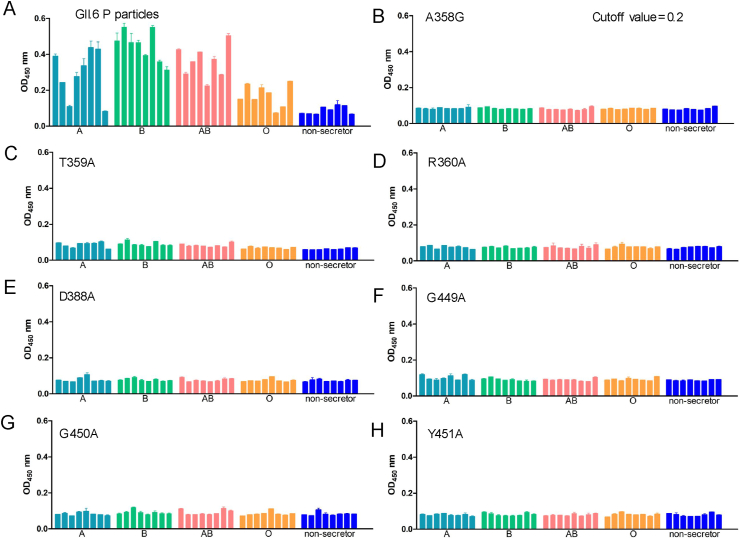
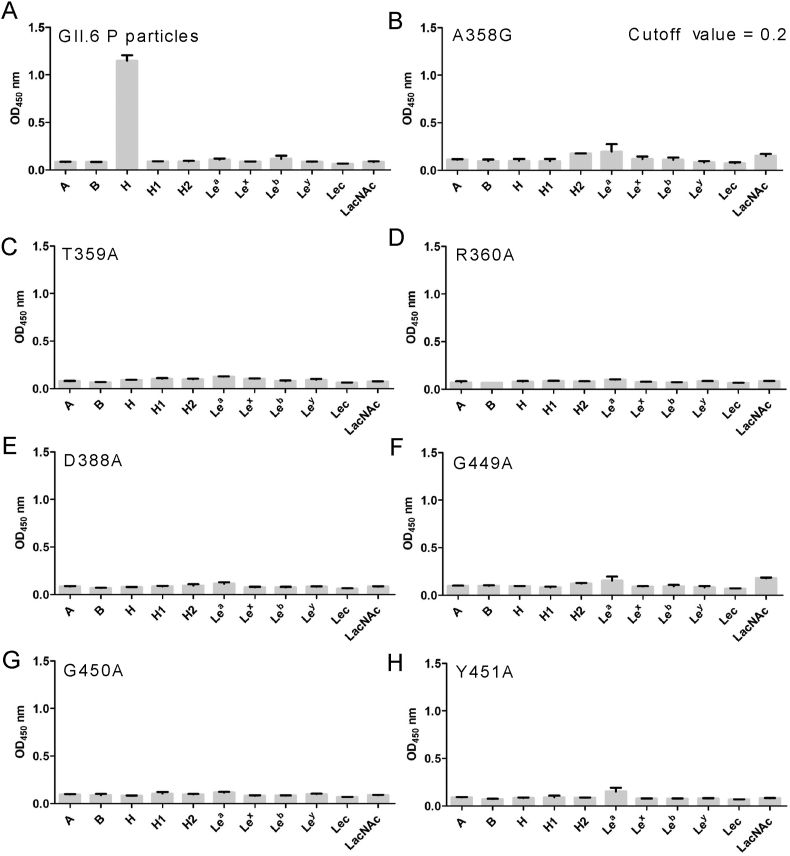
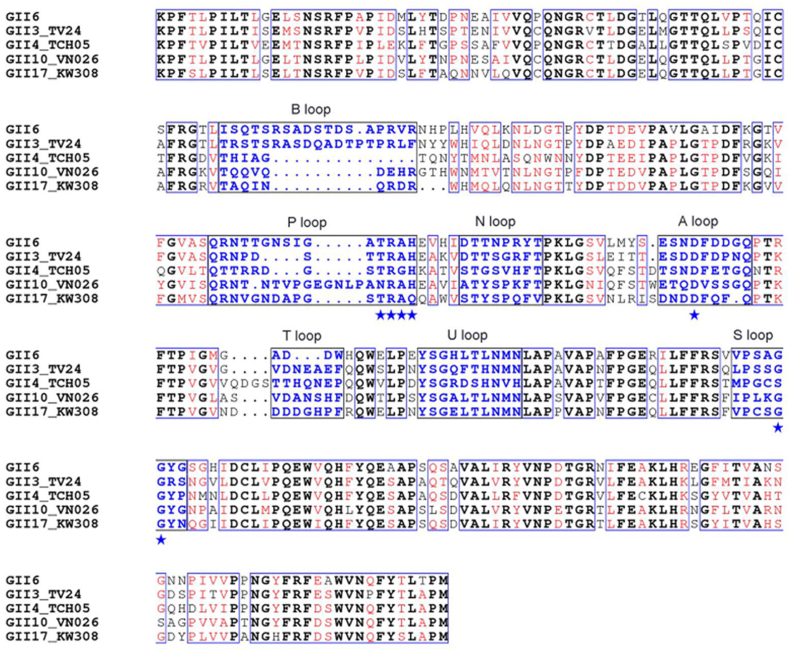
Noroviruses (NoVs) are the primary cause of acute gastroenteritis worldwide. Histo-blood group antigens (HBGAs) are receptors or attachment factors that affect the prevalence and host susceptibility of NoVs. GII.6 NoV is one of the predominant genotypes in humans, which recognizes the type ABO secretor of HBGAs. However, the structural basis of GII.6 NoV's interaction with HBGAs receptors remains elusive. In this study, we investigated the binding features of the GII.6 strain to HBGAs using saliva- and glycan-ELISA assays and characterized the molecular basis of the GII.6 virus that recognizes H disaccharide. We showed that the GII.6 P domain recognized some A and O secretor's saliva samples, most B secretor's saliva samples, and H disaccharide antigen, but did not bind non-secretors' saliva. Further, we determined the crystal structures of GII.6 and its complex with H disaccharides at 1.7 Å, revealing that the P domain of GII.6 shares the conventional binding interface and mode of GII HBGAs. Single residue mutations at the GII.6-H binding sites could inhibit the binding of GII.6 to HBGAs, demonstrating that the interaction residues were crucial in maintaining NoV-glycan integrity. Finally, structural and sequence analyses showed that the major residues of the GII.6-H interaction were conserved among NoVs in the GII genogroup. Taken together, our study characterized the functional and structural features of GII.6 that allow it to interact with HBGAs, and shed light on NoV evolution, epidemiology, and anti-viral drug development.
诺如病毒(NoV)是全球急性胃肠炎的主要病原体。组织血型抗原(HBGAs)是影响 NoV 流行和宿主易感性的受体或附着因子。GII.6 NoV 是人类中的主要基因型之一,它识别 HBGAs 的 ABO 分泌型。然而,GII.6 NoV 与 HBGAs 受体相互作用的结构基础仍然难以捉摸。在这项研究中,我们使用唾液和聚糖 ELISA 检测研究了 GII.6 株与 HBGAs 的结合特征,并对 GII.6 病毒识别 H 二糖的分子基础进行了表征。我们表明,GII.6 P 结构域识别了一些 A 和 O 分泌者的唾液样本、大多数 B 分泌者的唾液样本和 H 二糖抗原,但不结合非分泌者的唾液。此外,我们确定了 GII.6 及其与 H 二糖复合物的 1.7Å 晶体结构,揭示了 GII.6 的 P 结构域与 GII HBGAs 具有常规的结合界面和模式。GII.6-H 结合部位的单个残基突变可抑制 GII.6 与 HBGAs 的结合,表明相互作用残基对维持 NoV-聚糖完整性至关重要。最后,结构和序列分析表明,GII 组 NoV 中 GII.6-H 相互作用的主要残基是保守的。总之,我们的研究描述了 GII.6 与 HBGAs 相互作用的功能和结构特征,为 NoV 的进化、流行病学和抗病毒药物的开发提供了新的见解。