Experimental and Clinical Pharmacopsychology, Department of Psychiatry, Psychotherapy, and Psychosomatics, Psychiatric University Hospital, University of Zurich, Lenggstrasse 31, 8032, Zurich, Switzerland.
Cognition in Context, Research Center for Psychological Science, University of Lisbon, Alameda da Universidade, 1649-013, Lisbon, Portugal.
Transl Psychiatry. 2022 Oct 11;12(1):443. doi: 10.1038/s41398-022-02204-5.
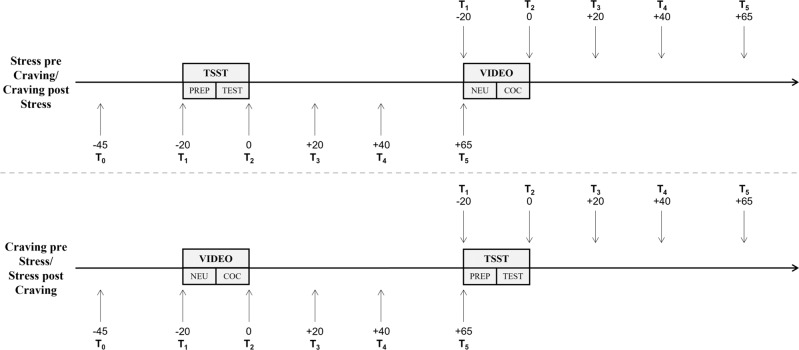
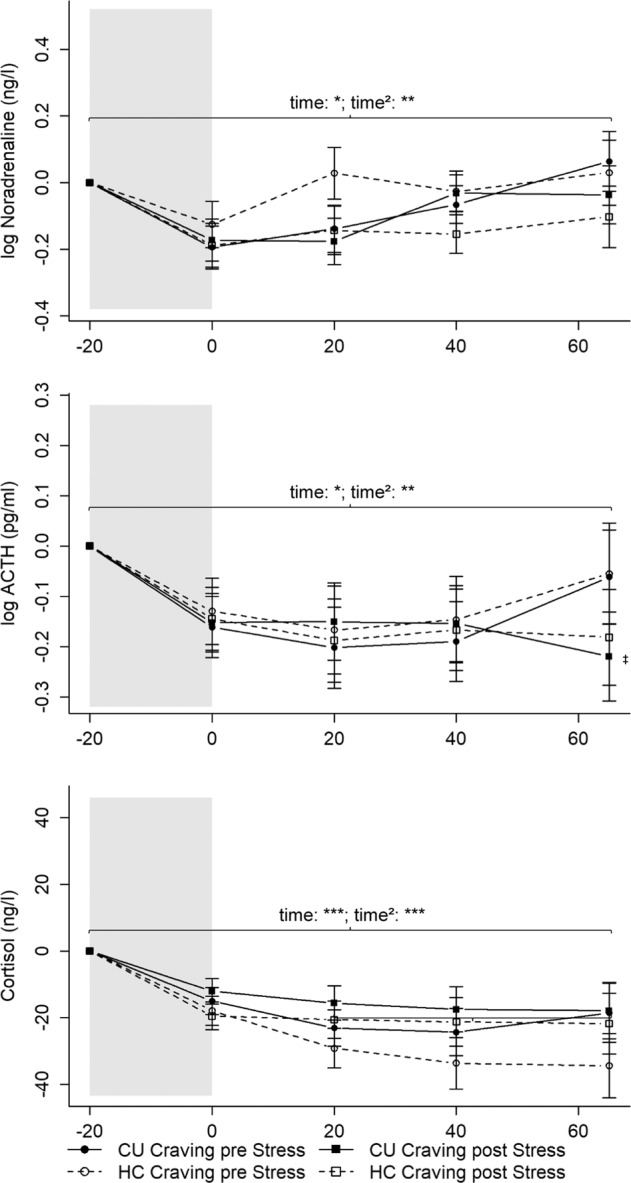
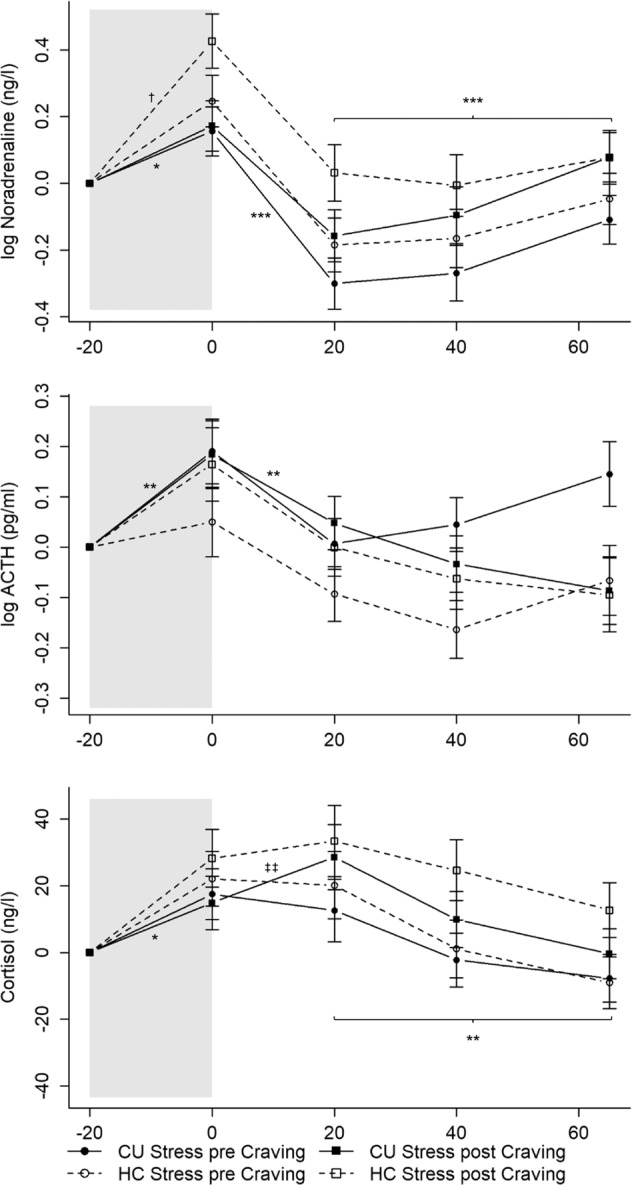
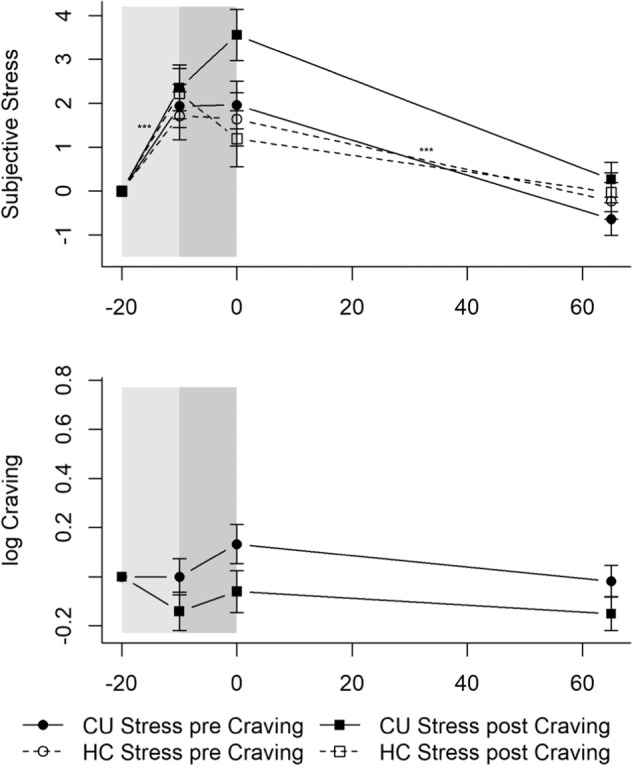
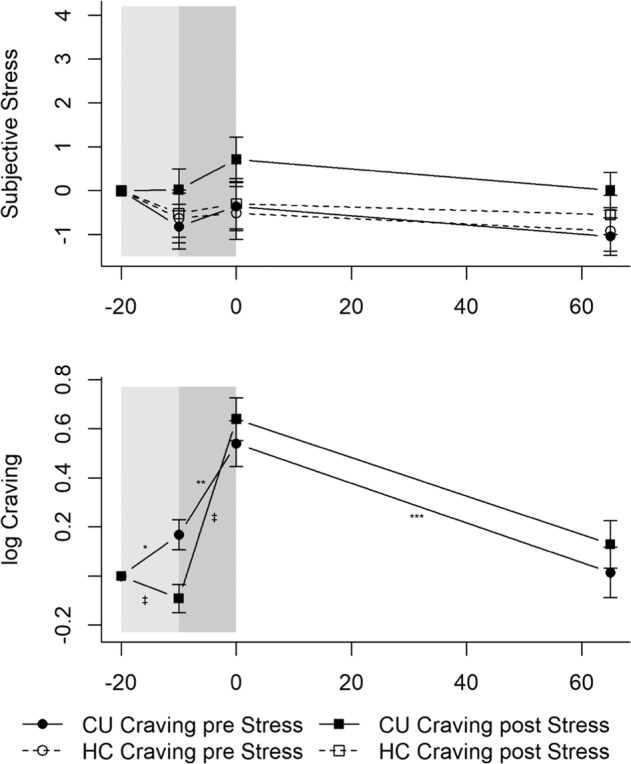
Stress and craving, it has been found, contribute to the development and maintenance of and relapse in cocaine use disorder. Chronic cocaine users (CU), previous research has shown, display altered physiological responses to psychosocial stress and increased vegetative responding to substance-related cues. However, how psychosocial stress and cue-induced craving interact in relation to the CU's physiological responses remains largely unknown. We thus investigated the interaction between acute psychosocial stress and cocaine-cue-related reactivity in 47 CU and 38 controls. In a crossed and balanced design, the participants were randomly exposed to a video-based cocaine-cue paradigm and the Trier Social Stress Test (TSST) or vice versa to investigate possible mutually augmenting effects of both stressors on physiological stress responses. Over the course of the experimental procedure, plasma cortisol, ACTH, noradrenaline, subjective stress, and craving were assessed repeatedly. To estimate the responses during the cocaine-cue paradigm and TSST, growth models and discontinuous growth models were used. Overall, though both groups did not differ in their endocrinological responses to the TSST, CU displayed lower ACTH levels at baseline. The TSST did not elevate craving in CU, but when the cocaine-cue video was shown first, CU displayed an enhanced cortisol response to the subsequent TSST. In CU, cocaine-cues robustly evoked craving but no physiological stress response, while cue-induced craving was intensified after the TSST. Taken together, though CU did not show an altered acute stress response during the TSST, stress and craving together seemed to have mutually augmenting effects on their stress response.
压力和渴望已被发现,会导致可卡因使用障碍的发展、维持和复发。以前的研究表明,慢性可卡因使用者(CU)对心理社会压力的生理反应发生改变,对与物质相关的线索的植物性反应增加。然而,心理社会压力和线索引起的渴望如何相互作用,与 CU 的生理反应有关,这在很大程度上仍然未知。因此,我们调查了 47 名 CU 和 38 名对照者在急性心理社会压力和可卡因线索相关反应之间的相互作用。在交叉和平衡设计中,参与者被随机暴露于基于视频的可卡因线索范式和特里尔社会应激测试(TSST)或反之,以研究这两个应激源对生理应激反应是否可能具有相互增强的影响。在实验过程中,反复评估了血浆皮质醇、ACTH、去甲肾上腺素、主观压力和渴望。为了估计可卡因线索范式和 TSST 期间的反应,使用了生长模型和不连续生长模型。总的来说,尽管两组在对 TSST 的内分泌反应方面没有差异,但 CU 在基线时的 ACTH 水平较低。TSST 并未在 CU 中引起渴望增加,但当首先显示可卡因线索视频时,CU 对随后的 TSST 表现出更强的皮质醇反应。在 CU 中,可卡因线索强烈引起渴望,但没有生理应激反应,而在 TSST 之后,线索引起的渴望会加剧。总之,尽管 CU 在 TSST 期间没有表现出改变的急性应激反应,但压力和渴望似乎对他们的应激反应具有相互增强的影响。