Department of Invasive Cardiology, Medical University of Bialystok, Białystok, Poland.
Faculty of Economics and Sociology, University of Lodz, Łódź, Poland.
Sci Rep. 2022 Oct 13;12(1):17150. doi: 10.1038/s41598-022-21585-7.
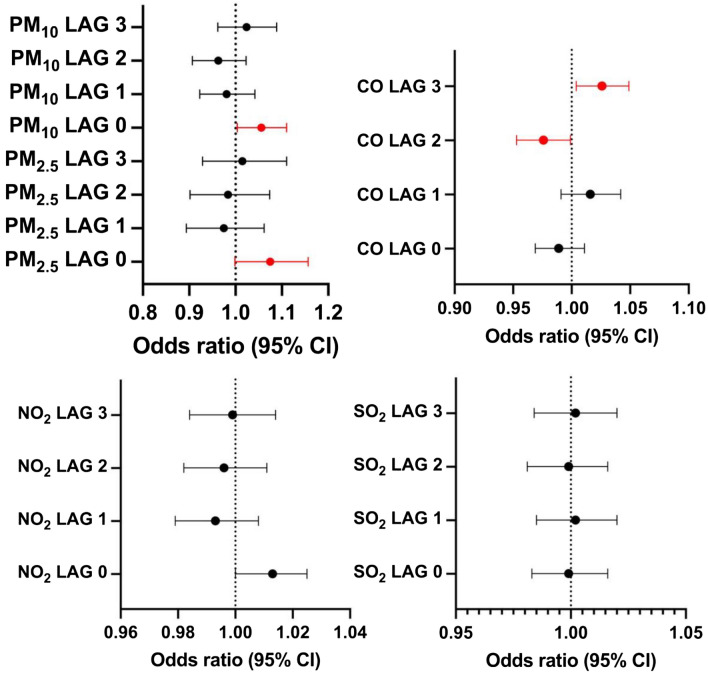
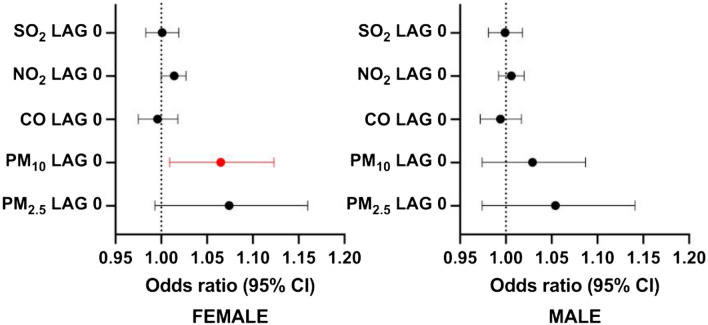
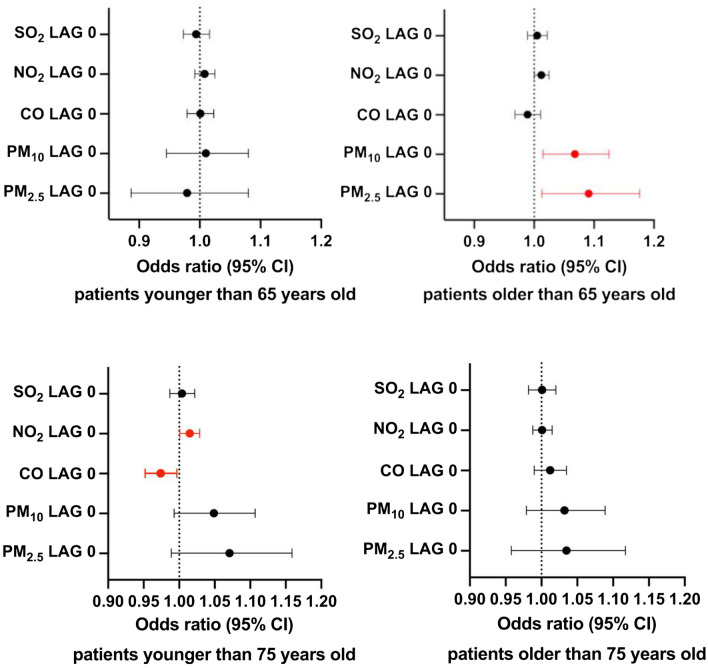
It is well known that exceeded levels of particulate matter in the air and other air pollutants harmfully affect the cardiovascular system. Empirical analyses of the effects of these factors on stroke incidence and mortality are still limited. The main objective of our analyses was to determine the association between short-term exposure to air pollutants and stroke incidence in non-industrial areas, more specifically in north-eastern Poland. To achieve this aim, we used data from the National Health Fund on patients hospitalized for stroke between 2011 and 2020 in the largest city of the region described as the Green Lungs of Poland. The pollution levels and atmospheric conditions data were obtained from the Provincial Inspectorate for Environmental Protection and the Institute of Meteorology and Water Management. Using daily data on hospitalizations, atmospheric conditions, and pollution, as well as ordered logistic regression models the hypotheses on the impact of weather and air pollution conditions on ischemic strokes were tested. The study group included 4838 patients, 45.6% of whom were male; the average patient age was approximately 74 years. The average concentrations of PM were 19.09 µg/m, PM 26.66 µg/m and CO 0.35 µg/m. Analyses showed that an increase in PM and PM concentrations by 10 µg/m was associated with an increase in the incidence of stroke on the day of exposure (OR = 1.075, 95% CI 0.999-1.157, P = 0.053; OR = 1.056, 95% CI 1.004-1.110, P = 0.035) and the effect was even several times greater on the occurrence of a stroke event in general (PM: OR = 1.120, 95% CI 1.013-1.237, P = 0.026; PM: OR = 1.103, 95% CI 1.028-1.182, P = 0.006). Furthermore, a short-term (up to 3 days) effect of CO on stroke incidence was observed in the study area. An increase of 1 μg/m CO was associated with a lower incidence of stroke 2 days after the exposure (OR = 0.976, 95% CI 0.953-0.998, P = 0.037) and a higher incidence 3 days after the exposure (OR = 1.026, 95% CI 1.004-1.049, P = 0.022).
众所周知,空气中超过标准的颗粒物和其他空气污染物会对心血管系统造成有害影响。关于这些因素对中风发病率和死亡率影响的实证分析仍然有限。我们分析的主要目的是确定短期暴露于空气污染物与非工业区(更具体地说是波兰东北部)中风发病率之间的关联。为了实现这一目标,我们使用了国家卫生基金(National Health Fund)关于 2011 年至 2020 年期间该地区最大城市(被称为波兰绿肺)中风住院患者的数据。污染水平和大气条件数据是从省级环境保护监察局和气象与水资源管理研究所获得的。使用每日住院、大气条件和污染数据以及有序逻辑回归模型,检验了天气和空气污染条件对缺血性中风影响的假设。研究组包括 4838 名患者,其中 45.6%为男性;平均患者年龄约为 74 岁。PM 的平均浓度为 19.09μg/m,PM2.6 的平均浓度为 26.66μg/m,CO 的平均浓度为 0.35μg/m。分析表明,PM 和 PM2.6 浓度增加 10μg/m 与暴露日中风发病率的增加相关(OR=1.075,95%CI 0.999-1.157,P=0.053;OR=1.056,95%CI 1.004-1.110,P=0.035),而且对总体中风事件的影响甚至更大(PM:OR=1.120,95%CI 1.013-1.237,P=0.026;PM:OR=1.103,95%CI 1.028-1.182,P=0.006)。此外,在研究区域还观察到 CO 对中风发病率的短期(最长 3 天)影响。CO 浓度增加 1μg/m 与暴露后 2 天中风发病率降低(OR=0.976,95%CI 0.953-0.998,P=0.037)和暴露后 3 天中风发病率升高(OR=1.026,95%CI 1.004-1.049,P=0.022)相关。