Ya Guoqi, Ren Weihong, Qin Rui, He Jiao, Zhao Shuo
The First Clinical Medical Institute, Henan University of Chinese Medicine, Zhengzhou, China.
Department of Laboratory Medicine, The First Affiliated Hospital of Henan University of Chinese Medicine, Zhengzhou, China.
Front Oncol. 2022 Sep 27;12:975261. doi: 10.3389/fonc.2022.975261. eCollection 2022.
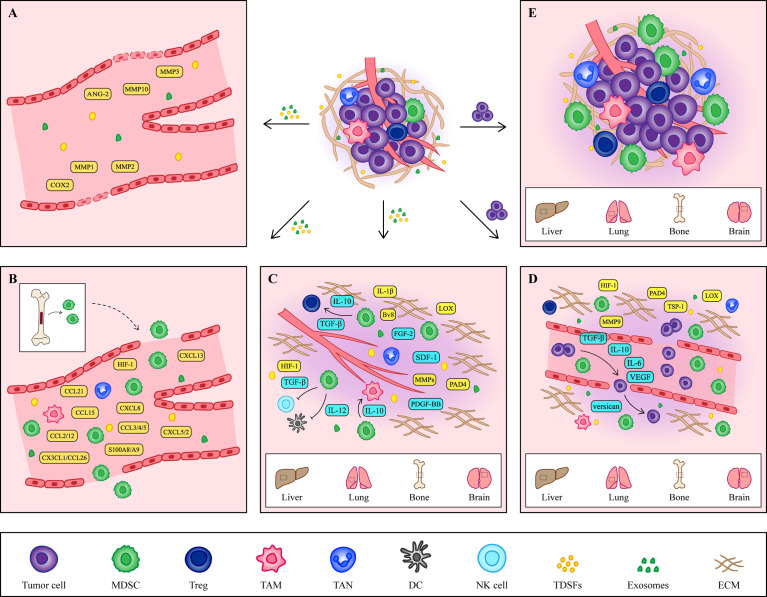
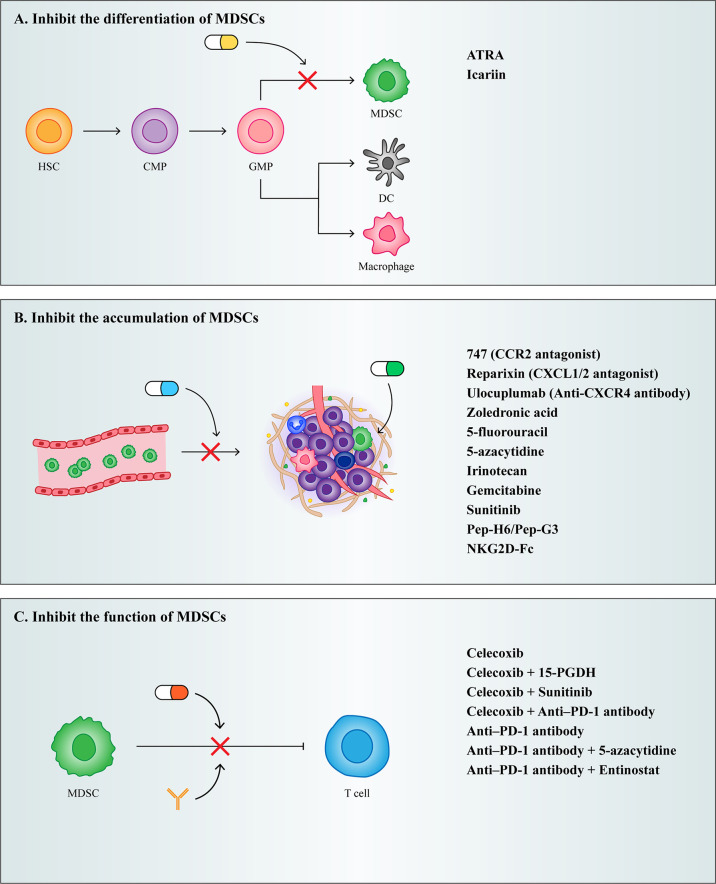
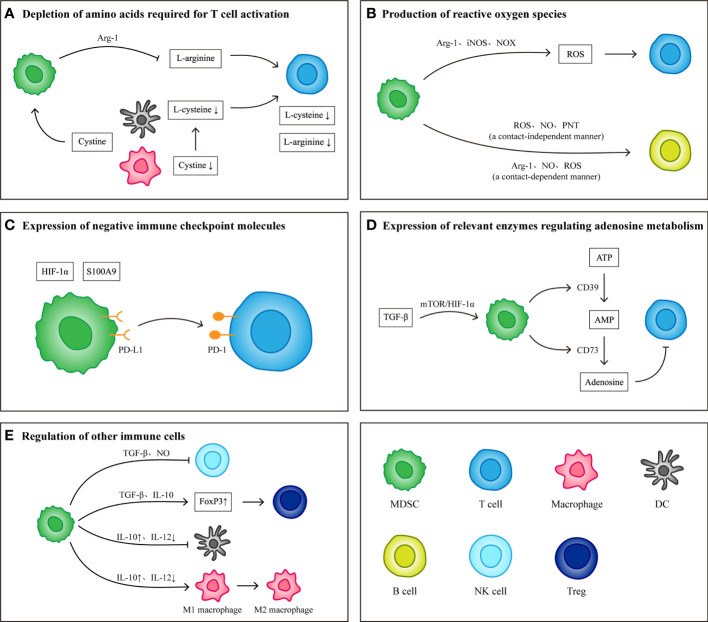
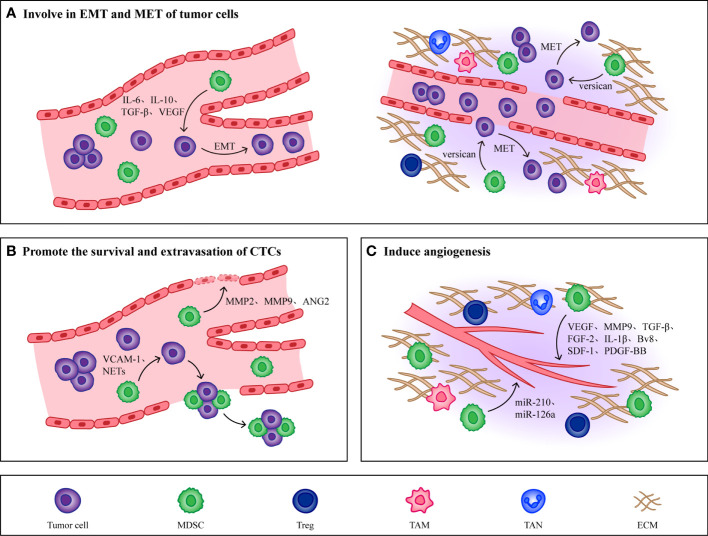
Metastasis is a complex process, which depends on the interaction between tumor cells and host organs. Driven by the primary tumor, the host organ will establish an environment suitable for the growth of tumor cells before their arrival, which is called the pre-metastasis niche. The formation of pre-metastasis niche requires the participation of a variety of cells, in which myeloid-derived suppressor cells play a very important role. They reach the host organ before the tumor cells, and promote the establishment of the pre-metastasis niche by influencing immunosuppression, vascular leakage, extracellular matrix remodeling, angiogenesis and so on. In this article, we introduced the formation of the pre-metastasis niche and discussed the important role of myeloid-derived suppressor cells. In addition, this paper also emphasized the targeting of myeloid-derived suppressor cells as a therapeutic strategy to inhibit the formation of pre-metastasis niche, which provided a research idea for curbing tumor metastasis.
转移是一个复杂的过程,它依赖于肿瘤细胞与宿主器官之间的相互作用。在原发性肿瘤的驱动下,宿主器官会在肿瘤细胞到达之前建立一个适合其生长的环境,这被称为前转移生态位。前转移生态位的形成需要多种细胞的参与,其中髓系来源的抑制性细胞发挥着非常重要的作用。它们在肿瘤细胞之前到达宿主器官,并通过影响免疫抑制、血管渗漏、细胞外基质重塑、血管生成等过程促进前转移生态位的建立。在本文中,我们介绍了前转移生态位的形成,并讨论了髓系来源的抑制性细胞的重要作用。此外,本文还强调了以髓系来源的抑制性细胞为靶点作为抑制前转移生态位形成的治疗策略,这为遏制肿瘤转移提供了一个研究思路。