Department of Diagnostics and Public Health, Division of Infectious Diseases, University of Verona, Verona, Italy.
Department of Medical and Surgical Sciences, Infectious Diseases Unit, IRCCS Policlinico Sant'Orsola, University of Bologna, Bologna, Italy.
Hematol Oncol. 2023 Feb;41(1):16-25. doi: 10.1002/hon.3084. Epub 2022 Oct 20.
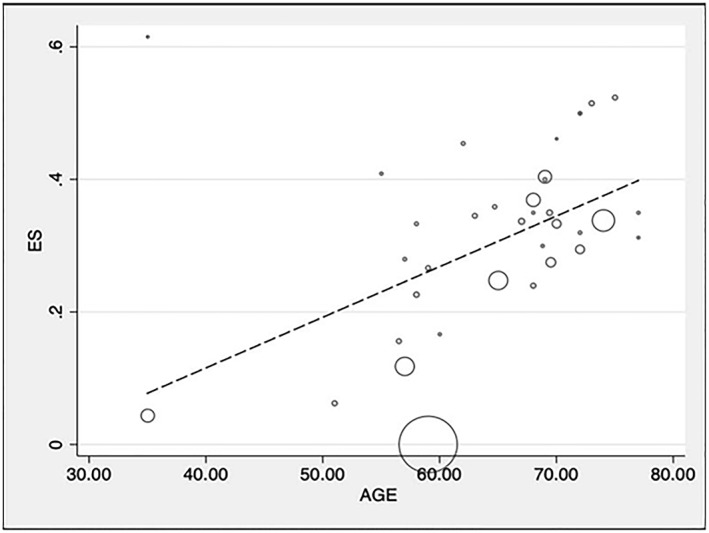
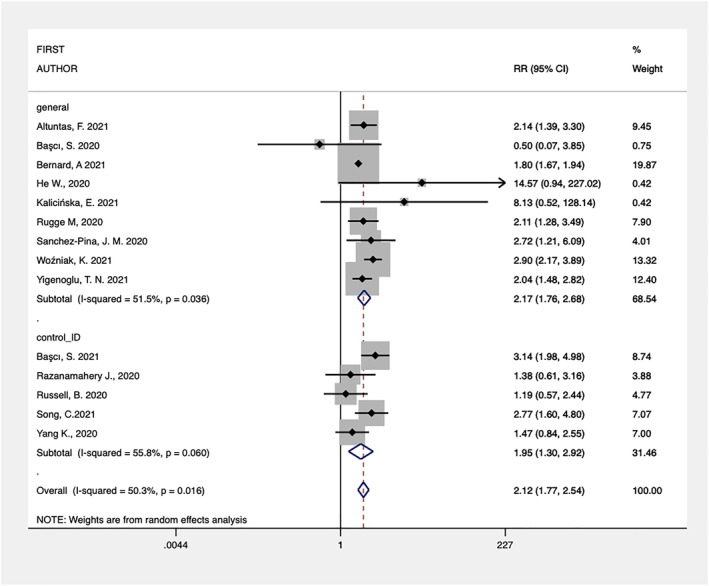
Main aim of this systematic review is to quantify the risk and identify predictors of clinical evolution of SARS-CoV-2 in hematological patients compared to different control populations. Two independent reviewers screened the literature assessing clinical outcomes of SARS-CoV-2 infection in adult patients with active hematological malignancies published up to June 2021. Primary outcome was COVID-19 related mortality, secondary outcomes were hospital and intensive-care admission, mechanical ventilation (MV), and thromboembolic events. Variables related to study setting, baseline patients' demographic, comorbidities, underlying hematological disease, ongoing chemotherapy, COVID-19 presentation, and treatments were extracted. A total of 67 studies including 10,061 hematological patients and 111,143 controls were included. Most of the studies were retrospective cohorts (51 studies, 76%) and only 19 (13%) provided data for a control group. A significant increased risk of clinical progression in the hematological population compared to the controls was found in terms of COVID-19 related mortality (OR, 2.12; 95% CI, 1.77-2.54), hospitalization (OR, 1.98; 95% CI, 1.15-3.43), intensive-care admission (OR, 1.77; 95% CI, 1.38-2.26), and MV (OR, 2.17; 95% CI, 1.71-2.75). The risk remained significantly higher in the subgroup analysis comparing hematological patients versus solid cancer. Meta-regression analysis of uncontrolled studies showed that older age, male sex, and hypertension were significantly related to worse clinical outcomes of COVID-19 in hematological population. Older age and hypertension were found to be associated also to thromboembolic events. In conclusion, hematological patients have a higher risk of COVID-19 clinical progression compared to both the general population and to patients with solid cancer.
本系统评价的主要目的是量化与不同对照组相比,血液系统疾病患者 SARS-CoV-2 临床演变的风险,并确定其预测因素。两位独立的审查员筛选了截至 2021 年 6 月发表的评估成人血液系统恶性肿瘤患者 SARS-CoV-2 感染临床结局的文献,评估内容包括临床结局、住院及 ICU 入院、机械通气(MV)和血栓栓塞事件。提取了与研究背景、患者人口统计学、合并症、基础血液病、正在进行的化疗、COVID-19 表现和治疗等相关的变量。共纳入 67 项研究,包括 10061 例血液病患者和 111143 例对照组。大多数研究为回顾性队列研究(51 项研究,占 76%),仅有 19 项研究(占 13%)提供了对照组数据。与对照组相比,血液系统患者 COVID-19 相关死亡率(OR,2.12;95%CI,1.77-2.54)、住院(OR,1.98;95%CI,1.15-3.43)、 ICU 入院(OR,1.77;95%CI,1.38-2.26)和 MV(OR,2.17;95%CI,1.71-2.75)的临床进展风险显著增加。在将血液系统患者与实体癌患者进行比较的亚组分析中,这种风险仍然显著更高。对未控制研究进行的荟萃回归分析显示,年龄较大、男性和高血压与血液系统患者 COVID-19 临床结局较差显著相关。年龄较大和高血压也与血栓栓塞事件相关。总之,与一般人群和实体癌患者相比,血液系统疾病患者 COVID-19 临床进展的风险更高。