Division of Cardiovascular Medicine, Department of Medicine, Lahey Hospital and Medical Center, Beth Israel Lahey Health, Burlington, Massachusetts, USA.
Division of Cardiovascular Medicine, Brigham and Women's Hospital and Harvard Medical School, Boston, Massachusetts, USA.
J Am Coll Cardiol. 2022 Nov 15;80(20):1912-1924. doi: 10.1016/j.jacc.2022.08.800. Epub 2022 Oct 12.
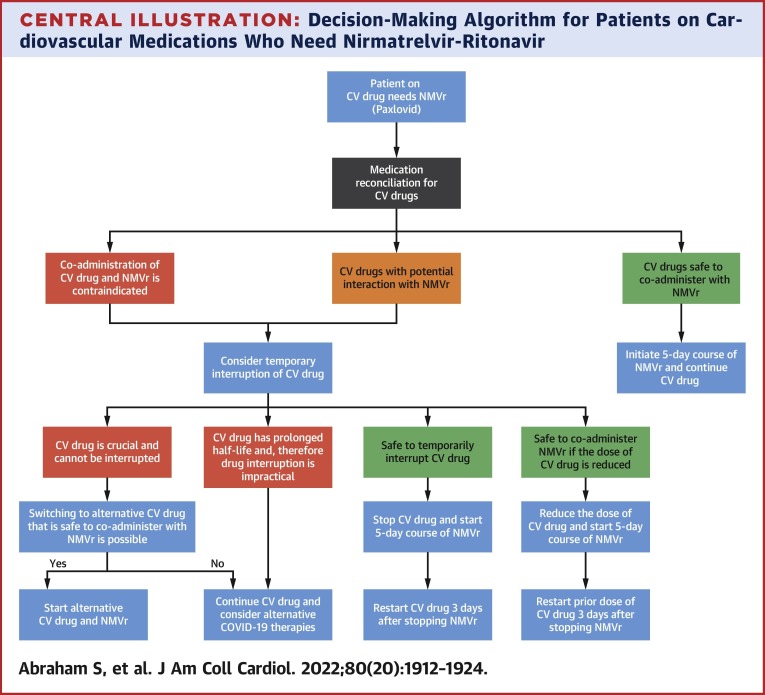
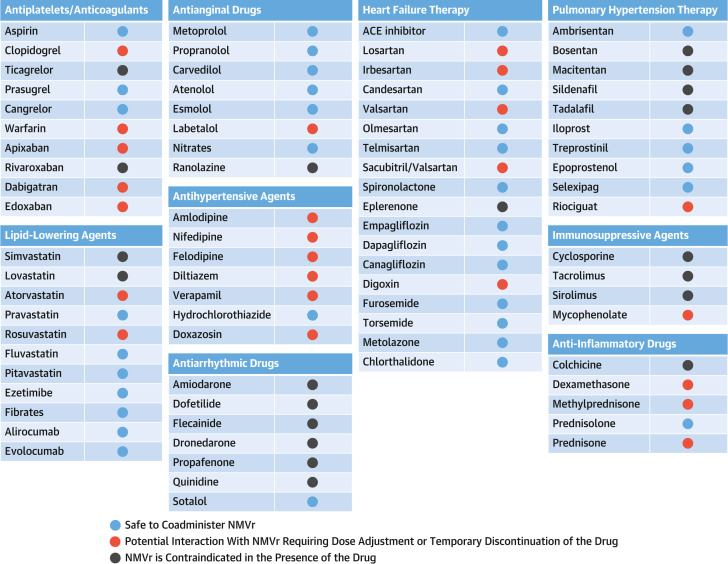
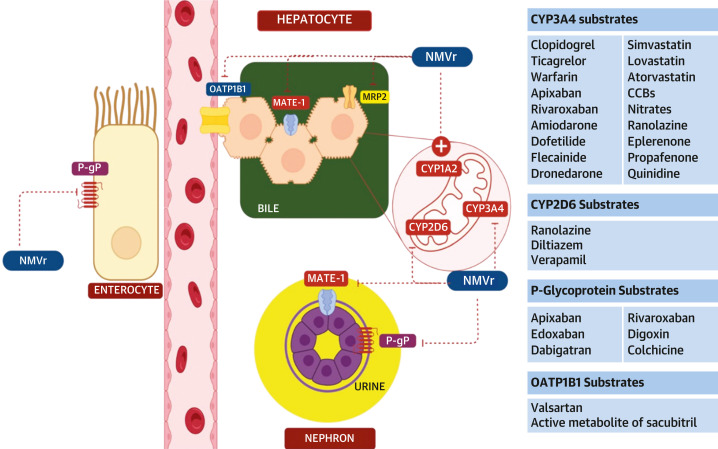
Nirmatrelvir-ritonavir (NMVr) is used to treat symptomatic, nonhospitalized patients with coronavirus disease-2019 (COVID-19) who are at high risk of progression to severe disease. Patients with cardiovascular risk factors and cardiovascular disease are at a high risk of developing adverse events from COVID-19 and as a result have a higher likelihood of receiving NMVr. Ritonavir, the pharmaceutical enhancer used in NMVr, is an inhibitor of the enzymes of CYP450 pathway, particularly CYP3A4 and to a lesser degree CYP2D6, and affects the P-glycoprotein pump. Co-administration of NMVr with medications commonly used to manage cardiovascular conditions can potentially cause significant drug-drug interactions and may lead to severe adverse effects. It is crucial to be aware of such interactions and take appropriate measures to avoid them. In this review, we discuss potential drug-drug interactions between NMVr and commonly used cardiovascular medications based on their pharmacokinetics and pharmacodynamic properties.
尼马瑞韦利特-利托那韦(NMVr)用于治疗有症状的、未住院的 2019 冠状病毒病(COVID-19)患者,这些患者有进展为重症疾病的高风险。有心血管危险因素和心血管疾病的患者因 COVID-19 而发生不良事件的风险较高,因此更有可能接受 NMVr 治疗。尼马瑞韦利特中使用的药物增效剂利托那韦是细胞色素 P450 途径的酶抑制剂,特别是 CYP3A4,在较小程度上是 CYP2D6,并且影响 P-糖蛋白泵。NMVr 与常用于治疗心血管疾病的药物联合使用可能会导致严重的药物相互作用,并可能导致严重的不良反应。了解这些相互作用并采取适当措施避免它们至关重要。在这篇综述中,我们根据药物的药代动力学和药效学特性讨论了 NMVr 与常用心血管药物之间的潜在药物相互作用。