Wake Forest Institute for Regenerative Medicine (WFIRM), Winston-Salem, NC, United States.
Facultad de Medicina, Escuela de doctorado, Universidad de Barcelona, Barcelona, Spain.
Front Endocrinol (Lausanne). 2022 Sep 28;13:1002279. doi: 10.3389/fendo.2022.1002279. eCollection 2022.
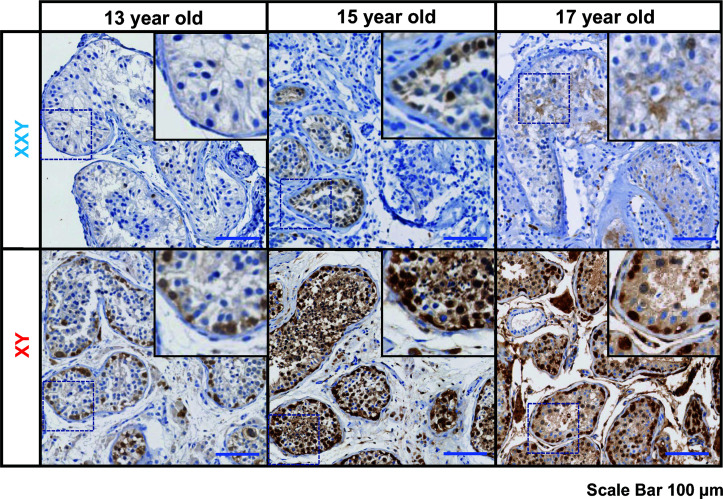
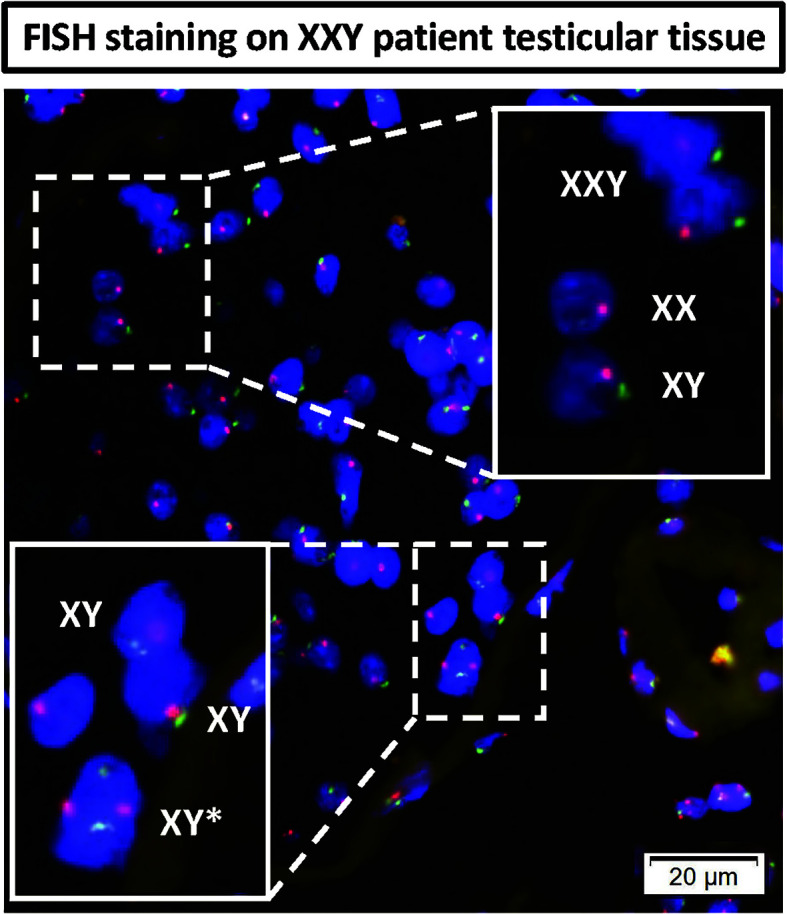
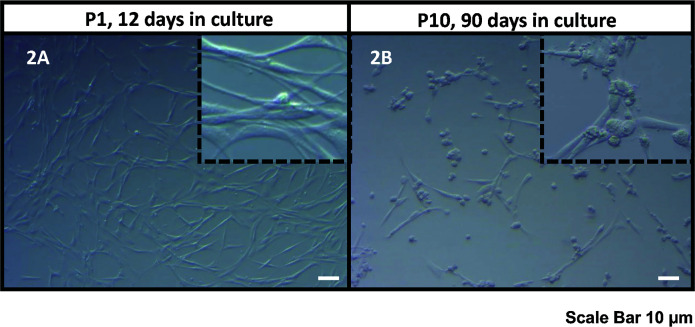
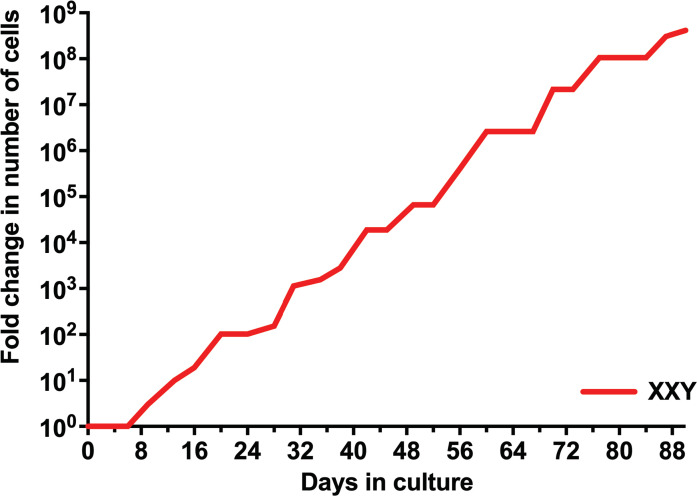
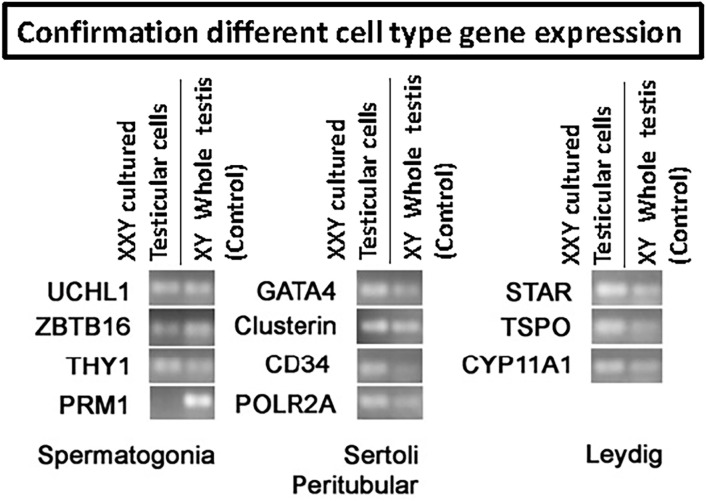
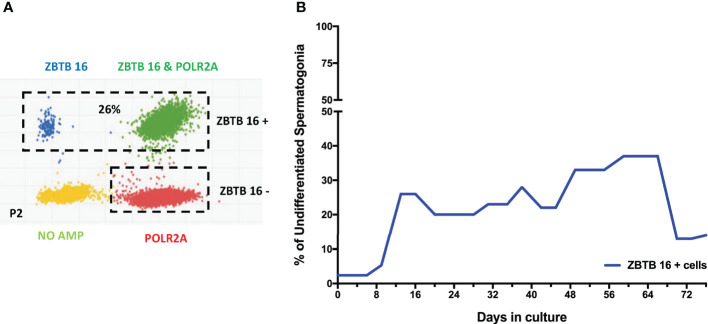
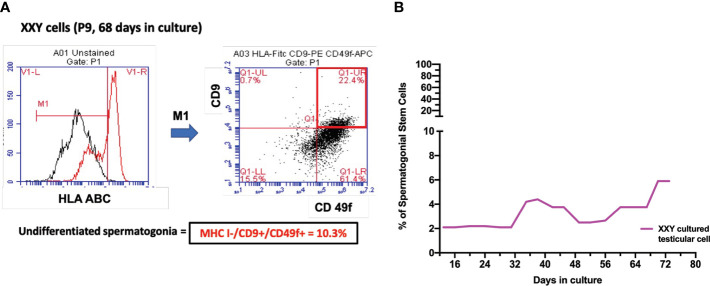
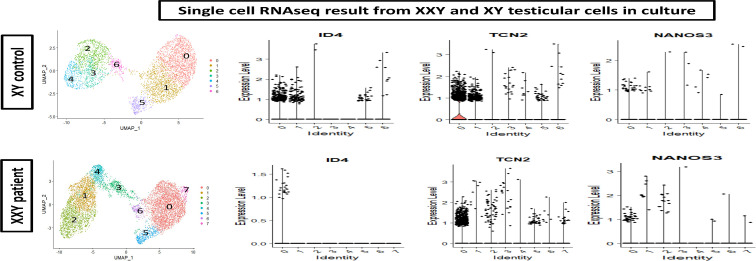
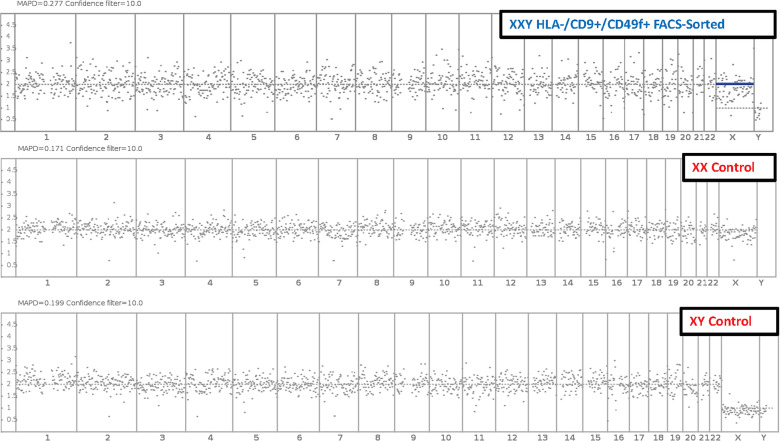
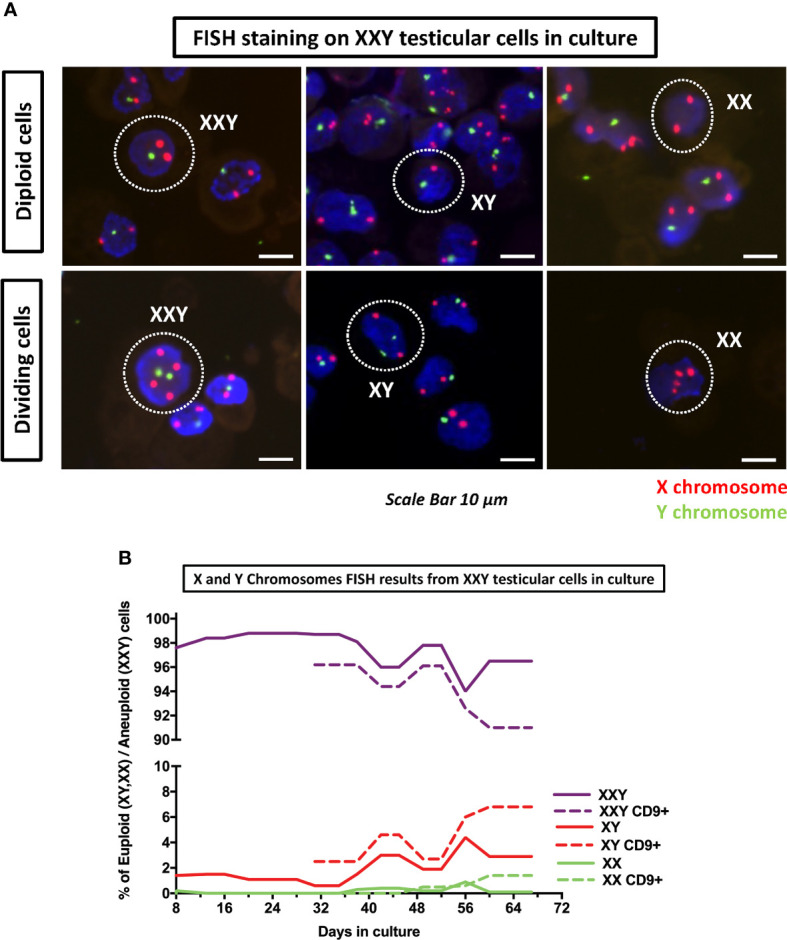
Klinefelter Syndrome (KS) is characterized by a masculine phenotype, supernumerary sex chromosomes (47, XXY), and impaired fertility due to loss of spermatogonial stem cells (SSCs). Early testicular cryopreservation could be an option for future fertility treatments in these patients, including SSCs transplantation or spermatogenesis. It is critically essential to adapt current SSCs propagation systems as a fertility option for KS patients. KS human testicular samples (13,15- and 17-year-old non-mosaic KS boys) were donated by patients enrolled in an experimental testicular tissue banking program. Testicular cells were isolated from cryopreserved tissue and propagated in long-term culture for 110 days. Cell-specific gene expression confirmed the presence of all four main cell types found in testes: Spermatogonia, Sertoli, Leydig, and Peritubular cells. A population of ZBTB16 undifferentiated spermatogonia was identified throughout the culture using digital PCR. Flow cytometric analysis also detected an HLA/CD9/CD49f population, indicating maintenance of a stem cell subpopulation among the spermatogonial cells. FISH staining for chromosomes X and Y showed most cells containing an XXY karyotype with a smaller number containing either XY or XX. Both XY and XX populations were able to be enriched by magnetic sorting for CD9 as a spermatogonia marker. Molecular karyotyping demonstrated genomic stability of the cultured cells, over time. Finally, single-cell RNAseq analysis confirmed transcription of ID4, TCN2, and NANOS 3 within a population of putative SSCs population. This is the first study showing successful isolation and long-term propagation of human KS testicular cells. These findings could inform the development of therapeutic fertility options for KS patients, either through spermatogenesis or transplantation of SSC, .
克氏综合征(KS)的特征是男性表型、额外的性染色体(47,XXY)以及由于精原干细胞(SSC)丧失导致的生育能力受损。对于这些患者的未来生育治疗,早期睾丸冷冻保存可能是一种选择,包括 SSC 移植或精子发生。对于 KS 患者来说,将当前的 SSC 繁殖系统作为一种生育选择进行适配是至关重要的。KS 人类睾丸样本(13、15 和 17 岁非嵌合性 KS 男孩)由参加实验性睾丸组织库计划的患者捐献。从冷冻保存的组织中分离睾丸细胞,并在长期培养中培养 110 天。细胞特异性基因表达证实了存在睾丸中发现的所有四种主要细胞类型:精原细胞、支持细胞、间质细胞和小管周围细胞。使用数字 PCR 在整个培养过程中鉴定出 ZBTB16 未分化精原细胞。流式细胞术分析还检测到 HLA/CD9/CD49f 群体,表明在精原细胞中维持了干细胞亚群。染色体 X 和 Y 的 FISH 染色显示大多数细胞含有 XXY 核型,少数细胞含有 XY 或 XX。通过 CD9 作为精原细胞标志物的磁性分选,均能够富集 XY 和 XX 群体。分子核型分析证明了培养细胞随时间的基因组稳定性。最后,单细胞 RNAseq 分析证实了 ID4、TCN2 和 NANOS3 在潜在 SSC 群体中的转录。这是第一项成功分离和长期繁殖人类 KS 睾丸细胞的研究。这些发现可能为 KS 患者提供治疗生育选择,无论是通过精子发生还是 SSC 移植。