Calambás Pulgarin Heidy Lorena, Caicedo Carolina, López Edwin Flórez
Grupo de Investigación en Desarrollo de Materiales y Productos, Centro Nacional de Asistencia Técnica a La Industria (ASTIN), SENA, Cali, 760003, Colombia.
Faculty of Engineering, Unidad Central Del Valle Del Cauca (UCEVA), Carrera 17a 48-144, Tuluá 763022, Colombia.
Heliyon. 2022 Oct 1;8(10):e10833. doi: 10.1016/j.heliyon.2022.e10833. eCollection 2022 Oct.
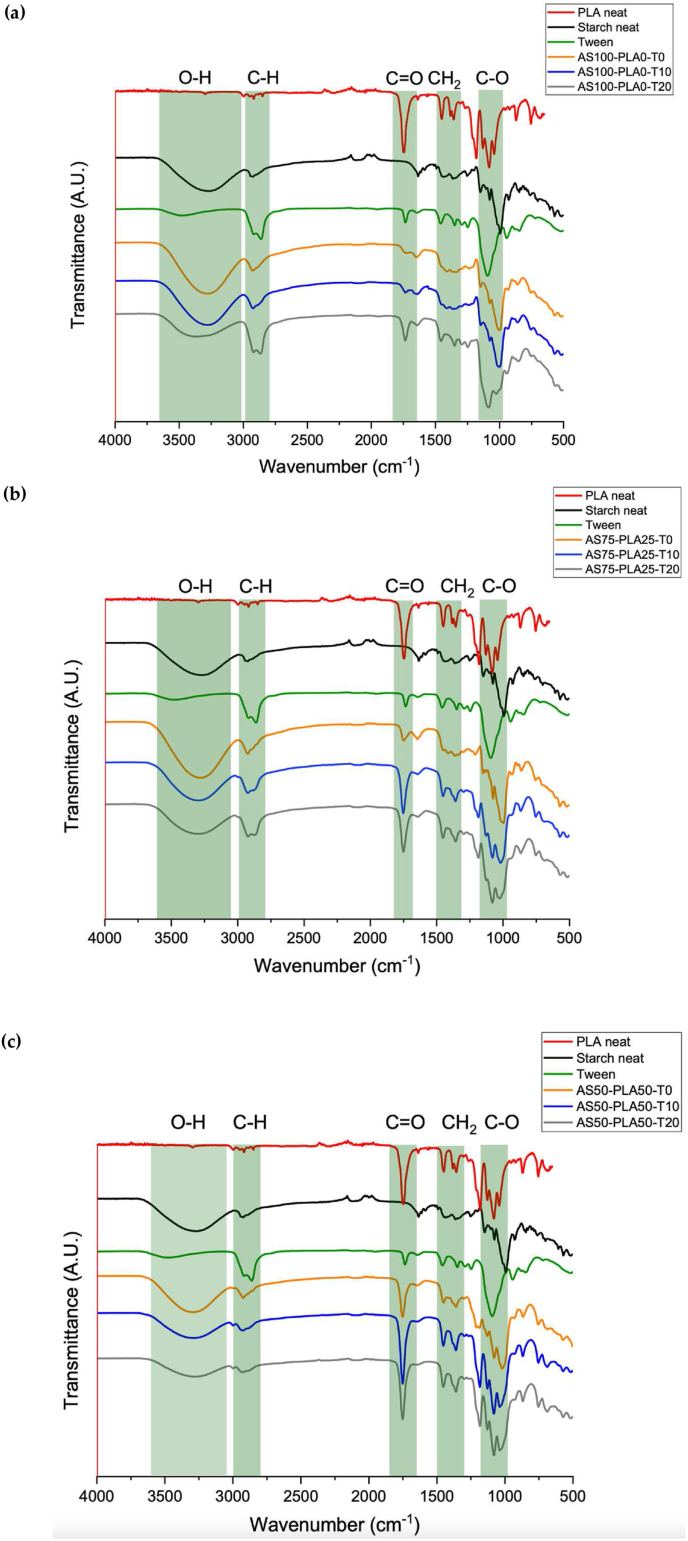
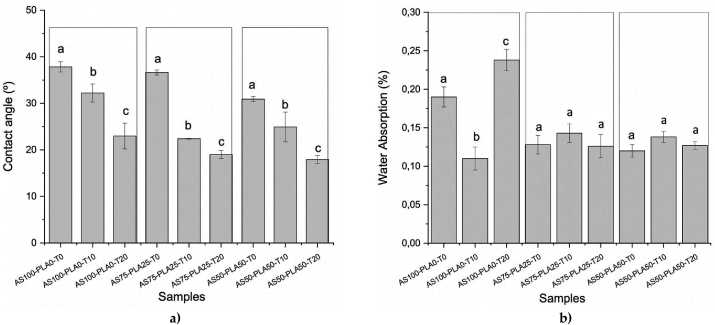
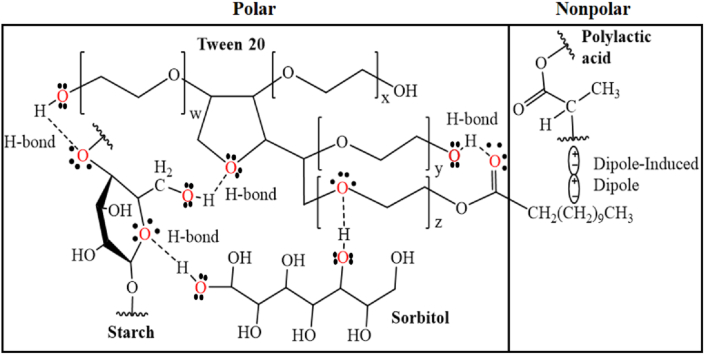
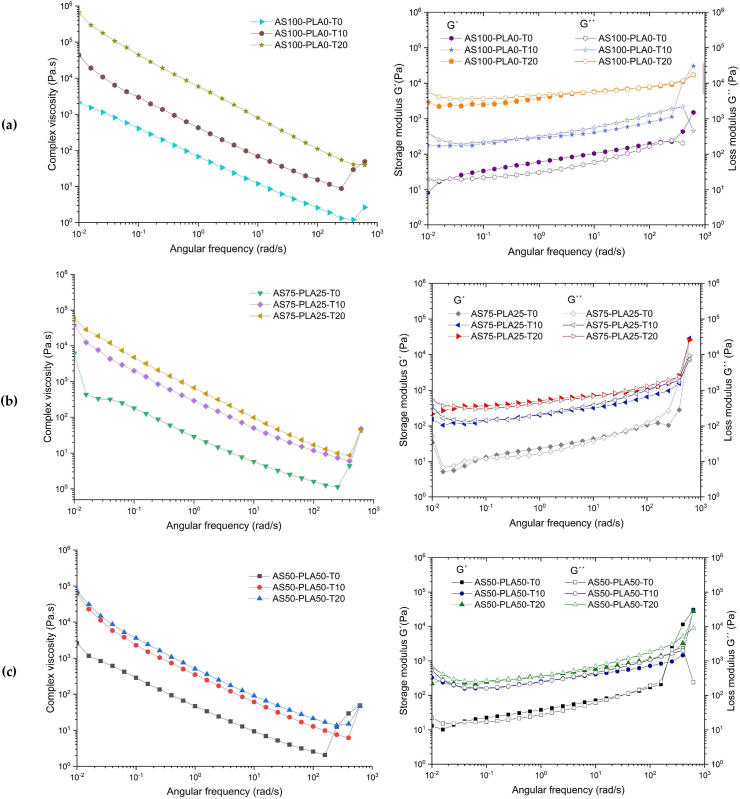
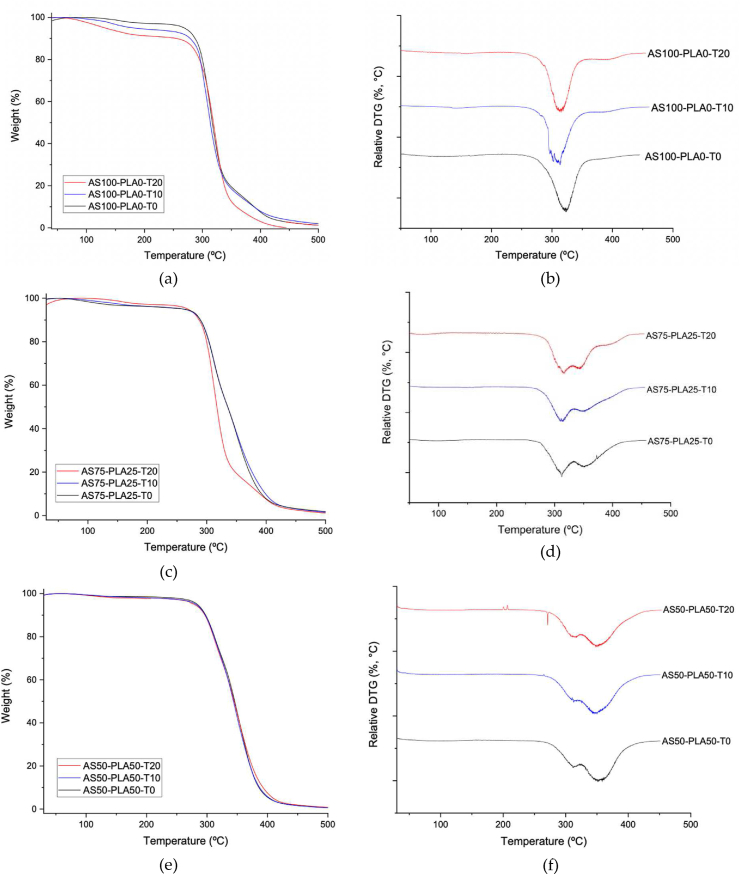
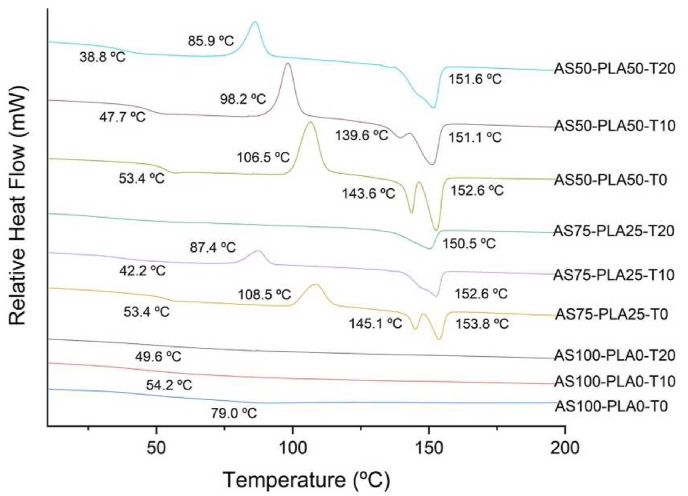
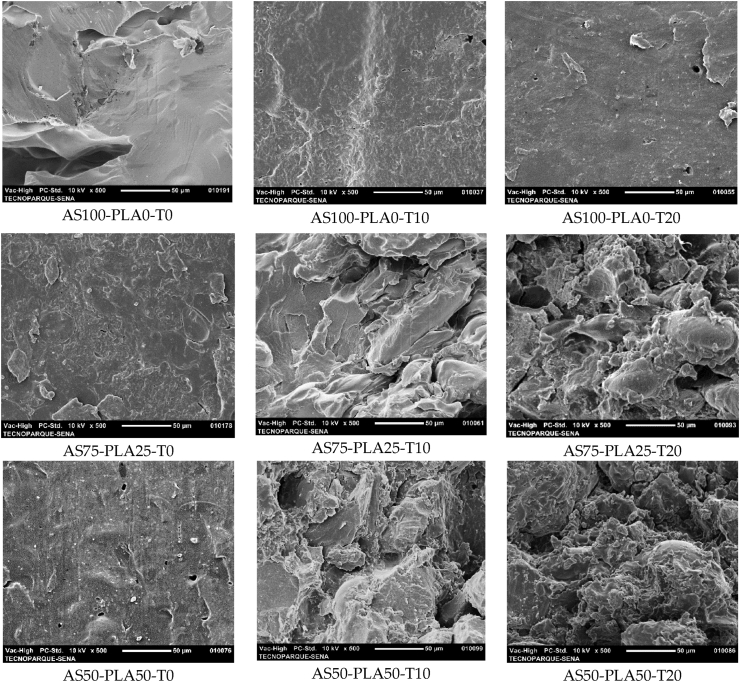
Miscibility in biopolymeric blends is a critical process that requires evaluation of the effect of surfactants or coupling agents under conditions similar to processing. Different mixtures in the molten state of plasticized starch and polylactic acid in the presence of a surfactant (Tween 20) at different concentrations were studied. This allowed knowing the rheological, thermal and surface behavior of the mixtures. The results of the dynamic rheological analysis showed increases in viscosity in the presence of the surfactant, in which strong interactions were produced at high shear rates that reflect possible crosslinking between the polymer chains, in addition to intermolecular interactions that were evidenced in the infrared spectrum. Likewise, the storage and loss modulus showed transitions mainly from viscous to elastic typical for thermoplastics. The thermogravimetric analysis did not show significant changes between the mixtures. However, the calorimetric analysis showed changes in the crystallinity of the mixtures, the tensoactive promotes greater freedom of movement and rearrangements in the microstructure with decrease of interface between polymers, and less compaction of the material induced by the emulsion. Analysis derived from biopolymeric films against contact with water shows significant changes. Interaction with water in short times (in the order of minutes) according to the sessile drop technique, favors hydrophilicity by increasing the concentration of Tween 20. However, interaction with water for prolonged times (in the order of hours), shows that the absorption reaches saturation in samples a stabilization in the absorption is observed. The results demonstrate that the miscibility of PLA in AS was achieved in the presence of the tween, under conventional processing conditions. The stability of the different formulations allows the production of films for packaging and biomedical applications.
生物聚合物共混物的混溶性是一个关键过程,需要在类似于加工的条件下评估表面活性剂或偶联剂的效果。研究了在不同浓度的表面活性剂(吐温20)存在下,增塑淀粉和聚乳酸在熔融状态下的不同混合物。这有助于了解混合物的流变学、热学和表面行为。动态流变学分析结果表明,在表面活性剂存在下粘度增加,在高剪切速率下会产生强烈相互作用,这反映了聚合物链之间可能的交联,此外红外光谱也证明了分子间相互作用。同样,储能模量和损耗模量显示出主要从粘性到弹性的转变,这是热塑性塑料的典型特征。热重分析未显示混合物之间有显著变化。然而,量热分析显示混合物的结晶度发生了变化,表面活性剂促进了微观结构中更大的运动自由度和重排,聚合物之间的界面减少,乳液引起的材料压实程度降低。对生物聚合物薄膜与水接触的分析显示出显著变化。根据静置滴法,短时间(几分钟量级)与水相互作用时,随着吐温20浓度的增加有利于亲水性。然而,长时间(几小时量级)与水相互作用时,样品中的吸收达到饱和,观察到吸收稳定。结果表明,在吐温存在下,在常规加工条件下实现了聚乳酸在淀粉中的混溶。不同配方的稳定性使得能够生产用于包装和生物医学应用的薄膜。