Shao Xuerong, Wang Zheng, Luan Lijiang, Sheng Yilan, Yu Ruoni, Pranata Adrian, Adams Roger, Zhang Anren, Han Jia
Department of Rehabilitation Medicine, Shanghai Fourth People's Hospital, School of Medicine, Tongji University, Shanghai, China.
College of Rehabilitation Sciences, Shanghai University of Medicine and Health Sciences, Shanghai, China.
Front Aging Neurosci. 2022 Sep 30;14:946509. doi: 10.3389/fnagi.2022.946509. eCollection 2022.
Ankle proprioception plays a critical role in lower limb movement control. However, the relationship between ankle proprioception and fear of falling (FOF) in older people is still unclear.
(1) This study aims to develop a new device for measuring ankle inversion proprioceptive discrimination sensitivity during walking, i.e., the Ankle Inversion Discrimination Apparatus-Walking (AIDAW), and assess the test-retest reliability of the AIDAW in both young and older adults; (2) to evaluate the discriminant validity of the measure by comparing ankle proprioception during walking between the two groups; and (3) to explore convergent validity by determining to what extent the AIDAW proprioceptive scores correlate with Fall Efficacy Scale-International (FES-I) scores.
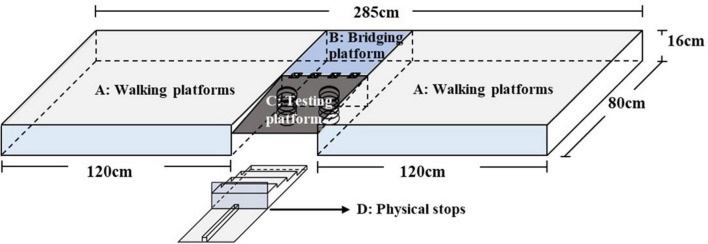
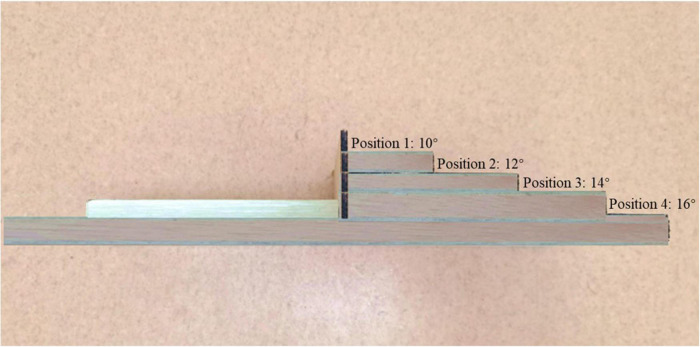
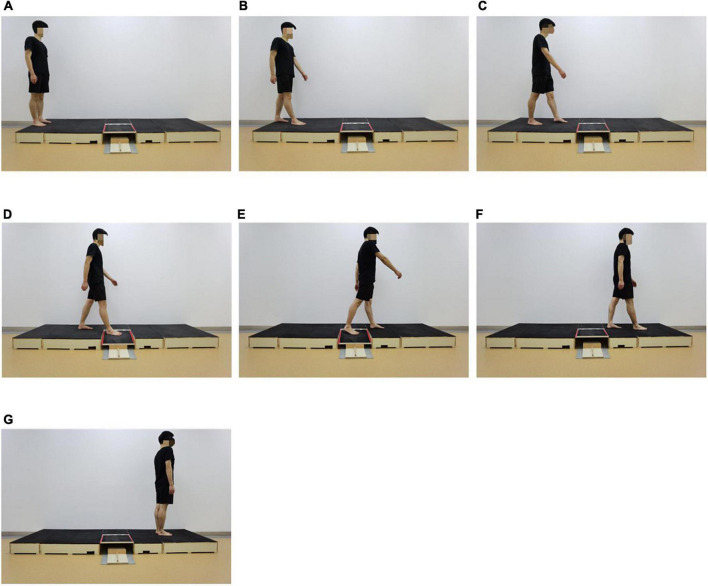
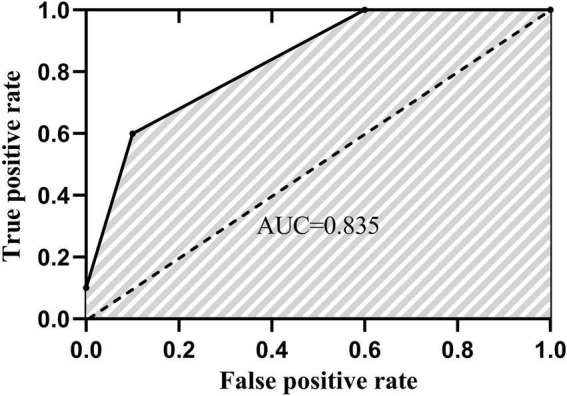
The AIDAW was purpose-built to test ankle inversion proprioceptive discrimination sensitivity during walking. The area under the receiver operating curve (AUC) was calculated as the proprioceptive discrimination score. In total, 54 adults volunteered. Test-retest reliability was evaluated in 12 young and 12 older adults, and another 15 young and 15 older adults completed the comparison study. FOF was assessed by using the FES-I.
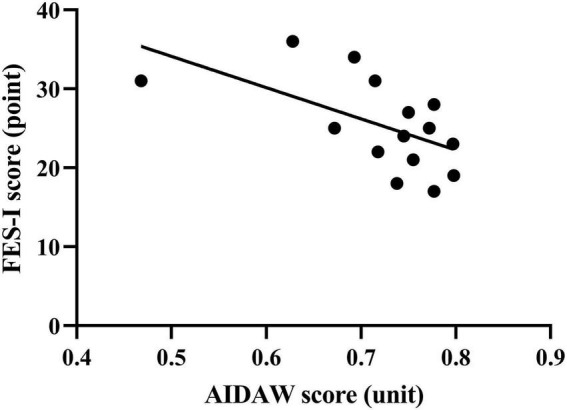
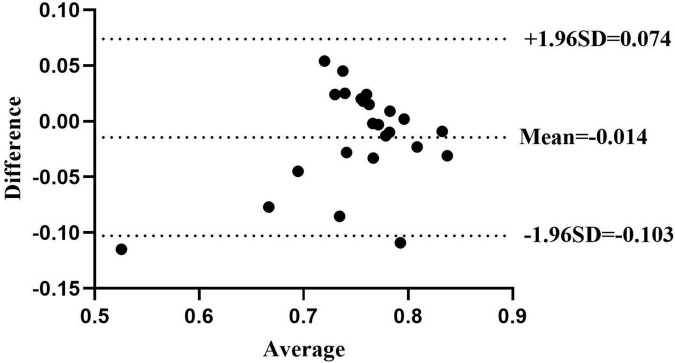
The test-retest reliability intraclass correlation coefficient ICC value for the whole group was 0.76 (95% CI: 0.52-0.89). The ICC values of the young and older groups were 0.81 (95% CI: 0.46-0.94) and 0.71 (95% CI: 0.26-0.91), respectively. The Minimal Detectable Change with 90% confidence (MDC) values for the young and older groups were 0.03 and 0.11, respectively. There was a significant difference between the AIDAW proprioceptive sensitivity scores for the young and older groups (0.78 ± 0.04 vs. 0.72 ± 0.08, = 5.06, = 0.033). Spearman's correlation analysis showed that the FES-I scores were significantly and negatively correlated with the AIDAW scores ( = -0.61, = 0.015), with higher FOF associated with worse ankle proprioception.
The AIDAW is a reliable and valid device for measuring ankle proprioception during walking in both young and older adults. Ankle inversion proprioceptive discrimination sensitivity during walking was found to be impaired in the elderly compared to young adults. This impairment was found to be strongly associated with FOF, suggesting that assessment and intervention for ankle proprioception in this population are needed to reduce the risk of falls.
踝关节本体感觉在下肢运动控制中起着关键作用。然而,老年人踝关节本体感觉与跌倒恐惧(FOF)之间的关系仍不清楚。
(1)本研究旨在开发一种新的用于测量步行过程中踝关节内翻本体感觉辨别敏感性的装置,即步行时踝关节内翻辨别仪(AIDAW),并评估AIDAW在年轻人和老年人中的重测信度;(2)通过比较两组步行时的踝关节本体感觉来评估该测量方法的判别效度;(3)通过确定AIDAW本体感觉评分与国际跌倒效能量表(FES-I)评分的相关程度来探索聚合效度。
专门设计AIDAW来测试步行过程中踝关节内翻本体感觉辨别敏感性。计算受试者工作特征曲线(AUC)下的面积作为本体感觉辨别分数。共有54名成年人自愿参与。在12名年轻人和12名老年人中评估重测信度,另外15名年轻人和15名老年人完成比较研究。使用FES-I评估跌倒恐惧。
整个组的重测信度组内相关系数ICC值为0.76(95%CI:0.52-0.89)。年轻人组和老年人组的ICC值分别为0.81(95%CI:0.46-0.94)和0.71(95%CI:0.26-0.91)。年轻人组和老年人组90%置信度的最小可检测变化(MDC)值分别为0.03和0.11。年轻人组和老年人组的AIDAW本体感觉敏感性评分存在显著差异(0.78±0.04对0.72±0.08,t=5.06,P=0.033)。Spearman相关分析表明,FES-I评分与AIDAW评分显著负相关(r=-0.61,P=0.015),跌倒恐惧程度越高,踝关节本体感觉越差。
AIDAW是一种可靠且有效的用于测量年轻人和老年人步行时踝关节本体感觉的装置。发现老年人步行时踝关节内翻本体感觉辨别敏感性相对于年轻人受损。发现这种损伤与跌倒恐惧密切相关,这表明需要对该人群的踝关节本体感觉进行评估和干预以降低跌倒风险。