Isaac Connie J, Miloserdov Fedor M, Pécharman Anne-Frédérique, Lowe John P, McMullin Claire L, Whittlesey Michael K
Department of Chemistry, University of Bath, Bath BA2 7AY, U.K.
Organometallics. 2022 Oct 10;41(19):2716-2730. doi: 10.1021/acs.organomet.2c00344. Epub 2022 Sep 21.
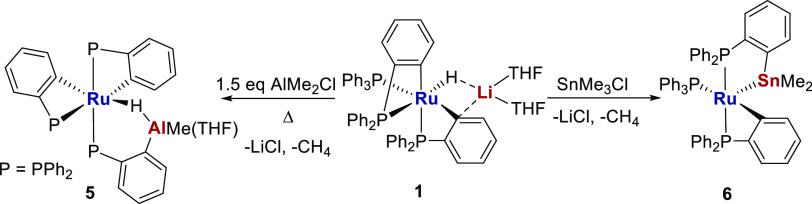
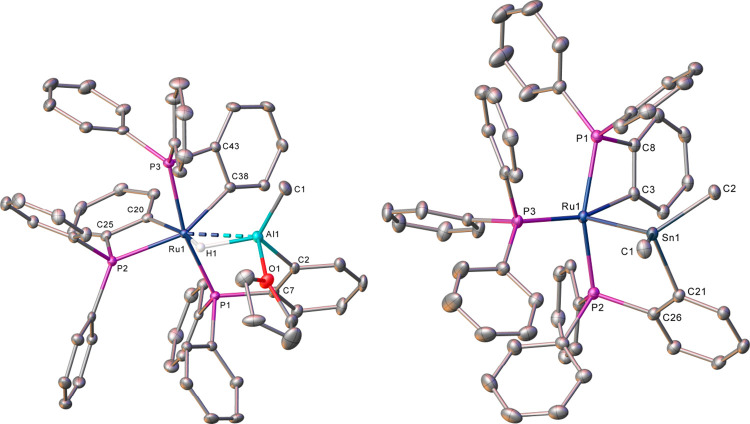
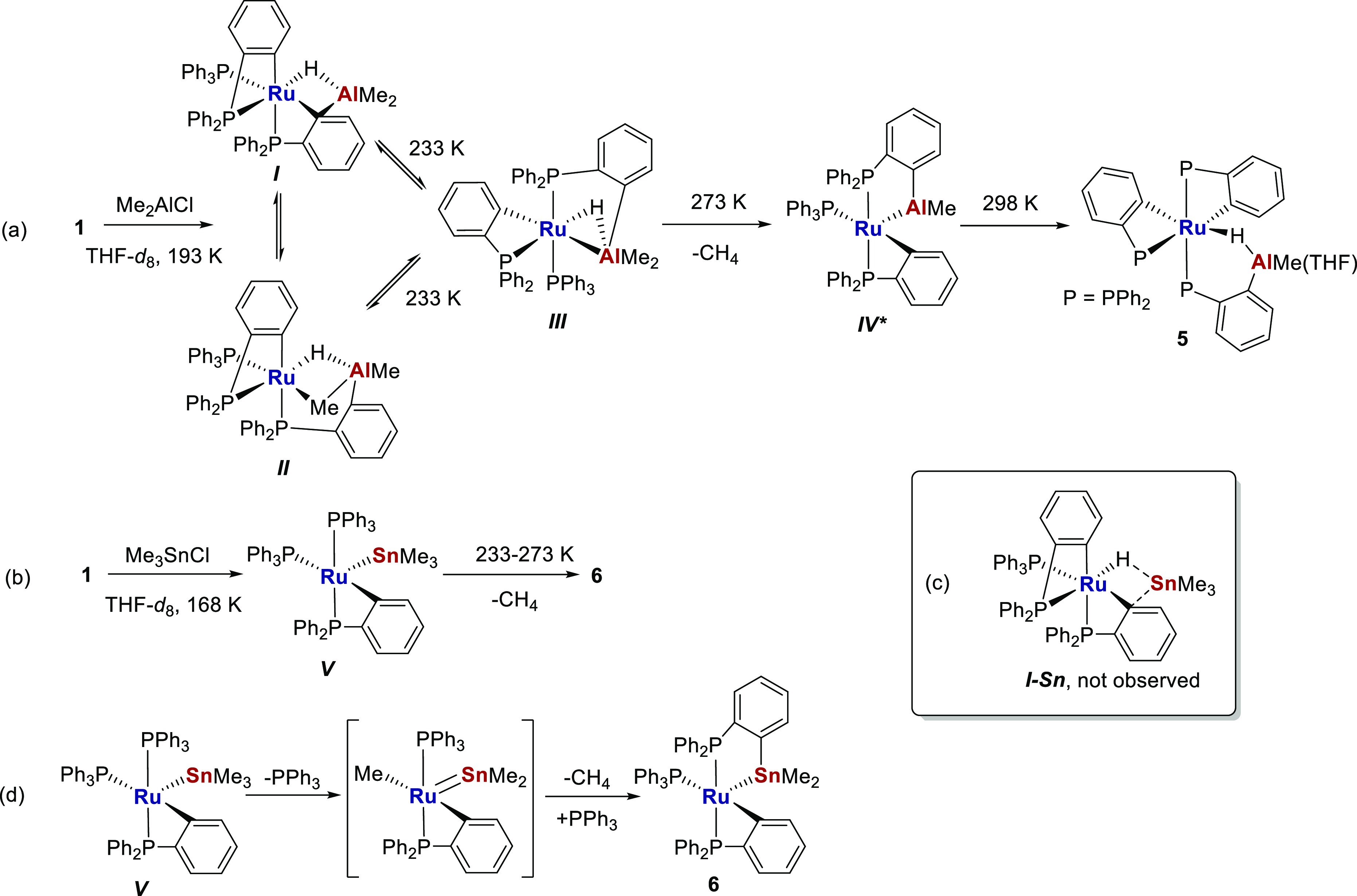
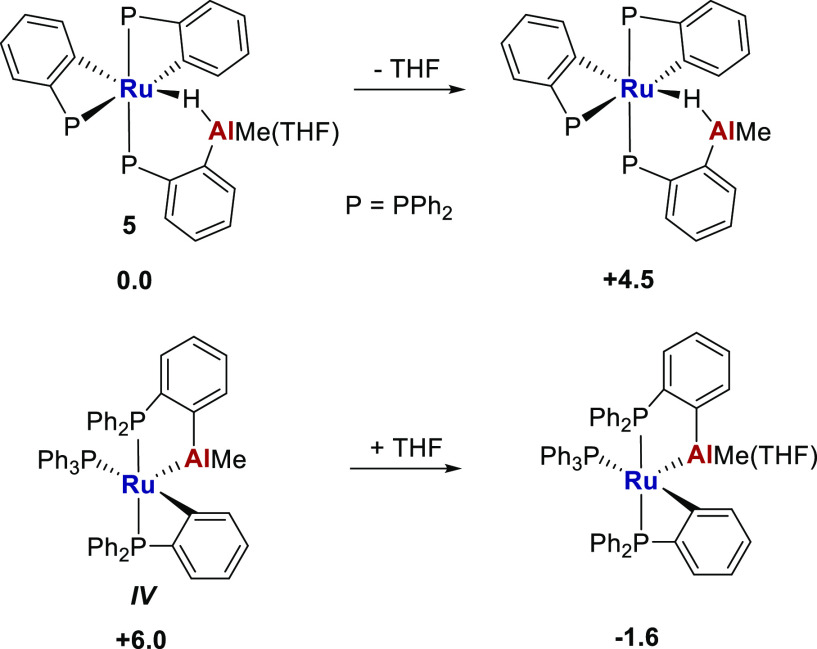
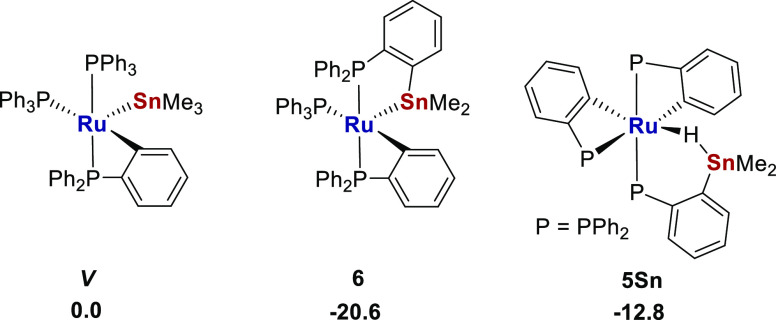
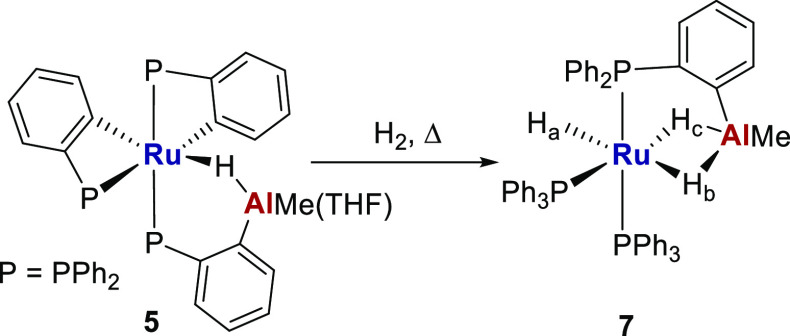
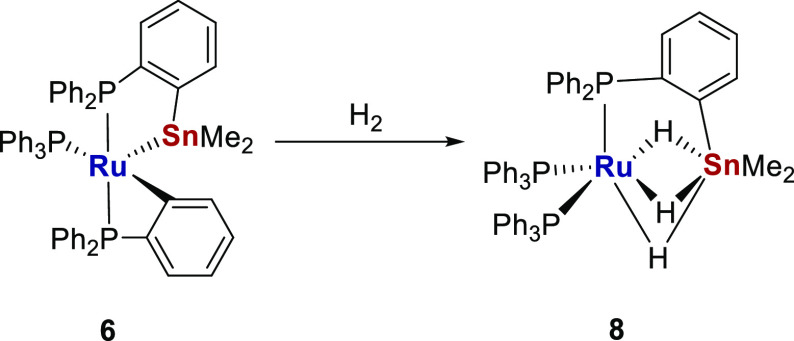
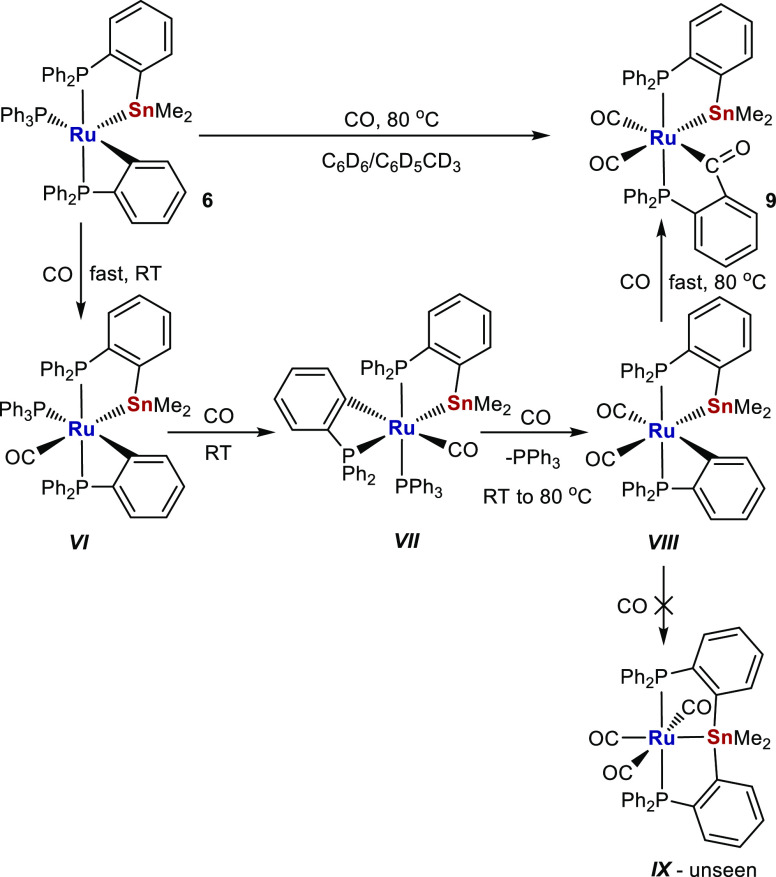
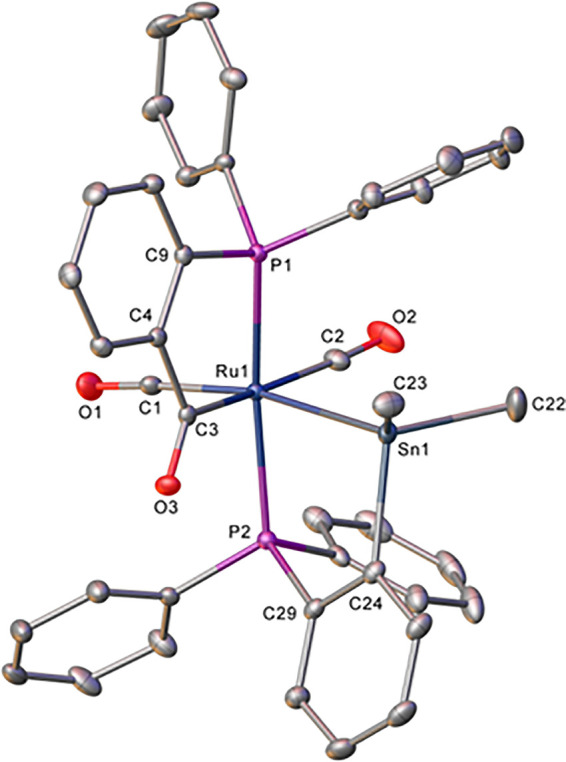
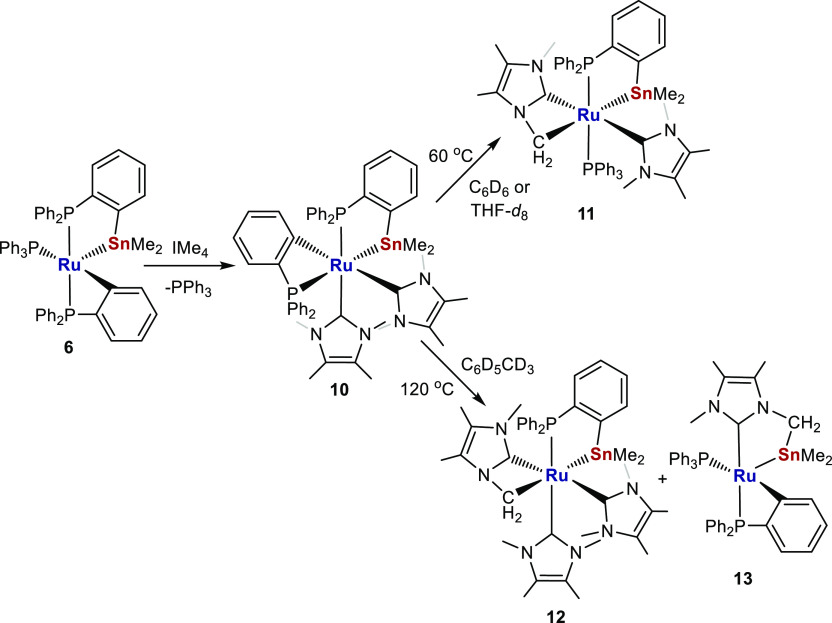
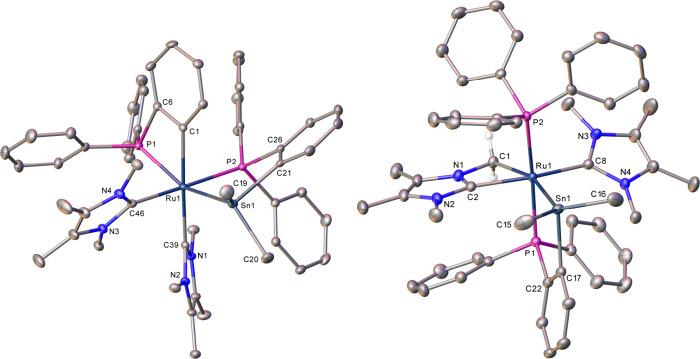
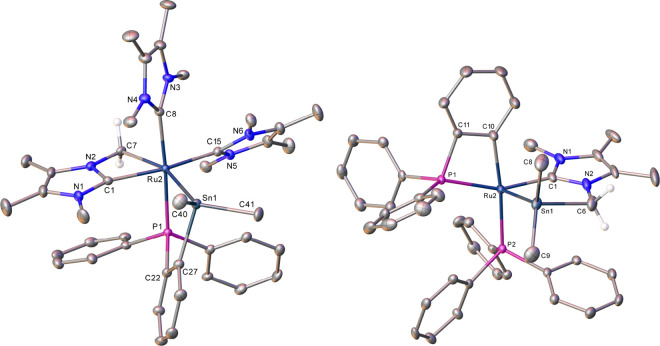
Treatment of [Ru(PPh)(CHPPh)H][Li(THF)] with AlMeCl and SnMeCl leads to elimination of LiCl and CH and formation of the heterobimetallic complexes [Ru(CHPPh){PPhCHAlMe(THF)}H] and [Ru(PPh)(CHPPh)(PPhCHSnMe)] , respectively. The pathways to and have been probed by variable temperature NMR studies, together with input from DFT calculations. Complete reaction of H occurs with at 60 °C and with at room temperature to yield the spectroscopically characterized trihydride complexes [Ru(PPh){PPhCHAlMe}H] and [Ru(PPh){PPhCHSnMe}H] . In the presence of CO, forms the acylated phosphine complex, [Ru(CO)(C(O)CHPPh)(PPhCHSnMe)] , through a series of intermediates that were identified by NMR spectroscopy in conjunction with CO labeling. Complex undergoes addition and substitution reactions with the N-heterocyclic carbene 1,3,4,5-tetramethylimidazol-2-ylidene (IMe) to give [Ru(IMe)(PPhCH)(PPhCHSnMe)] , which converted via rare N-Me group C-H activation to [Ru(IMe)(PPh)(IMe)'(PPhCHSnMe)] upon heating at 60 °C and to a mixture of [Ru(IMe)(IMe)'(PPhCHSnMe)] and [Ru(PPh)(PPhCH)(IMe-SnMe)'] at 120 °C.
用AlMeCl和SnMeCl处理[Ru(PPh)(CHPPh)H][Li(THF)]会导致LiCl和CH消除,并分别形成异双金属配合物[Ru(CHPPh){PPhCHAlMe(THF)}H]和[Ru(PPh)(CHPPh)(PPhCHSnMe)]。通过变温核磁共振研究以及密度泛函理论计算的输入,对形成这两种配合物的途径进行了探究。H与在60℃下完全反应,与在室温下完全反应,生成经光谱表征的三氢化物配合物[Ru(PPh){PPhCHAlMe}H]和[Ru(PPh){PPhCHSnMe}H]。在CO存在下,通过一系列经核磁共振光谱结合CO标记鉴定的中间体,形成酰化膦配合物[Ru(CO)(C(O)CHPPh)(PPhCHSnMe)]。配合物与N-杂环卡宾1,3,4,5-四甲基咪唑-2-亚基(IMe)发生加成和取代反应,生成[Ru(IMe)(PPhCH)(PPhCHSnMe)],在60℃加热时通过罕见的N-Me基团C-H活化转化为[Ru(IMe)(PPh)(IMe)'(PPhCHSnMe)],在120℃时转化为[Ru(IMe)(IMe)'(PPhCHSnMe)]和[Ru(PPh)(PPhCH)(IMe-SnMe)']的混合物。