Gezgin Gülçin, Visser Marten, Ruano Dina, Santegoets Saskia J, de Miranda Noel F C C, van der Velden Pieter A, Luyten Gregorius P M, van der Burg Sjoerd H, Verdegaal Els M, Jager Martine J
Department of Ophthalmology, Leiden University Medical Center, Leiden, The Netherlands.
Department of Medical Oncology, Oncode Institute, Leiden University Medical Center, Leiden, The Netherlands.
Ophthalmol Sci. 2022 Mar 1;2(2):100132. doi: 10.1016/j.xops.2022.100132. eCollection 2022 Jun.
To evaluate whether expanded tumor-infiltrating lymphocytes (TILs) can be obtained from primary uveal melanoma (UM) for potential use as adjuvant treatment in patients at risk of developing metastatic disease.
Experimental research study.
Freshly obtained primary UM from 30 patients.
Three different methods were used to expand TILs: (1) direct culture from small fragments of fresh tumor tissue, (2) single-cell tissue preparation by enzymatic digestion and subsequent enrichment of mononuclear cells, and (3) selection of CD3 T cells using magnetic beads. Surface expression of costimulatory and inhibitory T-cell markers and T-cell reactivity against autologous tumor cells was assessed. Clinical, histopathologic, genetic, and immunologic characteristics of the tumors were compared with the capacity to expand TILs and with their reactivity against autologous tumor cells.
The feasibility of expanding TILs from primary UM, testing their reactivity to autologous UM cells, and evaluating the impact of an immunomodulatory environment.
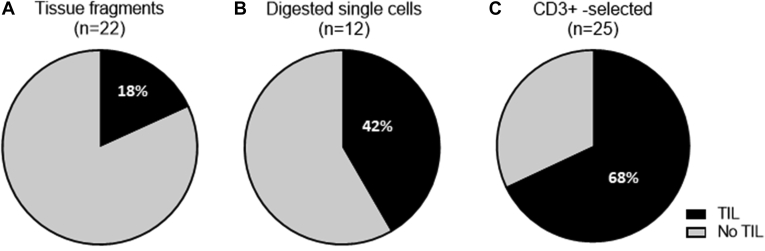
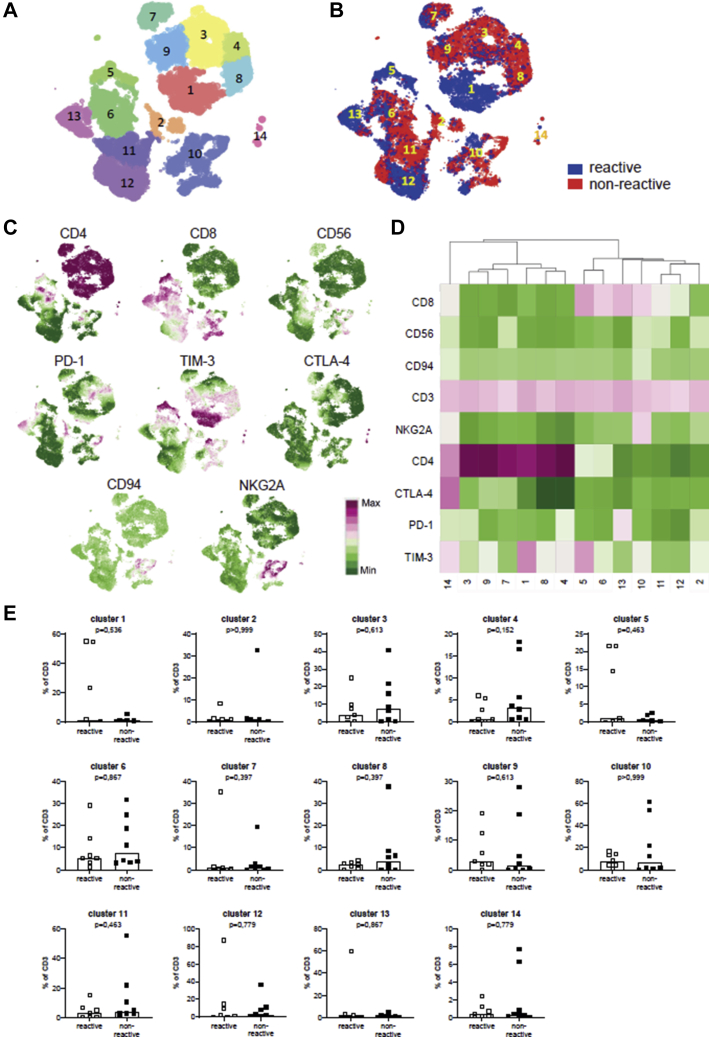
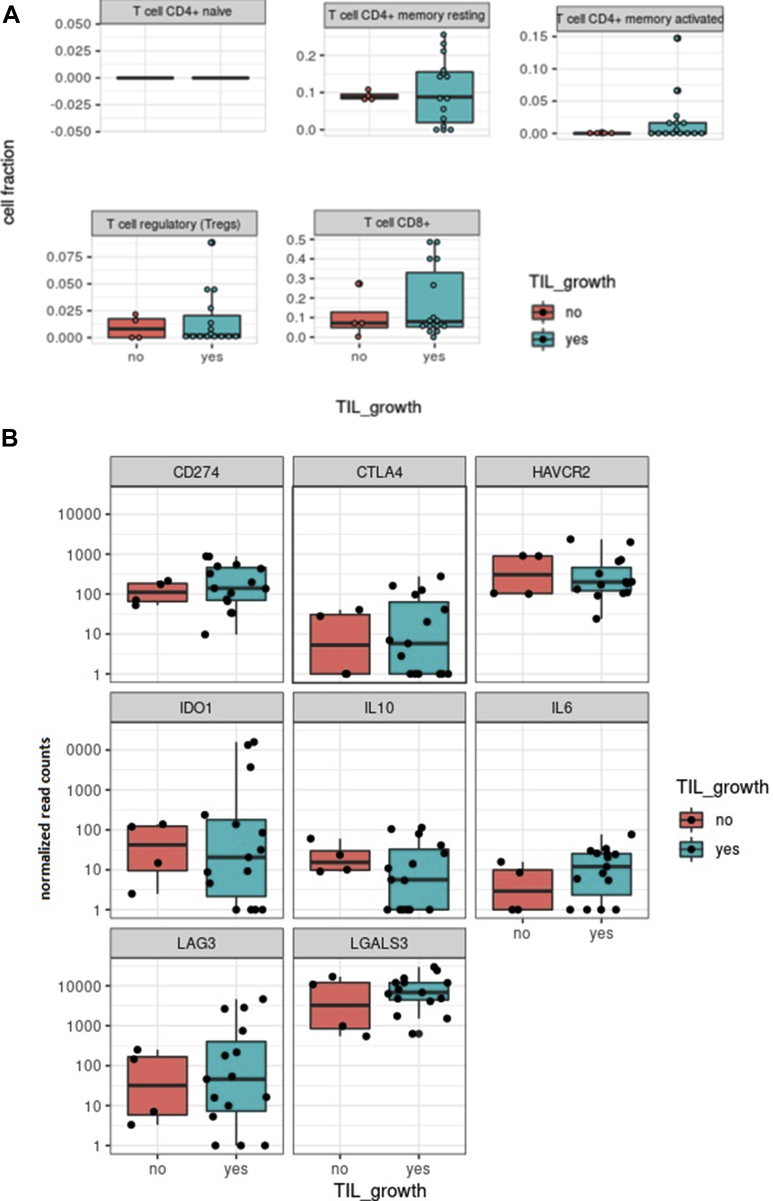
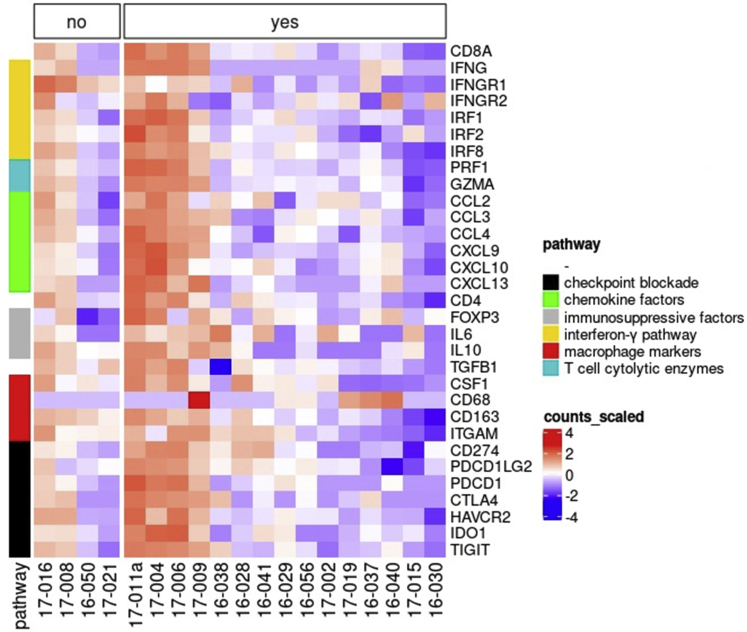
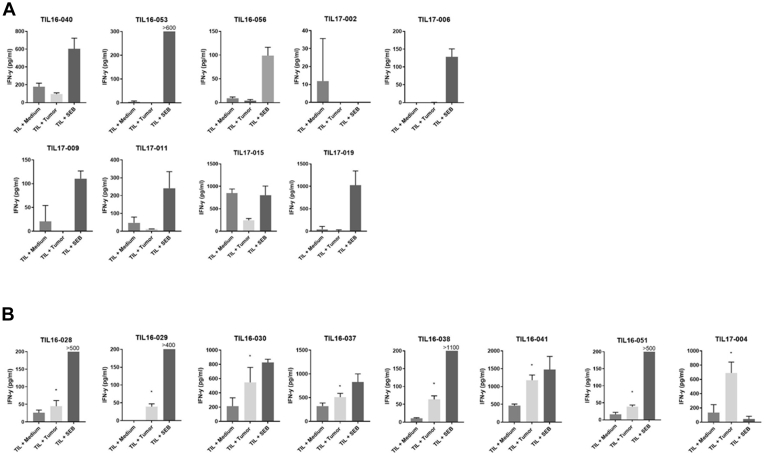
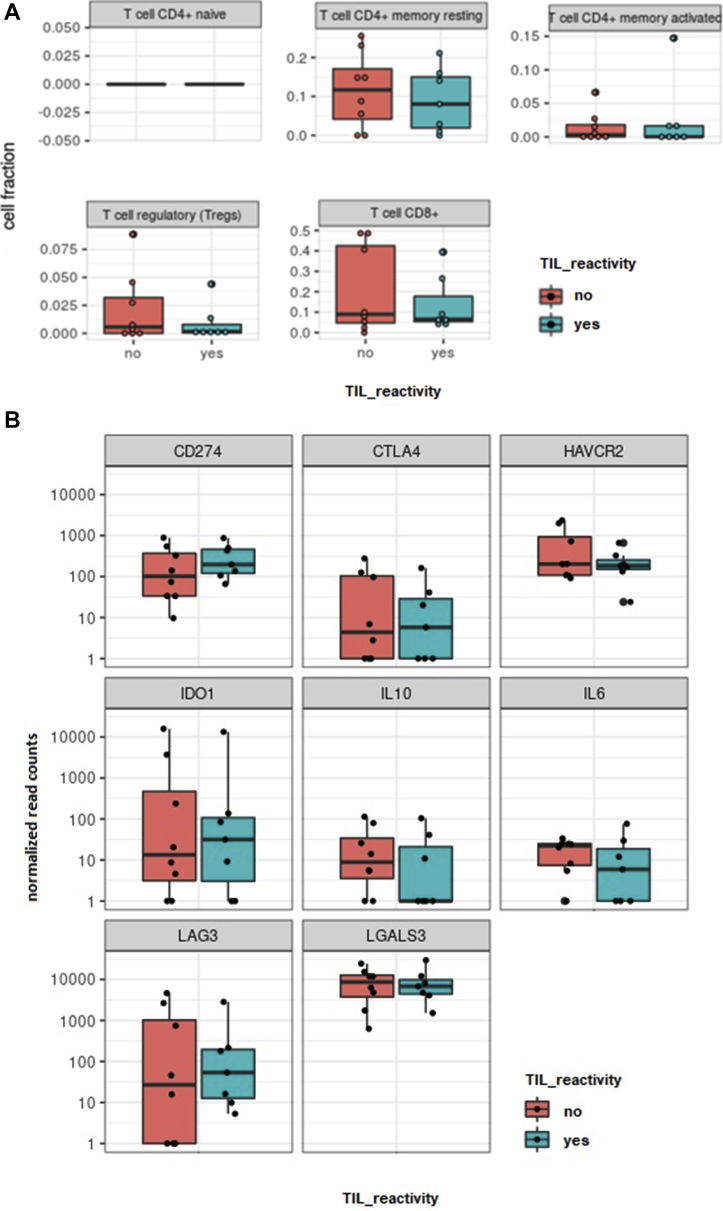
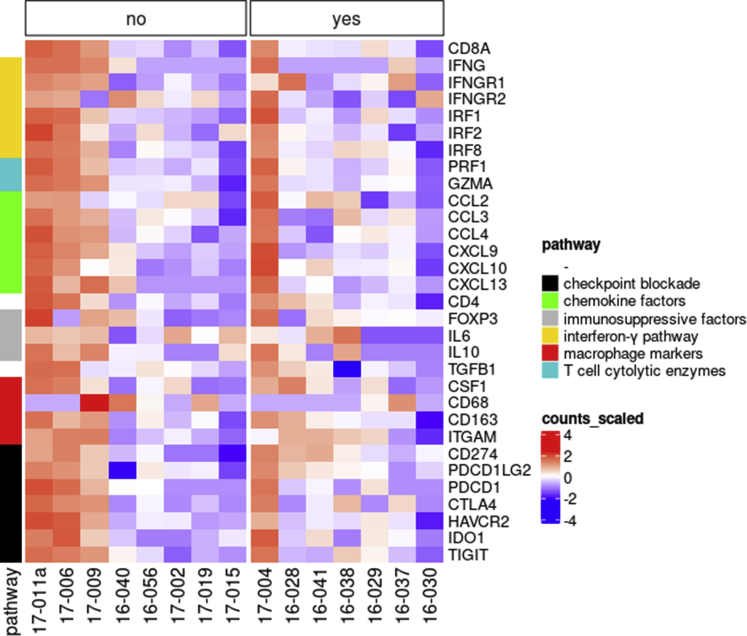
Direct culture of tumor parts led to successful TIL culture in 4 of 22 tumors (18%), enrichment of mononuclear cells gave rise to TILs in 5 of 12 tumors (42%), while preselection of CD3 T cells with magnetic beads resulted in TIL expansion in 17 of 25 tumors (68%). In 8 of 17 tumors (47%), the TIL cultures comprised UM-reactive T cells. The presence of UM-reactive T cells among TILs was not related to clinical, histologic, genetic, or immunological tumor characteristics. Interestingly, RNA-Seq analysis showed that approximately half of the UM tumors displayed an increased expression of immunomodulatory molecules related to T-cell suppression, such as , , , , and , potentially explaining why T cells require optimal removal of tumor components for expansion.
The need to separate TILs from their tumor microenvironment for their successful expansion and the presence of UM-reactive T cells among TILs suggests that these UM-reactive T cells are strongly suppressed in vivo and that UM is immunogenic. These findings indicate that adoptive TIL therapy could be an option as an adjuvant treatment in primary UM patients at high risk of developing metastatic disease.
评估能否从原发性葡萄膜黑色素瘤(UM)中获取扩增的肿瘤浸润淋巴细胞(TILs),以作为有发生转移性疾病风险患者的潜在辅助治疗手段。
实验性研究。
从30例患者中新鲜获取的原发性UM。
采用三种不同方法扩增TILs:(1)从新鲜肿瘤组织小片段直接培养;(2)通过酶消化制备单细胞组织并随后富集单核细胞;(3)使用磁珠选择CD3 T细胞。评估共刺激和抑制性T细胞标志物的表面表达以及T细胞对自体肿瘤细胞的反应性。将肿瘤的临床、组织病理学、遗传学和免疫学特征与扩增TILs的能力及其对自体肿瘤细胞的反应性进行比较。
从原发性UM扩增TILs的可行性、检测其对自体UM细胞的反应性以及评估免疫调节环境的影响。
肿瘤部分的直接培养在22个肿瘤中的4个(18%)成功培养出TILs,单核细胞富集在12个肿瘤中的5个(42%)产生了TILs,而用磁珠预选CD3 T细胞在25个肿瘤中的17个(68%)导致TILs扩增。在17个肿瘤中的8个(47%),TIL培养物包含对UM有反应的T细胞。TILs中对UM有反应的T细胞的存在与肿瘤的临床、组织学、遗传学或免疫学特征无关。有趣的是,RNA测序分析表明,大约一半的UM肿瘤显示出与T细胞抑制相关的免疫调节分子表达增加,如 、 、 、 和 ,这可能解释了为什么T细胞扩增需要最佳地去除肿瘤成分。
为成功扩增需要将TILs与其肿瘤微环境分离,且TILs中存在对UM有反应的T细胞,这表明这些对UM有反应的T细胞在体内受到强烈抑制,并且UM具有免疫原性。这些发现表明,过继性TIL治疗可能是有发生转移性疾病高风险的原发性UM患者辅助治疗的一种选择。