School of Medical Sciences, Universiti Sains Malaysia, Kota Bharu, Kelantan, Malaysia.
Department of Surgery, Hospital Universiti Sains Malaysia, Kota Bharu, Kelantan, Malaysia.
Sci Rep. 2022 Oct 17;12(1):17355. doi: 10.1038/s41598-022-22363-1.
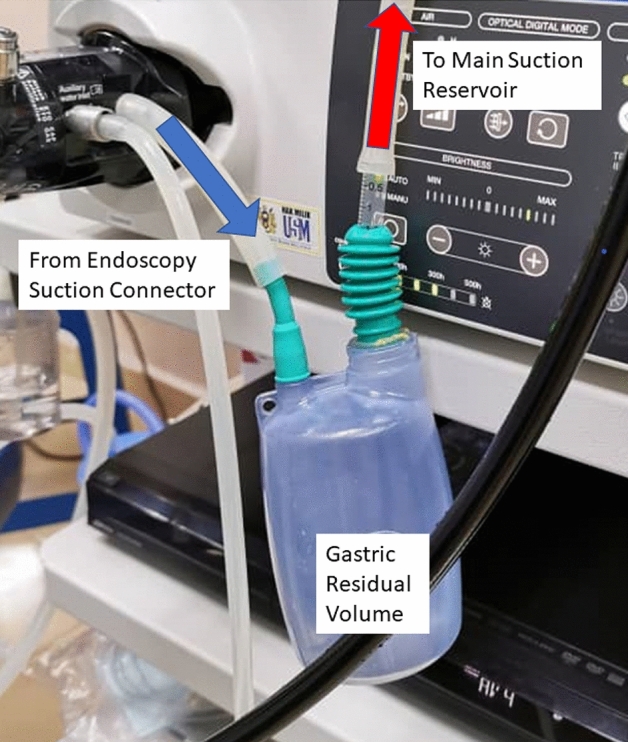
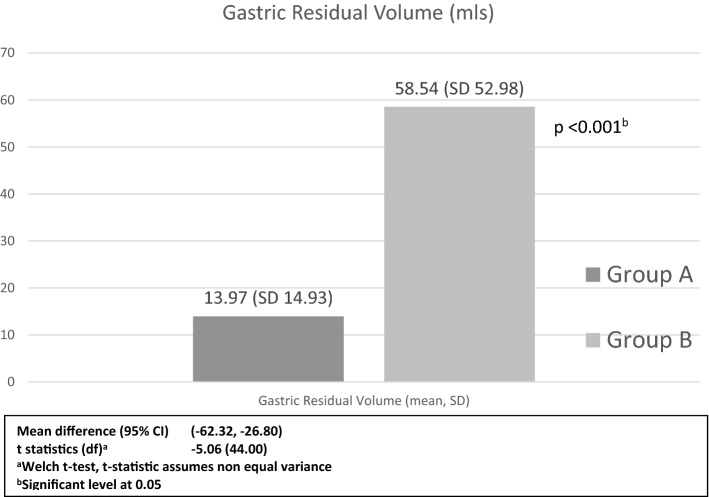
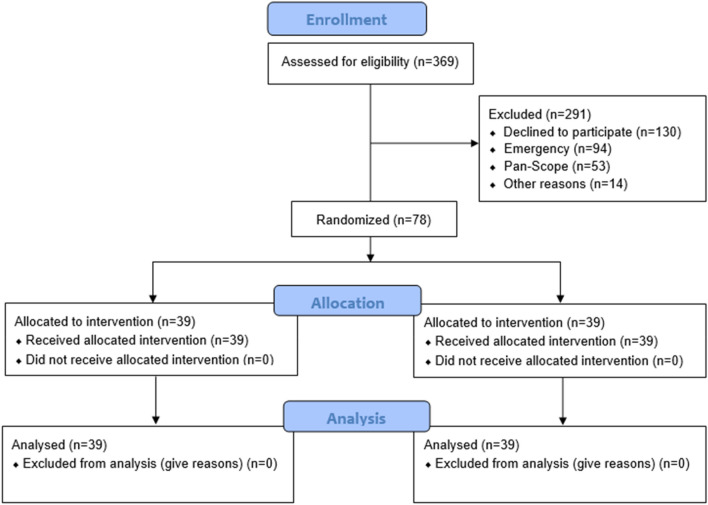
Clinical benefits and safety of carbohydrate loading pre-gastroscopy remain unclear. We aimed to determine the effects of a commercial carbohydrate-rich whey protein beverage versus plain water given pre-gastroscopy on gastric residual volume and well-being, and to determine adverse events. This was a single centre, single-blinded, parallel-group, sex-stratified randomized controlled trial. Participants were randomized either to carbohydrate-rich whey protein beverage group (Resource, Nestle Health Science) or control group (250 ml plain water) given pre-gastroscopy. Gastric contents were aspirated into a suction reservoir bottle to determine the gastric residual volume (GRV). Visual analogue scale (VAS) of well-being (anxiety, hunger, thirst, tiredness, and weakness) was compared before and after the intervention. Adverse events were also evaluated post-intervention. Of 369 screened, 78 participants (36 males, mean age 49 ± 14.3 years) were randomized. Compared with the control group, carbohydrate beverage was associated with significantly higher GRV (p < 0.001). Anxiety was less after intervention with carbohydrate beverage (p = 0.016), and after adjustment for confounders, fewer participants also experienced hunger (p = 0.043) and thirst (p = 0.021). No serious adverse events were reported with both interventions. Commercial carbohydrate-rich whey protein beverage is associated with higher gastric residual volume, better well-being and safe.Trial registration Clinicaltrial.gov. Identifier: NCT03948594, Date of registration: 14/05/2019.
临床获益和安全性碳水化合物负荷前胃镜检查仍不清楚。我们旨在确定商业碳水化合物丰富的乳清蛋白饮料与普通水对胃残留量和舒适度的影响,并确定不良事件。这是一项单中心、单盲、平行组、性别分层随机对照试验。参与者被随机分为富含碳水化合物的乳清蛋白饮料组(Resource,雀巢健康科学公司)或对照组(250 毫升普通水),在胃镜检查前给予。胃内容物被抽吸到储液瓶中以确定胃残留量(GRV)。干预前后比较舒适度的视觉模拟量表(VAS)(焦虑、饥饿、口渴、疲劳和虚弱)。干预后还评估了不良事件。在 369 名筛查者中,有 78 名参与者(36 名男性,平均年龄 49±14.3 岁)被随机分组。与对照组相比,碳水化合物饮料组的 GRV 显著更高(p<0.001)。干预后,碳水化合物饮料组的焦虑程度较低(p=0.016),并且在调整混杂因素后,更少的参与者还经历了饥饿(p=0.043)和口渴(p=0.021)。两种干预措施均未报告严重不良事件。商业碳水化合物丰富的乳清蛋白饮料与更高的胃残留量、更好的舒适度和安全性相关。试验注册Clinicaltrial.gov。标识符:NCT03948594,注册日期:2019 年 5 月 14 日。