Rosenthal M Zachary, McMahon Kibby, Greenleaf Anna S, Cassiello-Robbins Clair, Guetta Rachel, Trumbull Jacqueline, Anand Deepika, Frazer-Abel Emily S, Kelley Lisalynn
Department of Psychiatry and Behavior, Duke University Medical Center, Durham, NC, United States.
Department of Psychology and Neuroscience, Duke University, Durham, NC, United States.
Front Psychol. 2022 Oct 6;13:941898. doi: 10.3389/fpsyg.2022.941898. eCollection 2022.
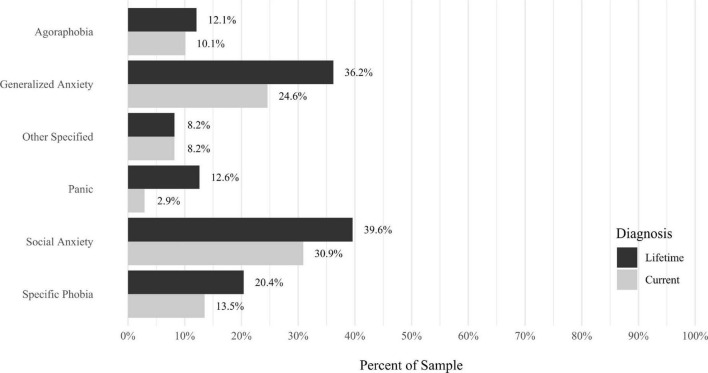
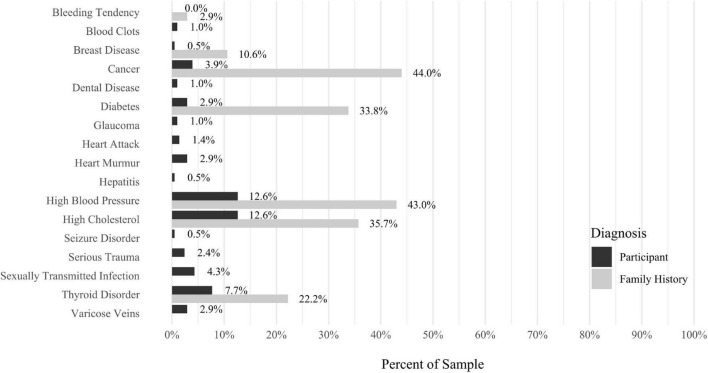
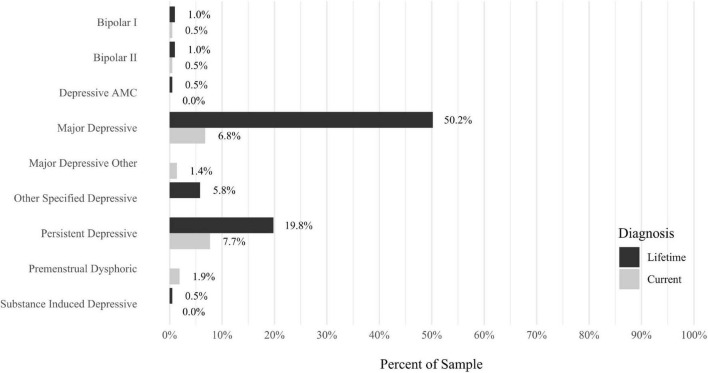
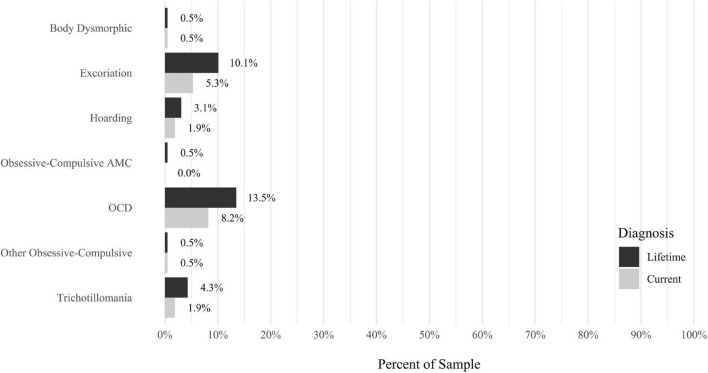
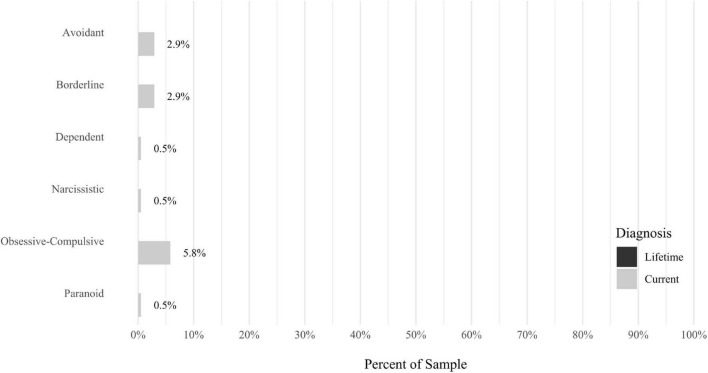
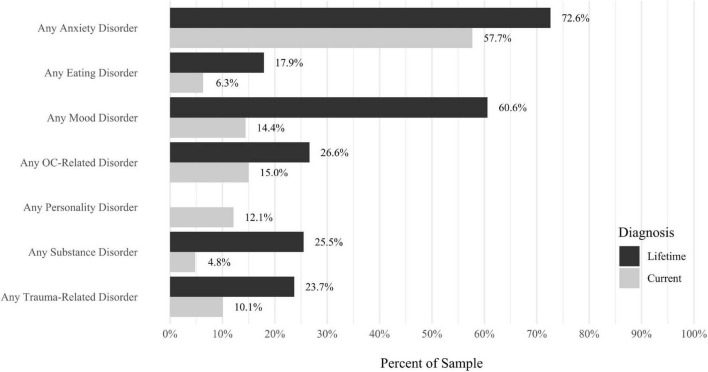
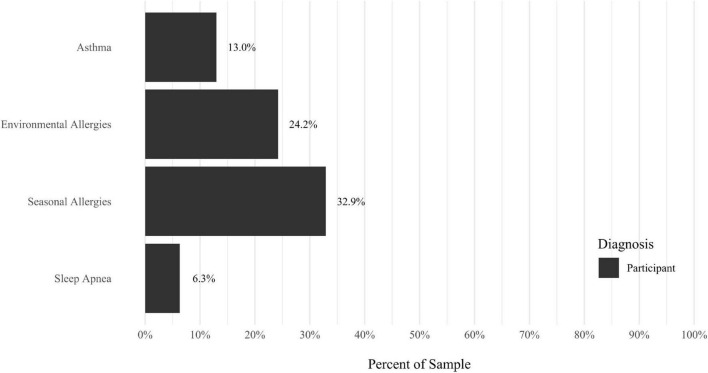
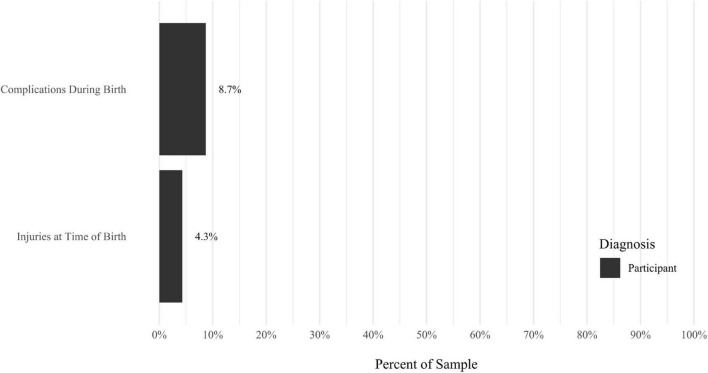
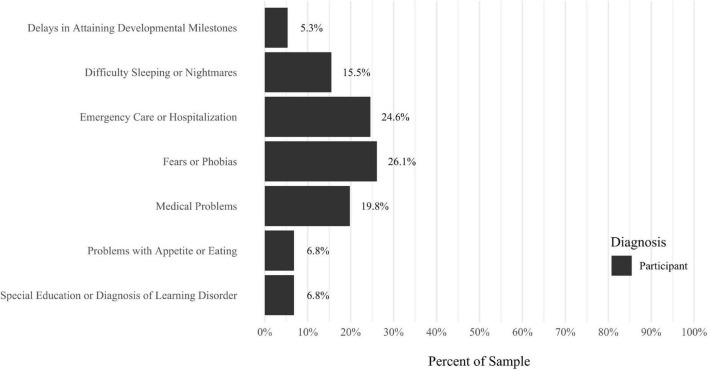
Misophonia is characterized by decreased tolerance to specific sounds and associated stimuli that causes significant psychological distress and impairment in daily functioning (Swedo et al., 2022). Aversive stimuli (often called "triggers") are commonly repetitive facial (e.g., nose whistling, sniffling, and throat clearing) or oral (e.g., eating, drinking, and mouth breathing) sounds produced by other humans. Few empirical studies examining the nature and features of misophonia have used clinician-rated structured diagnostic interviews, and none have examined the relationship between misophonia and psychiatric disorders in the Diagnostic and Statistical Manual-5th version (DSM-5; American Psychiatric Association, 2013). In addition, little is known about whether there are any medical health problems associated with misophonia. Accordingly, the purpose of the present study was to improve the phenotypic characterization of misophonia by investigating the psychiatric and medical health correlates of this newly defined disorder. Structured diagnostic interviews were used to assess rates of lifetime and current DSM-5 psychiatric disorders in a community sample of 207 adults. The three most commonly diagnosed current psychiatric disorders were: (1) social anxiety disorder, (2) generalized anxiety disorder, and (3) specific phobia. The three most common lifetime psychiatric disorders were major depressive disorder, social anxiety disorder, and generalized anxiety disorder. A series of multiple regression analyses indicated that, among psychiatric disorders that were correlated with misophonia, those that remained significant predictors of misophonia severity after controlling for age and sex were borderline personality disorder, obsessive compulsive disorder, and panic disorder. No medical health problems were significantly positively correlated with misophonia severity.
恐音症的特征是对特定声音及相关刺激的耐受性降低,这些声音和刺激会导致严重的心理困扰并损害日常功能(斯威多等人,2022年)。厌恶刺激(通常称为“触发因素”)通常是其他人发出的重复性面部声音(如鼻子呼啸声、抽鼻子声和清嗓子声)或口腔声音(如进食、饮水和口呼吸声)。很少有实证研究使用临床医生评定的结构化诊断访谈来研究恐音症的性质和特征,而且没有一项研究考察过恐音症与《精神疾病诊断与统计手册》第5版(DSM-5;美国精神病学协会,2013年)中精神障碍之间的关系。此外,对于是否存在与恐音症相关的任何医疗健康问题知之甚少。因此,本研究的目的是通过调查这种新定义疾病的精神和医疗健康相关因素,来改善对恐音症的表型特征描述。我们使用结构化诊断访谈来评估207名成年人社区样本中终生和当前的DSM-5精神障碍发生率。当前最常诊断出的三种精神障碍是:(1)社交焦虑障碍,(2)广泛性焦虑障碍,(3)特定恐惧症。三种最常见的终生精神障碍是重度抑郁症、社交焦虑障碍和广泛性焦虑障碍。一系列多元回归分析表明,在与恐音症相关的精神障碍中,在控制年龄和性别后,仍为恐音症严重程度显著预测因素的是边缘性人格障碍、强迫症和惊恐障碍。没有任何医疗健康问题与恐音症严重程度呈显著正相关。