Zając Patrycja, Kaziród-Wolski Karol, Oleś Izabela, Sielski Janusz, Siudak Zbigniew
The Reumatology Department, Province Hospital in Konskie, Poland ul. Gimnazjalna 41B, 26-200 Końskie, Poland.
Collegium Medicum, Jan Kochanowski University in Kielce, al. IX Wieków Kielc 19A, 25-369 Kielce, Poland.
J Cardiovasc Dev Dis. 2022 Oct 17;9(10):356. doi: 10.3390/jcdd9100356.
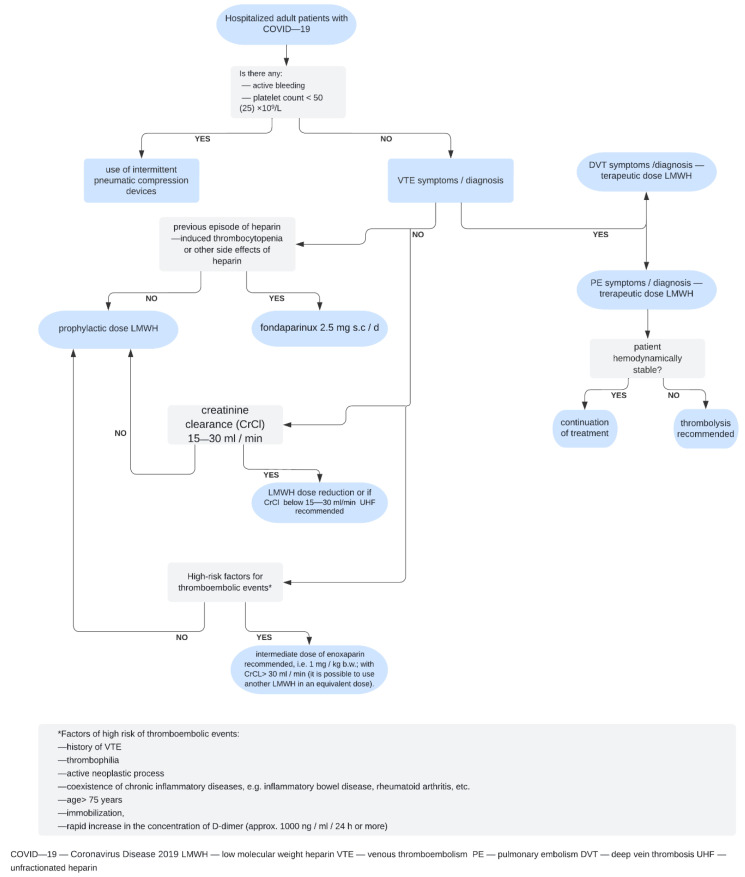
An impaired fibrinolytic process has been demonstrated in patients infected with SARS-CoV-2, including those in severe or critical condition. Disruption of fibrinolysis leads to fibrin deposition, which exacerbates inflammation and fibrosis and damages the pulmonary surfactant. Numerous authors point out the different course of coagulopathy in patients with COVID-19. It is reported that they may have a state of secondary hyperfibrinolysis, which may explain, at least in part, the increased incidence of venous thromboembolism, even among those patients already receiving appropriate anticoagulant treatment. This raises the question of whether current guidelines for the prevention and treatment of embolic-thrombotic complications, among patients with severe COVID-19, are sufficient. Some studies show evidence of clinical improvement in patients who have received fibrinolytic therapy, beyond the current indications for its implementation. However, when considering the inclusion of systemic fibrinolytic therapy, the benefits of such treatment should always be weighed over the risk of adverse effects. Thromboelastography and rotational thromboelastometry can be helpful in making such decisions. The purpose of this study was to review the current knowledge regarding fibrinolysis and its role in the treatment of patients with severe COVID-19, including those with thromboembolic complications.
在感染严重急性呼吸综合征冠状病毒2(SARS-CoV-2)的患者中,包括那些处于重症或危重症状态的患者,已证实存在纤维蛋白溶解过程受损的情况。纤维蛋白溶解的破坏会导致纤维蛋白沉积,这会加剧炎症和纤维化,并损害肺表面活性物质。众多作者指出了新型冠状病毒肺炎(COVID-19)患者凝血病的不同病程。据报道,他们可能处于继发性高纤维蛋白溶解状态,这至少可以部分解释静脉血栓栓塞发生率的增加,即使在那些已经接受适当抗凝治疗的患者中也是如此。这就提出了一个问题,即目前针对重症COVID-19患者的血栓栓塞并发症预防和治疗指南是否足够。一些研究表明,接受纤维蛋白溶解治疗的患者有临床改善的证据,超出了目前实施该治疗的指征。然而,在考虑纳入全身纤维蛋白溶解治疗时,这种治疗的益处应始终与不良反应的风险相权衡。血栓弹性描记法和旋转血栓弹性测定法有助于做出此类决策。本研究的目的是回顾目前关于纤维蛋白溶解及其在重症COVID-19患者治疗中的作用的知识,包括那些有血栓栓塞并发症的患者。