
开发用于研究新治疗方法的严重急性呼吸综合征冠状病毒诱导的急性肺损伤体外模型。
Development of an In Vitro Model of SARS-CoV-Induced Acute Lung Injury for Studying New Therapeutic Approaches.
作者信息
Shevtsova Yulia A, Goryunov Kirill V, Babenko Valentina A, Pevzner Irina B, Vtorushina Valentina V, Inviyaeva Evgeniya V, Krechetova Lyubov V, Zorova Ljubava D, Plotnikov Egor Y, Zorov Dmitry B, Sukhikh Gennady T, Silachev Denis N
机构信息
V.I. Kulakov National Medical Research Center of Obstetrics, Gynecology and Perinatology, 117997 Moscow, Russia.
Faculty of Bioengineering and Bioinformatics, Lomonosov Moscow State University, 119992 Moscow, Russia.
出版信息
Antioxidants (Basel). 2022 Sep 27;11(10):1910. doi: 10.3390/antiox11101910.
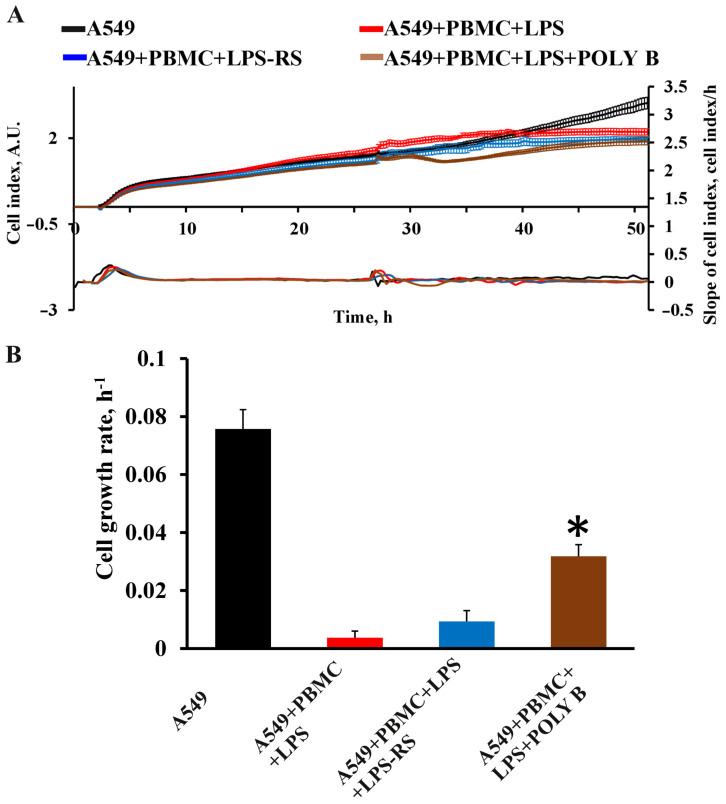
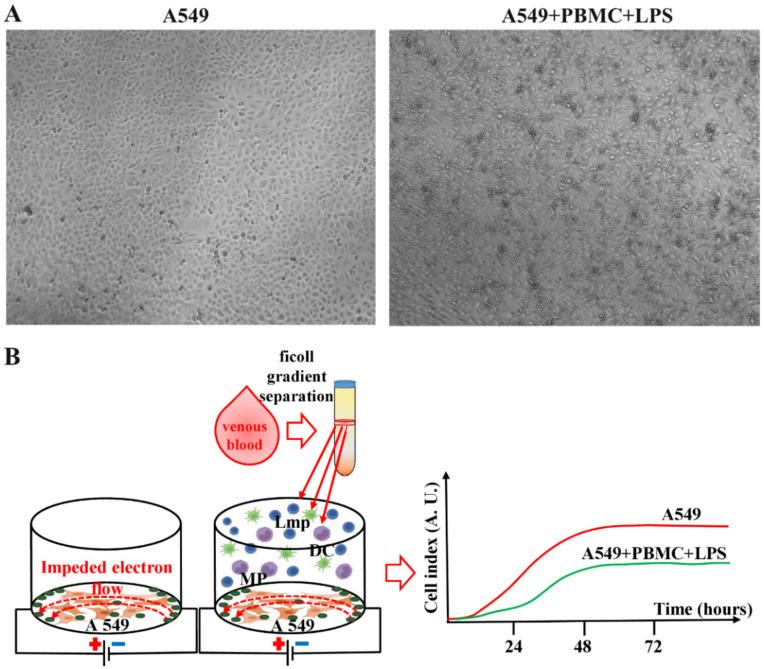
One of the causes of death of patients infected by SARS-CoV-2 is the induced respiratory failure caused by excessive activation of the immune system, the so-called "cytokine storm", leading to damage to lung tissue. In vitro models reproducing various stages of the disease can be used to explore the pathogenetic mechanisms and therapeutic approaches to treating the consequences of a cytokine storm. We have developed an in vitro test system for simulating damage to the pulmonary epithelium as a result of the development of a hyperinflammatory reaction based on the co-cultivation of pulmonary epithelial cells (A549 cells) and human peripheral blood mononuclear cells (PBMC) primed with lipopolysaccharide (LPS). In this model, after 24 h of co-cultivation, a sharp decrease in the rate of proliferation of A549 cells associated with the intrinsic development of oxidative stress and, ultimately, with the induction of PANoptotic death were observed. There was a significant increase in the concentration of 40 cytokines/chemokines in a conditioned medium, including TNF-α, IFN-α, IL-6, and IL-1a, which corresponded to the cytokine profile in patients with severe manifestation of COVID-19. In order to verify the model, the analysis of the anti-inflammatory effects of well-known substances (dexamethasone, LPS from Rhodobacter sphaeroides (LPS-RS), polymyxin B), as well as multipotent mesenchymal stem cells (MSC) and MSC-derived extracellular vesicles (EVs) was carried out. Dexamethasone and polymyxin B restored the proliferative activity of A549 cells and reduced the concentration of proinflammatory cytokines. MSC demonstrated an ambivalent effect through stimulated production of both pro-inflammatory cytokines and growth factors that regenerate lung tissue. LPS-RS and EVs showed no significant effect. The developed test system can be used to study molecular and cellular pathological processes and to evaluate the effectiveness of various therapeutic approaches for the correction of hyperinflammatory response in COVID-19 patients.
感染新型冠状病毒(SARS-CoV-2)的患者死亡原因之一是免疫系统过度激活引发的呼吸衰竭,即所谓的“细胞因子风暴”,进而导致肺组织损伤。可利用再现疾病各个阶段的体外模型来探究细胞因子风暴后果的发病机制及治疗方法。我们基于肺上皮细胞(A549细胞)与人外周血单个核细胞(PBMC)共培养,开发了一种体外测试系统,该系统可模拟因高炎症反应导致的肺上皮损伤,其中PBMC用脂多糖(LPS)进行预处理。在该模型中,共培养24小时后,观察到A549细胞增殖速率急剧下降,这与氧化应激的内在发展相关,最终与PANoptotic死亡的诱导有关。条件培养基中40种细胞因子/趋化因子的浓度显著增加,包括肿瘤坏死因子-α(TNF-α)、干扰素-α(IFN-α)、白细胞介素-6(IL-6)和白细胞介素-1α(IL-1α),这与新冠肺炎重症患者的细胞因子谱相符。为验证该模型,我们对知名物质(地塞米松、球形红杆菌脂多糖(LPS-RS)、多粘菌素B)以及多能间充质干细胞(MSC)和MSC衍生的细胞外囊泡(EVs)的抗炎作用进行了分析。地塞米松和多粘菌素B恢复了A549细胞的增殖活性,并降低了促炎细胞因子的浓度。MSC表现出矛盾的作用,它既刺激了促炎细胞因子的产生,又刺激了可使肺组织再生的生长因子的产生。LPS-RS和EVs未显示出显著作用。所开发的测试系统可用于研究分子和细胞病理过程,并评估各种治疗方法对新冠肺炎患者高炎症反应进行纠正的有效性。
 Zotero 插件