Laboratorio de Biología Celular del Cáncer, Facultad de Ciencias Químico Biológicas, Universidad Autónoma de Guerrero, Chilpancingo 39090, Mexico.
Laboratorio Estatal de Salud Pública, Secretaría de Salud, Chilpancingo 39715, Mexico.
Cells. 2022 Oct 14;11(20):3230. doi: 10.3390/cells11203230.
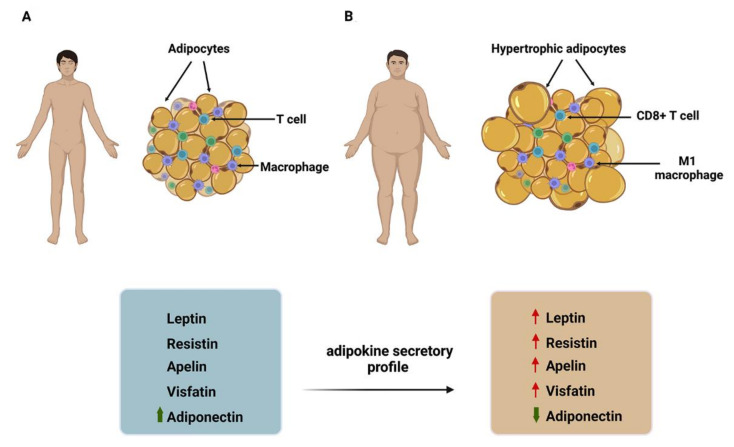
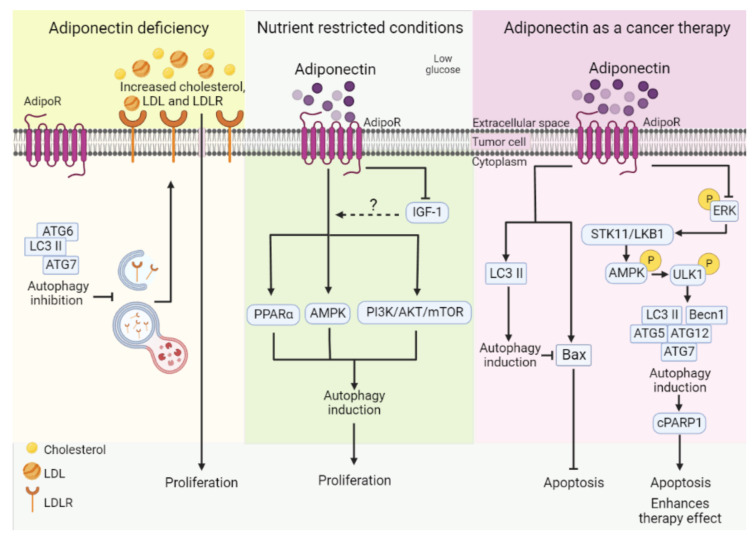
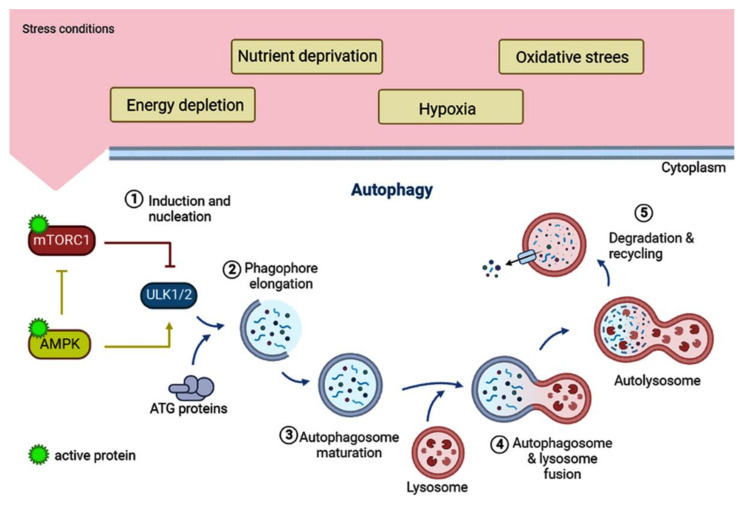
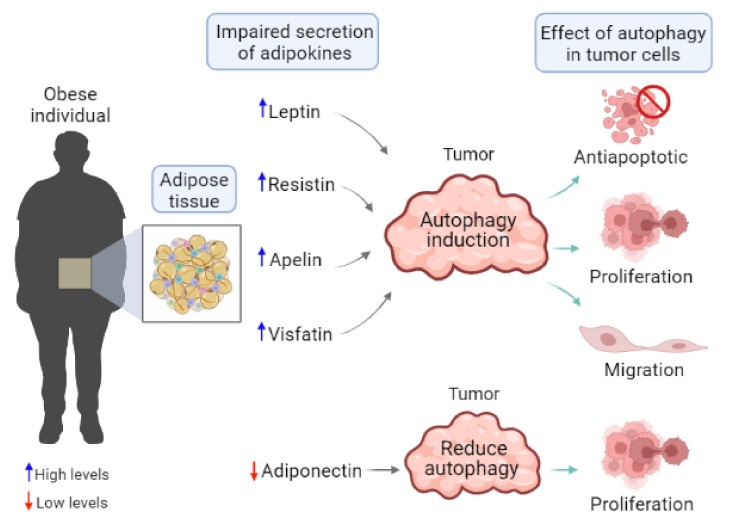
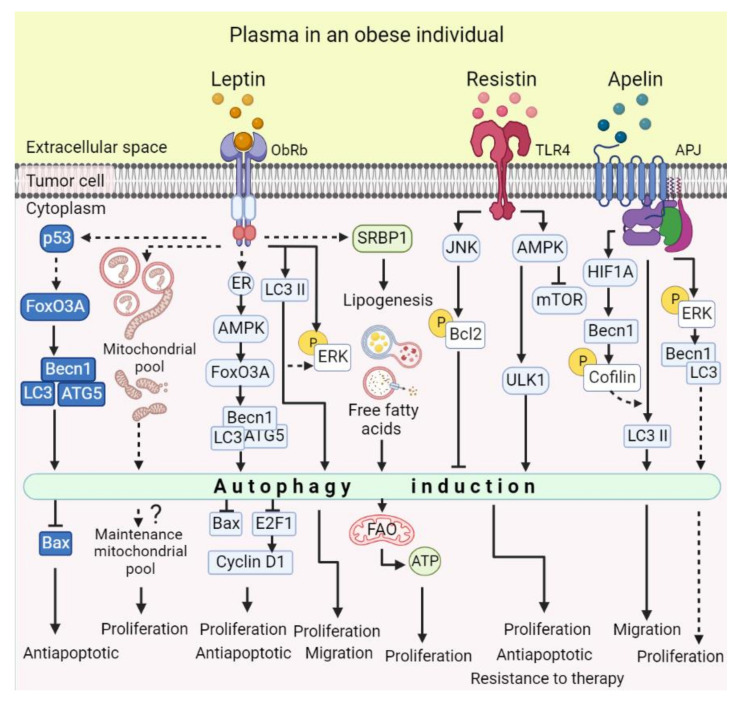
Excess body weight and obesity have become significant risk factors for cancer development. During obesity, adipose tissue alters its biological function, deregulating the secretion of bioactive factors such as hormones, cytokines, and adipokines that promote an inflammatory microenvironment conducive to carcinogenesis and tumor progression. Adipokines regulate tumor processes such as apoptosis, proliferation, migration, angiogenesis, and invasion. Additionally, it has been found that they can modulate autophagy, a process implicated in tumor suppression in healthy tissue and cancer progression in established tumors. Since the tumor-promoting role of autophagy has been well described, the process has been suggested as a therapeutic target in cancer. However, the effects of targeting autophagy might depend on the tumor type and microenvironmental conditions, where circulating adipokines could influence the role of autophagy in cancer. Here, we review recent evidence related to the role of adipokines in cancer cell autophagy in an effort to understand the tumor response in the context of obesity under the assumption of an autophagy-targeting treatment.
超重和肥胖已成为癌症发展的重要危险因素。在肥胖过程中,脂肪组织改变其生物学功能,调节生物活性因子(如激素、细胞因子和脂肪因子)的分泌,促进有利于致癌和肿瘤进展的炎症微环境。脂肪因子调节肿瘤过程,如细胞凋亡、增殖、迁移、血管生成和侵袭。此外,已经发现它们可以调节自噬,自噬过程在健康组织中抑制肿瘤,在已建立的肿瘤中促进肿瘤进展。由于自噬的促肿瘤作用已得到充分描述,因此该过程被认为是癌症治疗的靶点。然而,靶向自噬的效果可能取决于肿瘤类型和微环境条件,其中循环脂肪因子可能影响自噬在癌症中的作用。在这里,我们综述了与脂肪因子在癌症细胞自噬中的作用相关的最新证据,以期在假设自噬靶向治疗的情况下,根据肥胖的情况理解肿瘤的反应。