Van de Gucht Melissa, Dufait Inès, Kerkhove Lisa, Corbet Cyril, de Mey Sven, Jiang Heng, Law Ka Lun, Gevaert Thierry, Feron Olivier, De Ridder Mark
Department of Radiotherapy, Universitair Ziekenhuis Brussel, Vrije Universiteit Brussel, Laarbeeklaan 101, 1090 Brussels, Belgium.
Pole of Pharmacology and Therapeutics (FATH), Institut de Recherche Expérimentale et Clinique (IREC), UCLouvain, Avenue Mounier 53, 1200 Brussels, Belgium.
Cancers (Basel). 2022 Oct 15;14(20):5060. doi: 10.3390/cancers14205060.
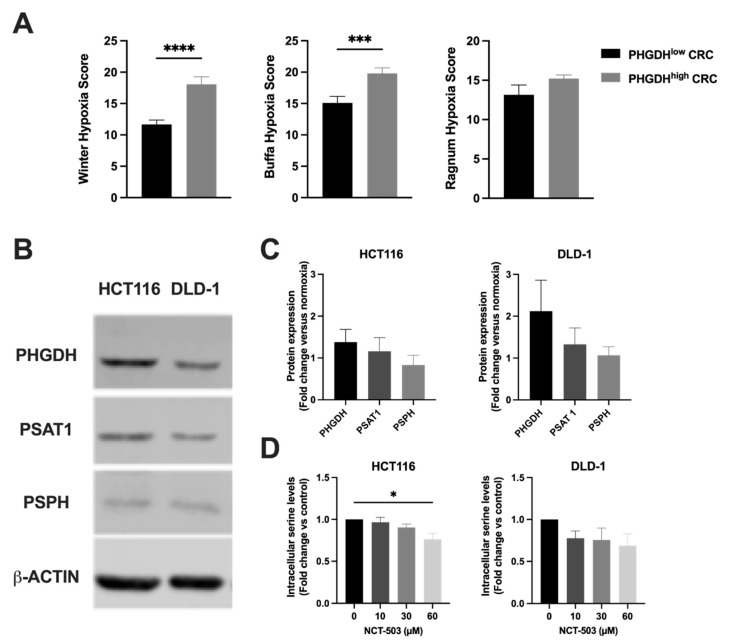
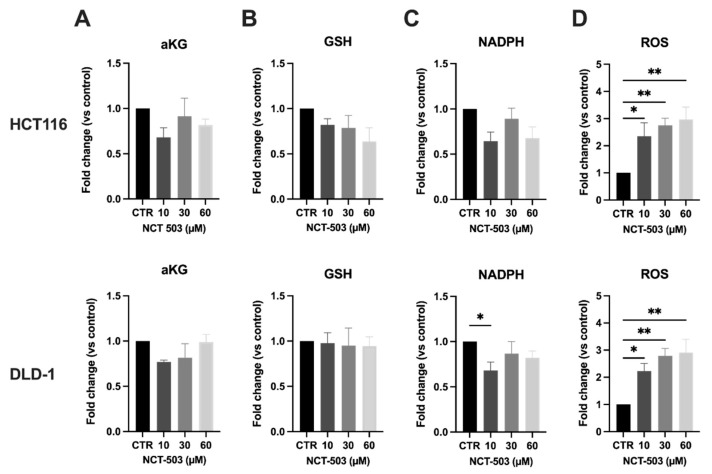
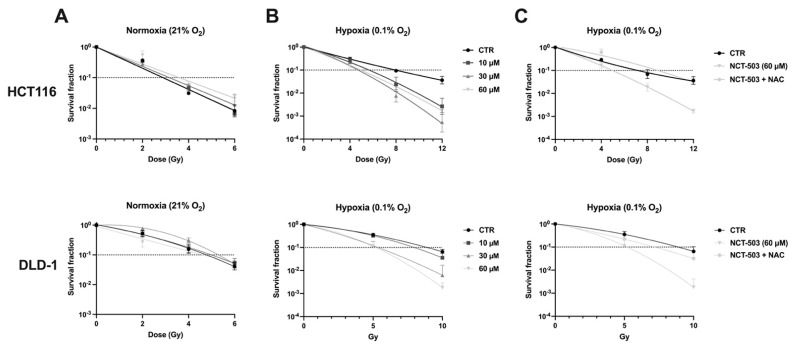
Augmented de novo serine synthesis activity is increasingly apparent in distinct types of cancers and has mainly sparked interest by investigation of phosphoglycerate dehydrogenase (PHGDH). Overexpression of PHGDH has been associated with higher tumor grade, shorter relapse time and decreased overall survival. It is well known that therapeutic outcomes in cancer patients can be improved by reprogramming metabolic pathways in combination with standard treatment options, for example, radiotherapy. In this study, possible metabolic changes related to radioresponse were explored upon PHGDH inhibition. Additionally, we evaluated whether PHGDH inhibition could improve radioresponse in human colorectal cancer cell lines in both aerobic and radiobiological relevant hypoxic conditions. Dysregulation of reactive oxygen species (ROS) homeostasis and dysfunction in mitochondrial energy metabolism and oxygen consumption rate were indicative of potential radiomodulatory effects. We demonstrated that PHGDH inhibition radiosensitized hypoxic human colorectal cancer cells while leaving intrinsic radiosensitivity unaffected. In a xenograft model, the first hints of additive effects between PHGDH inhibition and radiotherapy were demonstrated. In conclusion, this study is the first to show that modulation of de novo serine biosynthesis enhances radioresponse in hypoxic colorectal cancer cells, mainly mediated by increased levels of intracellular ROS.
在不同类型的癌症中,从头合成丝氨酸的活性增强愈发明显,而这主要是通过对磷酸甘油酸脱氢酶(PHGDH)的研究引发了人们的兴趣。PHGDH的过表达与肿瘤分级较高、复发时间较短以及总生存期缩短有关。众所周知,通过重新编程代谢途径并结合标准治疗方案(例如放疗),可以改善癌症患者的治疗效果。在本研究中,我们探讨了PHGDH抑制后与放射反应相关的可能代谢变化。此外,我们评估了在有氧和放射生物学相关的缺氧条件下,PHGDH抑制是否能改善人结肠癌细胞系的放射反应。活性氧(ROS)稳态失调以及线粒体能量代谢和氧消耗率功能障碍表明存在潜在的放射调节作用。我们证明,PHGDH抑制使缺氧的人结肠癌细胞对放疗敏感,同时不影响其固有放射敏感性。在异种移植模型中,首次证明了PHGDH抑制与放疗之间存在相加效应。总之,本研究首次表明,从头合成丝氨酸生物合成的调节增强了缺氧结肠癌细胞的放射反应,这主要是由细胞内ROS水平升高介导的。