Nuclear Medicine Department, Institut Jules Bordet, Université Libre de Bruxelles (ULB), 1070 Brussels, Belgium.
Laboratory of Oncology and Experimental Surgery, Institut Jules Bordet, Université Libre de Bruxelles (ULB), 1070 Brussels, Belgium.
Int J Mol Sci. 2022 Oct 15;23(20):12369. doi: 10.3390/ijms232012369.
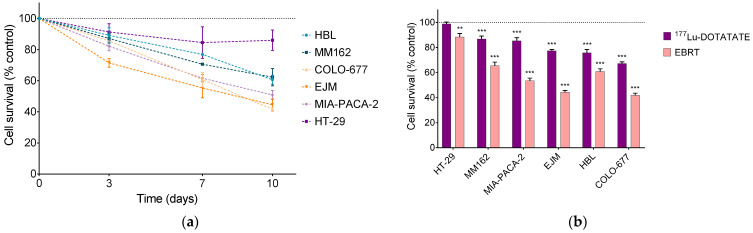
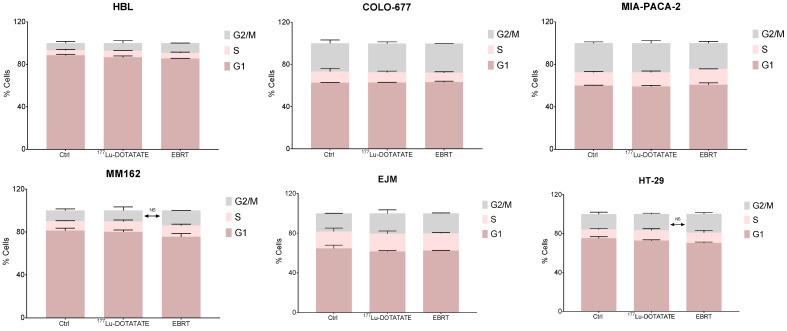
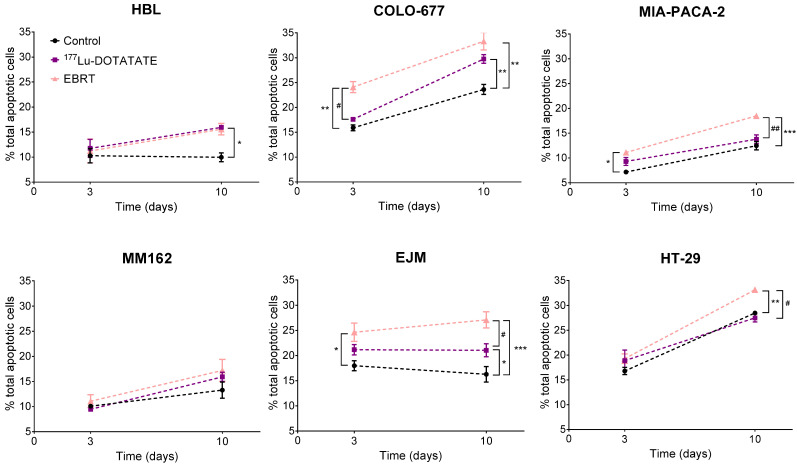
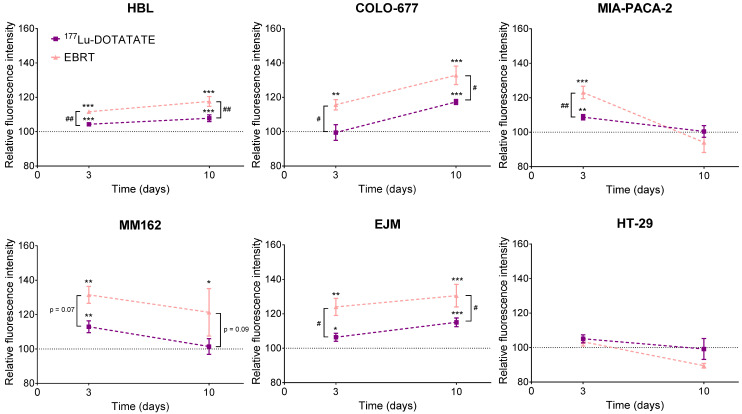
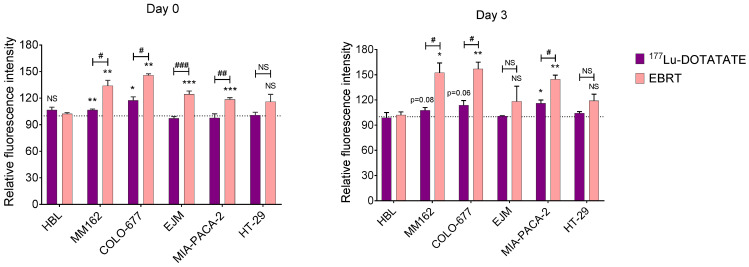
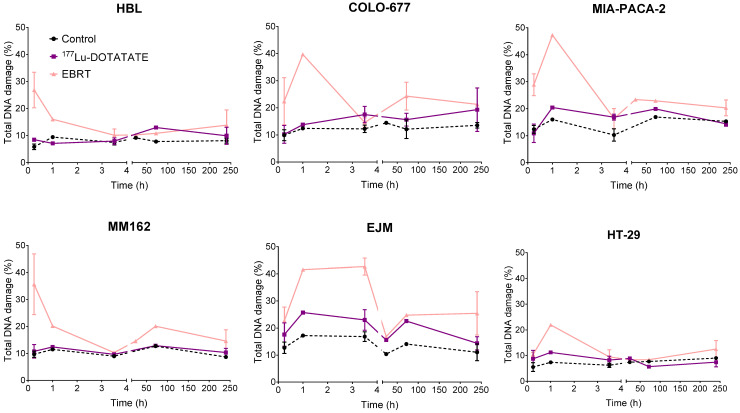
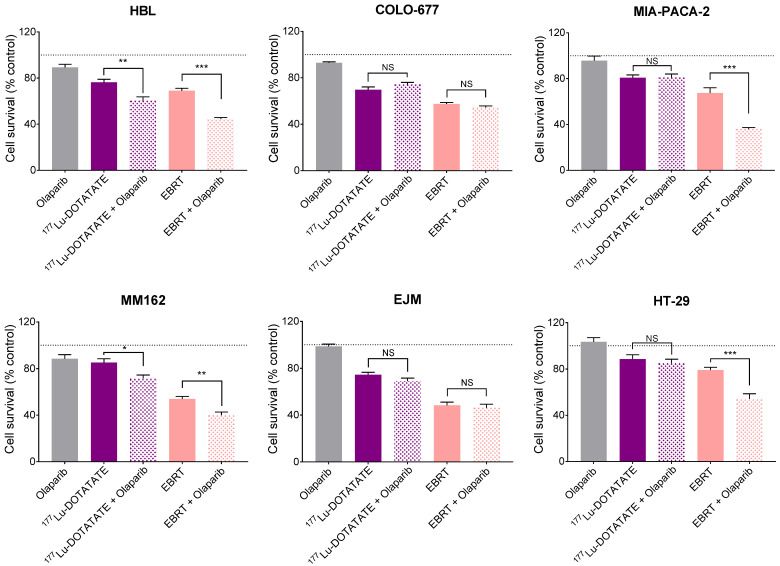
Radionuclide Therapy (RNT) with Lu-DOTATATE targeting somatostatin receptors (SSTRs) in neuroendocrine tumours (NET) has been successfully used in routine clinical practice, mainly leading to stable disease. Radiobiology holds promise for RNT improvement but is often extrapolated from external beam radiation therapy (EBRT) studies despite differences in these two radiation-based treatment modalities. In a panel of six human cancer cell lines expressing SSTRs, common radiobiological endpoints (i.e., cell survival, cell cycle, cell death, oxidative stress and DNA damage) were evaluated over time in Lu-DOTATATE- and EBRT-treated cells, as well as the radiosensitizing potential of poly (ADP-ribose) polymerase inhibition (PARPi). Our study showed that common radiobiological mechanisms were induced by both Lu-DOTATATE and EBRT, but to a different extent and/or with variable kinetics, including in the DNA damage response. A higher radiosensitizing potential of PARPi was observed for EBRT compared to Lu-DOTATATE. Our data reinforce the need for dedicated RNT radiobiology studies, in order to derive its maximum therapeutic benefit.
放射性核素治疗 (RNT) 用 Lu-DOTATATE 靶向神经内分泌肿瘤 (NET) 的生长抑素受体 (SSTRs),已在常规临床实践中成功应用,主要导致疾病稳定。放射生物学有望改善 RNT,但经常从外照射放射治疗 (EBRT) 研究中推断出来,尽管这两种基于辐射的治疗方式存在差异。在表达 SSTR 的六个人类癌细胞系中,评估了 Lu-DOTATATE 和 EBRT 处理的细胞中常见的放射生物学终点(即细胞存活、细胞周期、细胞死亡、氧化应激和 DNA 损伤)随时间的变化,以及聚 (ADP-核糖) 聚合酶抑制 (PARPi) 的放射增敏作用。我们的研究表明,Lu-DOTATATE 和 EBRT 均可诱导常见的放射生物学机制,但程度和/或动力学不同,包括 DNA 损伤反应。与 Lu-DOTATATE 相比,EBRT 时 PARPi 的放射增敏作用更高。我们的数据强调了需要进行专门的 RNT 放射生物学研究,以获得最大的治疗效益。