Helmberger Thomas, Lucatelli Pierleone, Pereira Philippe L, Gjoreski Aleksandar, Jovanoska Ivona, Bansaghi Zoltan, Spiliopoulos Stavros, Carchesio Francesca, Arnold Dirk, Baierl Andreas, Zeka Bleranda, Kaufmann Nathalie C, Taieb Julien, Iezzi Roberto
Institut für Radiologie, Neuroradiologie und Minimal-Invasive Therapie, München Klinik Bogenhausen, Englschalkinger Str. 77, 81925 München, Germany.
Vascular and Interventional Radiology Unit, Department of Radiological Oncological and Anatomopathological Sciences, Sapienza University of Rome, 00161 Roma, Italy.
J Clin Med. 2022 Oct 19;11(20):6178. doi: 10.3390/jcm11206178.
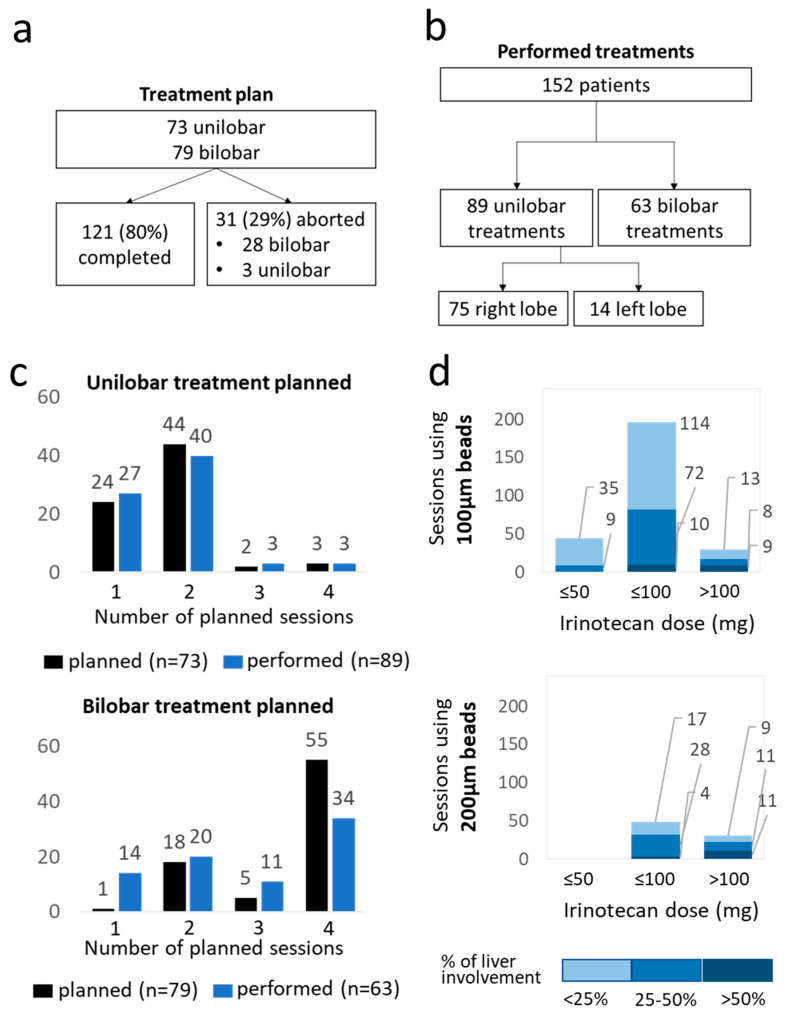
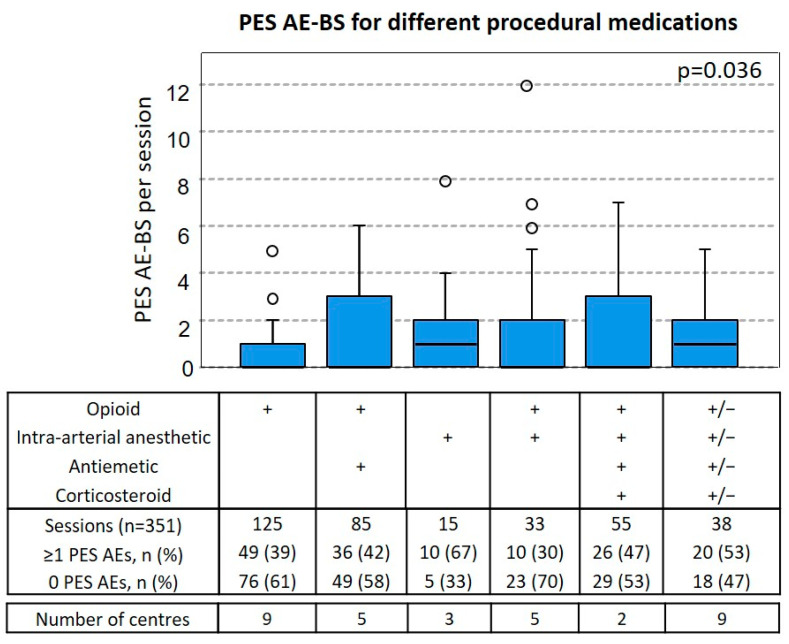
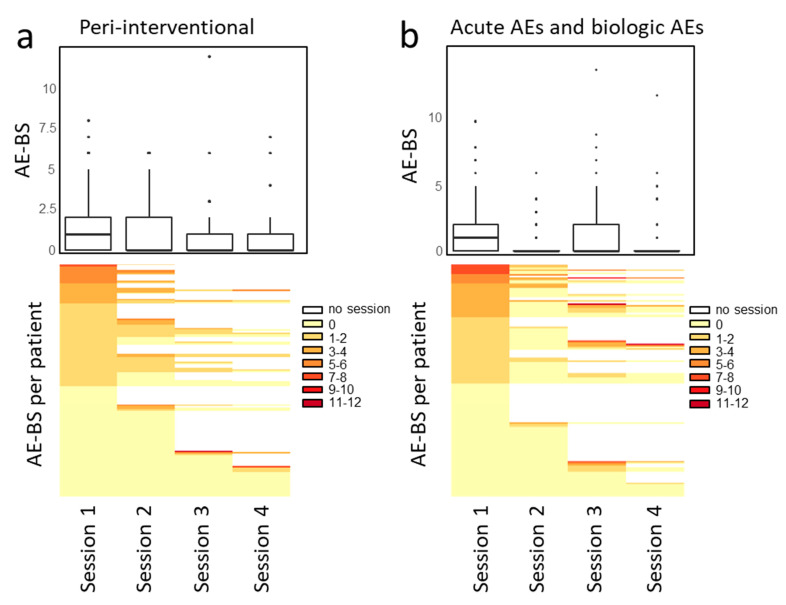
CIREL, a prospective, Europe-wide, observational study aimed to assess the real-world feasibility and tolerability of irinotecan-based transarterial chemoembolization (LP-irinotecan TACE) for unresectable colorectal cancer liver metastases with regard to the treatment plan and adverse events (AEs). CIREL enrolled 152 eligible patients (≥18 years) with liver-only or dominant metastases treated with LP-irinotecan TACE following a multidisciplinary tumor board decision. Data were prospectively collected for baseline, the number of planned and performed sessions, and technical information and safety according to CTCAE 4.03/5.0. Results from 351 analyzed treatment sessions showed technical success for 99% of sessions, and 121 patients (79%) completed all planned sessions. Further, 60% of sessions were performed using opioids, 4% intra-arterial anesthetics, and 25% both. Additionally, 60% of patients experienced at least one peri-interventional AE of any grade; 8% of grade 3−4. Occurrence of AEs was related to larger liver-involvement (p < 0.001), bi-lobar disease (p = 0.002), and larger beads (p < 0.001). Using corticosteroids together with antiemetics showed reduced and lower grade vomiting (p = 0.01). LP-irinotecan TACE was tolerated well and had a high proportion of completed treatment plans. This minimally invasive locoregional treatment can be used together with concomitant systemic therapy or ablation.
CIREL是一项前瞻性、全欧洲范围的观察性研究,旨在评估基于伊立替康的经动脉化疗栓塞术(脂质体伊立替康TACE)用于不可切除的结直肠癌肝转移患者时在治疗方案和不良事件(AE)方面的真实世界可行性和耐受性。CIREL纳入了152例符合条件(≥18岁)的仅肝脏转移或主要为肝脏转移的患者,这些患者在多学科肿瘤委员会做出决定后接受了脂质体伊立替康TACE治疗。前瞻性收集了基线数据、计划和实施的疗程数,以及根据CTCAE 4.03/5.0的技术信息和安全性数据。对351个分析的治疗疗程的结果显示,99%的疗程技术成功,121例患者(79%)完成了所有计划的疗程。此外,60%的疗程使用了阿片类药物,4%使用了动脉内麻醉剂,25%两者都使用。此外,60%的患者经历了至少一次任何级别的围介入期AE;8%为3-4级。AE的发生与更大的肝脏受累(p<0.001)、双侧病变(p=0.002)和更大的微球(p<0.001)有关。联合使用皮质类固醇和止吐药可减少呕吐并降低呕吐分级(p=0.01)。脂质体伊立替康TACE耐受性良好,完成治疗计划的比例很高。这种微创局部区域治疗可与全身治疗或消融联合使用。