Lv Zhenbing, Qiu Xin, Jin Pu, Li Zhaodong, Zhang Yan, Lv Lei, Song Fangzhou
Molecular Medicine and Cancer Research Center, Chongqing Medical University, Chongqing 400016, China.
Department of Gastrointestinal Surgery, Nanchong Central Hospital, Nanchong 637000, China.
Life (Basel). 2022 Oct 20;12(10):1651. doi: 10.3390/life12101651.
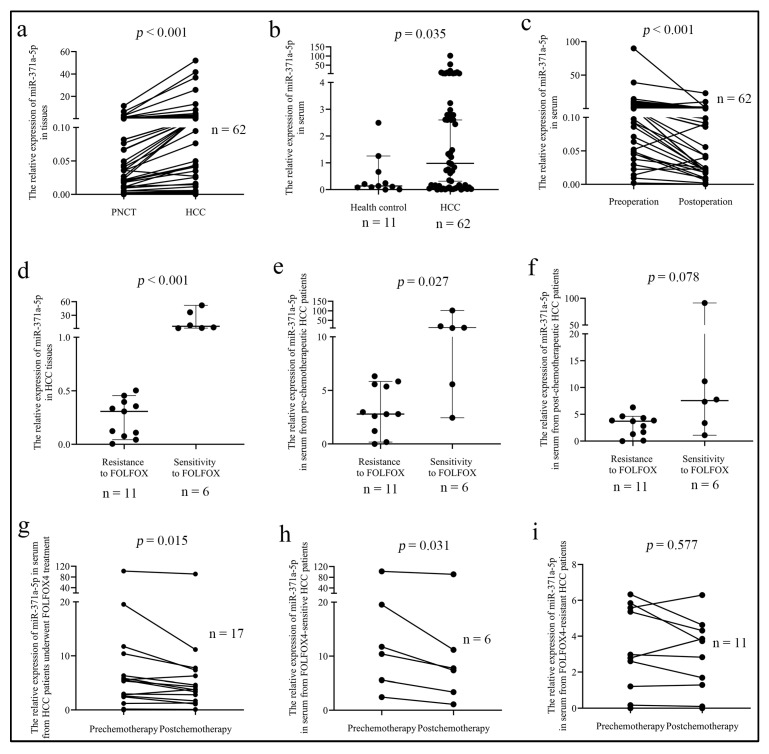
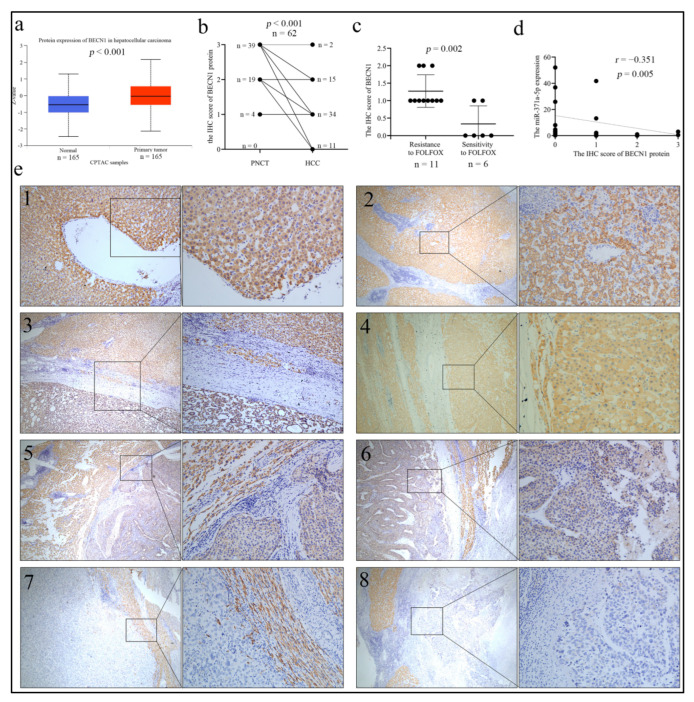
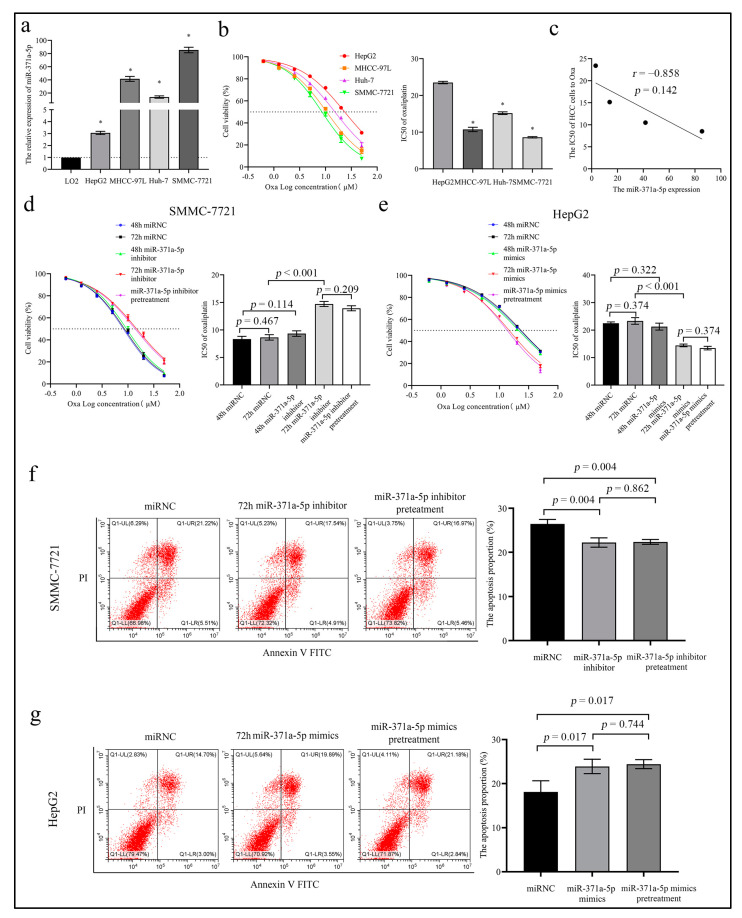
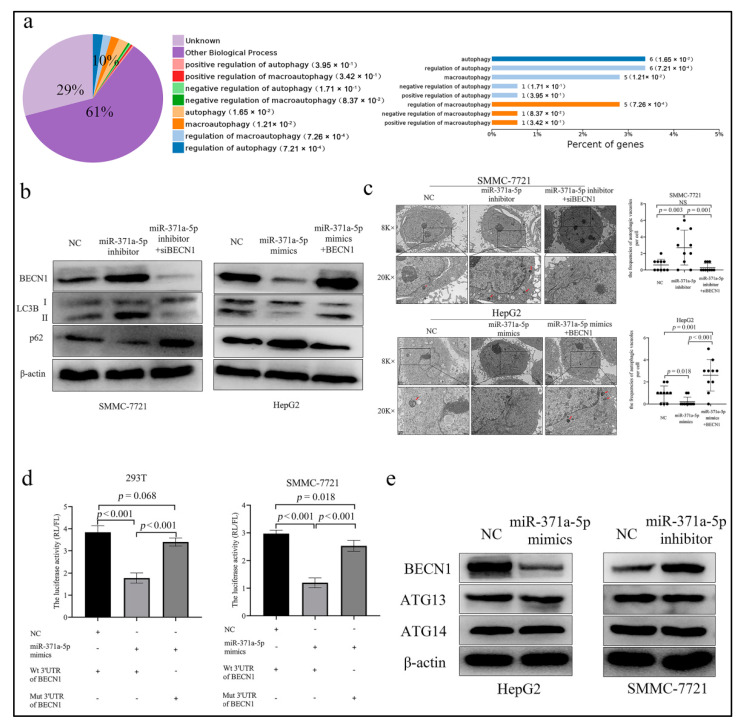
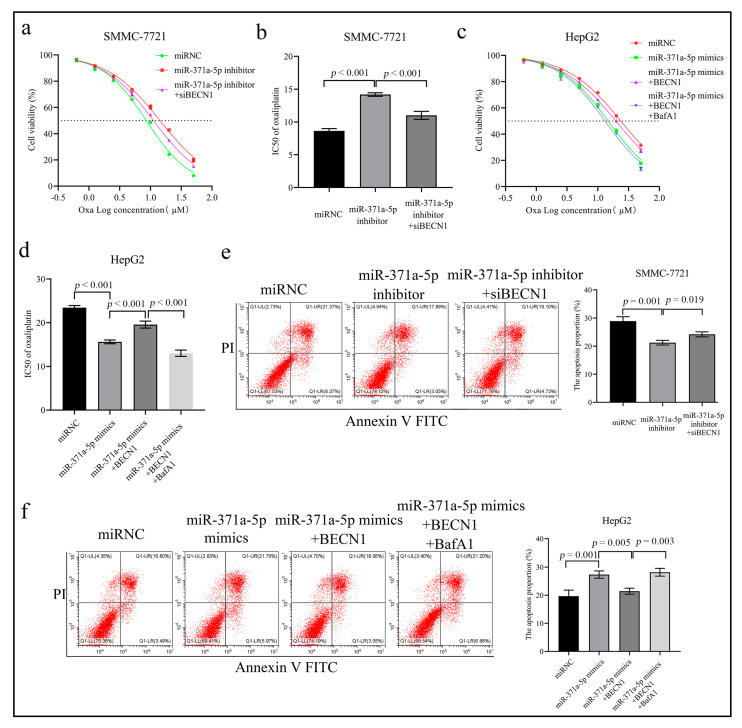
Oxaliplatin (OXA)-based chemotherapy demonstrates active efficacy in advanced hepatocellular carcinoma (HCC), while resistance development limits its clinical efficacy. Thus, identifying resistance-related molecules and underlying mechanisms contributes to improving the therapeutic efficacy of HCC patients. MicroRNA-371a-5p (MiR-371a-5p) fulfills an important function in tumor progression. However, little is known about the effect of miR-371a-5p on chemotherapy response. In this study, quantitative real-time polymerase chain reaction, Western blot and immunohistochemistry were used to determine the expression levels of miR-371a-5p, BECN1 and autophagy-related proteins in HCC cells, tissues and serum. The luciferase reporter assay was used to assess the directly suppressive effect of miR-371a-5p on BECN1 mRNA translation. Moreover, gain- and loss-of-function assays and rescue assays were used to evaluate the mediated effect of BECN1-dependent autophagy on the role of miR-371a-5p in the response of HCC cells to OXA. We found that miR-371a-5p was significantly up-regulated in HCC tissues and serum from patients, whereas BECN1 protein was down-regulated in HCC tissues compared to the corresponding controls. We also found that there was a negative correlation between the two molecules in HCC tissues. In addition, we found that miR-371a-5p expression was positively associated with malignant characteristics of HCC and BECN1 protein expression is negatively associated. Contrary to this, we found that miR-371a-5p enhances and BECN1 attenuates the response of HCC cells to OXA. Importantly, the enhanced effect of miR-371a-5p on the response of HCC cells to OXA could be reduced by re-expression of non-targetable BECN1, and then the reduced effect was restored following bafilomycin A treatment. Taken together, we identified a dual role of miR-371a-5p in HCC malignant characteristics and the response of HCC cells to oxaliplatin. Importantly, we reveal that miR-371a-5p enhances oxaliplatin response by target suppression of BECN1-dependent autophagy.
基于奥沙利铂(OXA)的化疗在晚期肝细胞癌(HCC)中显示出积极疗效,但耐药性的产生限制了其临床疗效。因此,识别耐药相关分子及其潜在机制有助于提高HCC患者的治疗效果。微小RNA-371a-5p(MiR-371a-5p)在肿瘤进展中发挥重要作用。然而,关于miR-371a-5p对化疗反应的影响知之甚少。在本研究中,采用定量实时聚合酶链反应、蛋白质免疫印迹法和免疫组织化学法来测定HCC细胞、组织及血清中miR-371a-5p、Beclin1(BECN1)和自噬相关蛋白的表达水平。荧光素酶报告基因检测用于评估miR-371a-5p对BECN1 mRNA翻译的直接抑制作用。此外,通过功能获得和功能缺失实验以及拯救实验来评估BECN1依赖性自噬对miR-371a-5p在HCC细胞对OXA反应中作用的介导效应。我们发现,患者HCC组织和血清中miR-371a-5p显著上调,而与相应对照相比,HCC组织中BECN1蛋白下调。我们还发现HCC组织中这两种分子之间存在负相关。此外,我们发现miR-371a-5p表达与HCC的恶性特征呈正相关,而BECN1蛋白表达与之呈负相关。与此相反,我们发现miR-371a-5p增强而BECN1减弱HCC细胞对OXA的反应。重要的是,重新表达不可靶向的BECN1可降低miR-371a-5p对HCC细胞对OXA反应的增强作用,随后用巴弗洛霉素A处理可恢复降低的效应。综上所述,我们确定了miR-371a-5p在HCC恶性特征及HCC细胞对奥沙利铂反应中的双重作用。重要的是,我们揭示了miR-371a-5p通过靶向抑制BECN1依赖性自噬增强奥沙利铂反应。