Department of Hepatobiliary Surgery, the Second Affiliated Hospital of Chongqing Medical University, Chongqing, 400010, China.
J Exp Clin Cancer Res. 2018 Nov 6;37(1):268. doi: 10.1186/s13046-018-0930-0.
MicroRNAs (miRNAs) posttranscriptionally regulate gene expression and thereby contribute to the modulation of numerous complex and disease-relevant cellular processes, including cell proliferation, cell motility, apoptosis and stress response. miRNA-31-5p is encoded on a genomic fragile site, 9p21.3, which is reportedly lost in many hepatocellular carcinoma (HCC) tumors. Based on previous findings, we hypothesized that miR-31-5p alters chemosensitivity and that miR-31-5p mimics may influence sensitivity to chemotherapeutics in HCC as well as in a variety of other cancers.
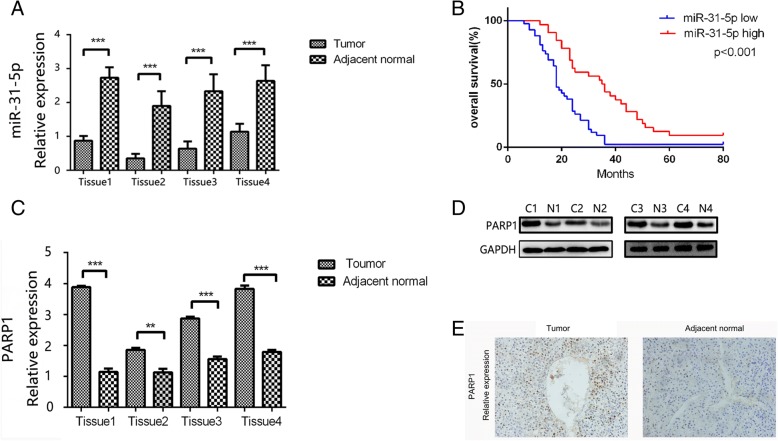
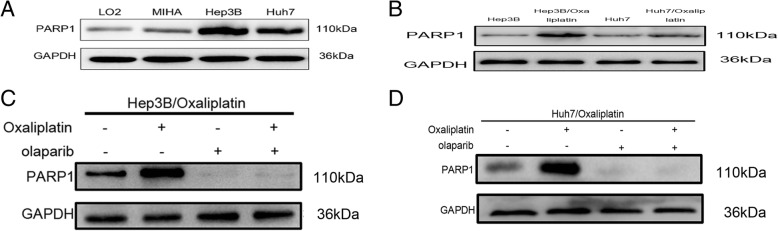
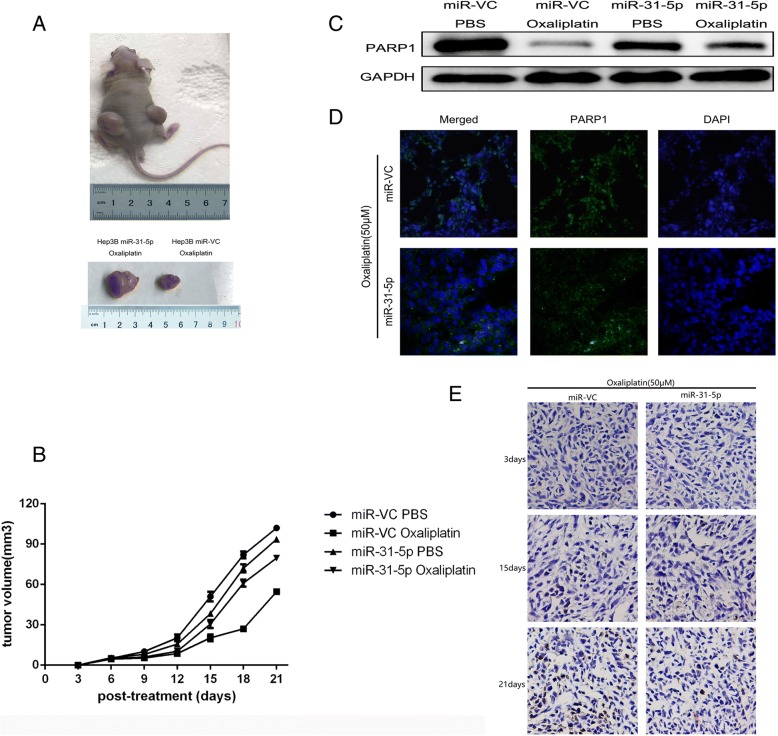
MiR-31-5p and PARP1 in HCC tissues were tested by RT-PCR and histological analysis, respectively. Next, clonogenic assay and western blot were used to detect miR-31-5p and PARP1 to modulate sensitivity to OXA-based chemotherapy. The distribution of OXA in the nuclear and intracellular was detected by ICP-MS. Coimmunoprecipitation was used to characterize the protein-protein interaction between PARP1 and ABCB9. A xenograft nude mouse model was used to examine the in vivo effects of miR-31-5p.
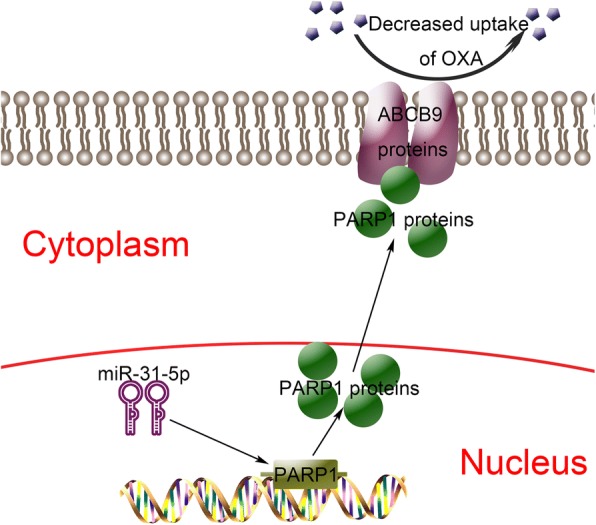
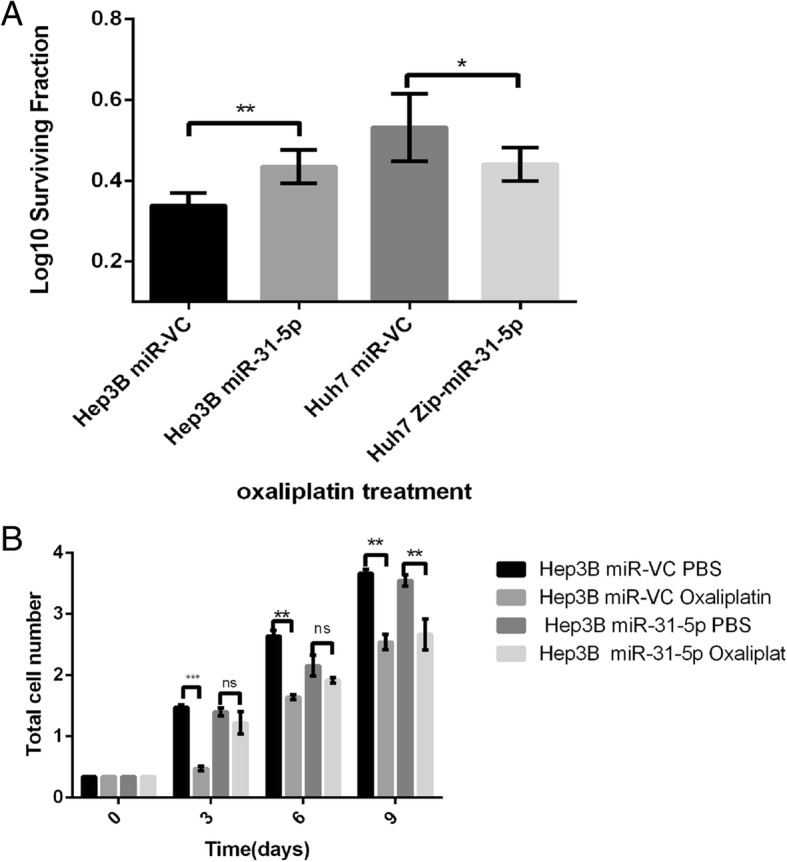
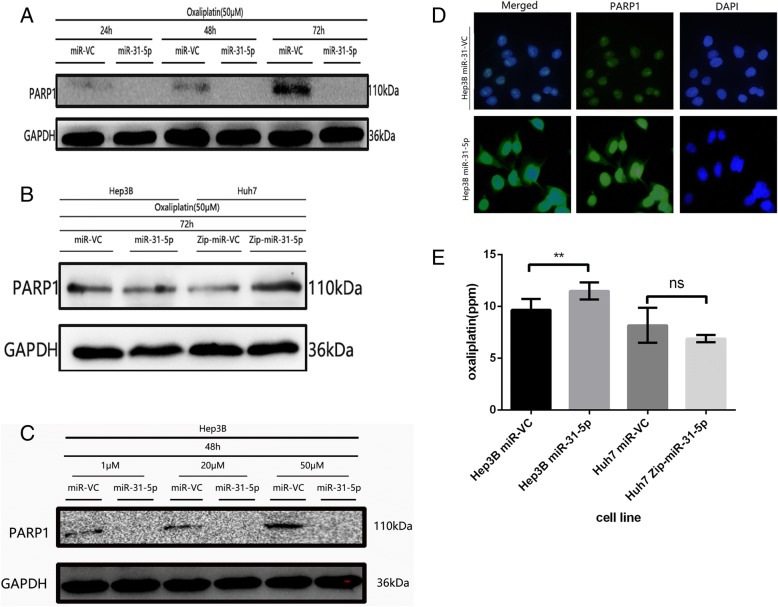
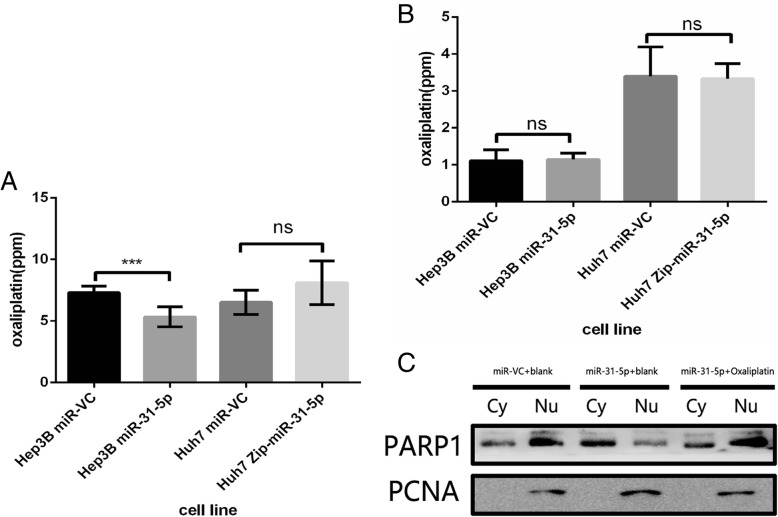
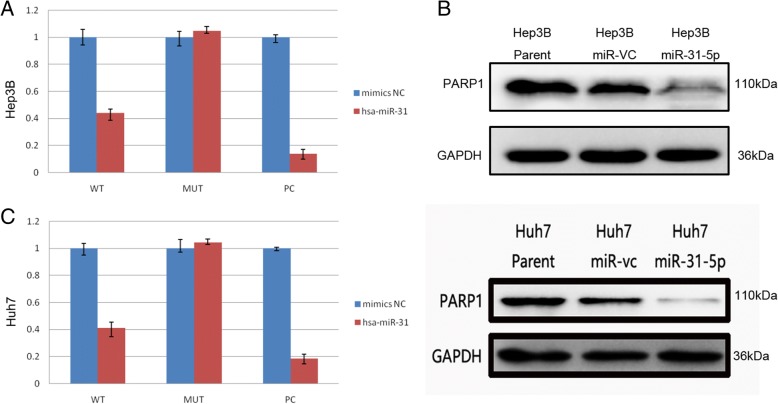
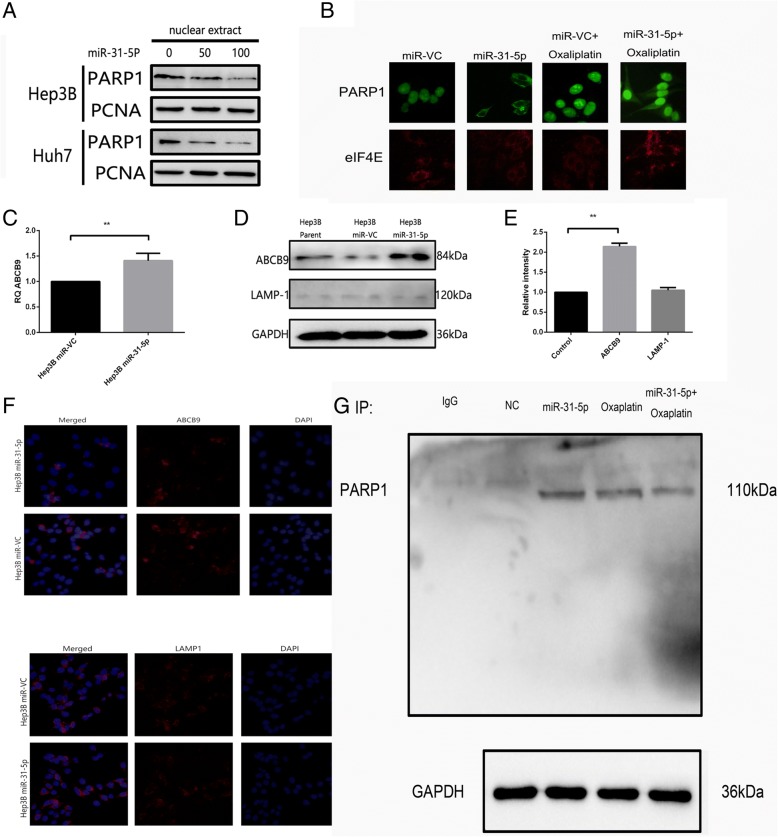
Reintroduction of miR-31-5p into miR-31-5p-null Hep3B cells significantly enhanced clonogenic resistance to oxaliplatin. Although miR-31-5p re-expression increased chemoresistance, it paradoxically increased the relative intracellular accumulation of oxaliplatin. This effect was coupled with a significantly decreased intranuclear concentration of oxaliplatin by ICP-MS. miR-31-5p prevents the nuclear location of PARP1 detected by immunofluorescence, histological analysis and Western blotting analysis. We subsequently identified an indirect miR-31-5p-mediated upregulation of ABCB9, which is a transporter associated with drug accumulation in lysosomes, along with an increased uptake of oxaliplatin to lysosomes; these phenomena were associated with a downregulation of PARP1, a bipotential transcriptional regulator with multiple miR-31-5p binding sites. However, the indirect overexpression of ABCB9 promoted cellular chemosensitivity, suggesting that miR-31-5p promotes chemoresistance largely via an ABCB9-independent mechanism.
Overall, our data suggest that the loss of miR-31-5p from HCC tumors promotes chemosensitivity, and this knowledge may be prognostically beneficial in the context of therapeutic sensitivity.
微小 RNA(miRNA)在后转录水平上调控基因表达,从而参与调节多种复杂和与疾病相关的细胞过程,包括细胞增殖、细胞迁移、细胞凋亡和应激反应。miR-31-5p 编码在基因组脆性位点 9p21.3 上,据报道,该位点在许多肝细胞癌(HCC)肿瘤中丢失。基于先前的发现,我们假设 miR-31-5p 改变化疗敏感性,miR-31-5p 模拟物可能影响 HCC 以及多种其他癌症对化疗药物的敏感性。
通过 RT-PCR 和组织学分析分别检测 HCC 组织中的 miR-31-5p 和 PARP1。接下来,通过克隆形成实验和 Western blot 检测 miR-31-5p 和 PARP1 来调节基于 OXA 的化疗敏感性。通过 ICP-MS 检测 OXA 在核内和细胞内的分布。通过共免疫沉淀来描述 PARP1 和 ABCB9 之间的蛋白-蛋白相互作用。使用异种移植裸鼠模型研究 miR-31-5p 的体内作用。
将 miR-31-5p 重新引入 miR-31-5p 缺失的 Hep3B 细胞中,显著增强了对奥沙利铂的克隆形成抗性。尽管 miR-31-5p 的重新表达增加了化疗耐药性,但它却反常地增加了奥沙利铂的相对细胞内积累。这一效应与 ICP-MS 检测到的核内奥沙利铂浓度显著降低有关。miR-31-5p 通过免疫荧光、组织学分析和 Western blot 分析阻止 PARP1 的核定位。随后,我们鉴定出一种间接的 miR-31-5p 介导的 ABCB9 上调,这是一种与溶酶体中药物积累相关的转运体,同时奥沙利铂向溶酶体的摄取增加;这些现象与 PARP1 的下调有关,PARP1 是一种具有多个 miR-31-5p 结合位点的双潜能转录调节剂。然而,ABCB9 的间接过表达促进了细胞的化疗敏感性,表明 miR-31-5p 主要通过 ABCB9 非依赖性机制促进化疗耐药性。
总的来说,我们的数据表明,HCC 肿瘤中 miR-31-5p 的缺失促进了化疗敏感性,这一知识在治疗敏感性方面可能具有预后益处。