Wu Yuexin, Jiang Tianyu
School of Life Sciences, Peking University, Beijing 100871, China.
Shenzhen Research Institute of Shandong University, Shenzhen 518000, China.
Micromachines (Basel). 2022 Oct 20;13(10):1789. doi: 10.3390/mi13101789.
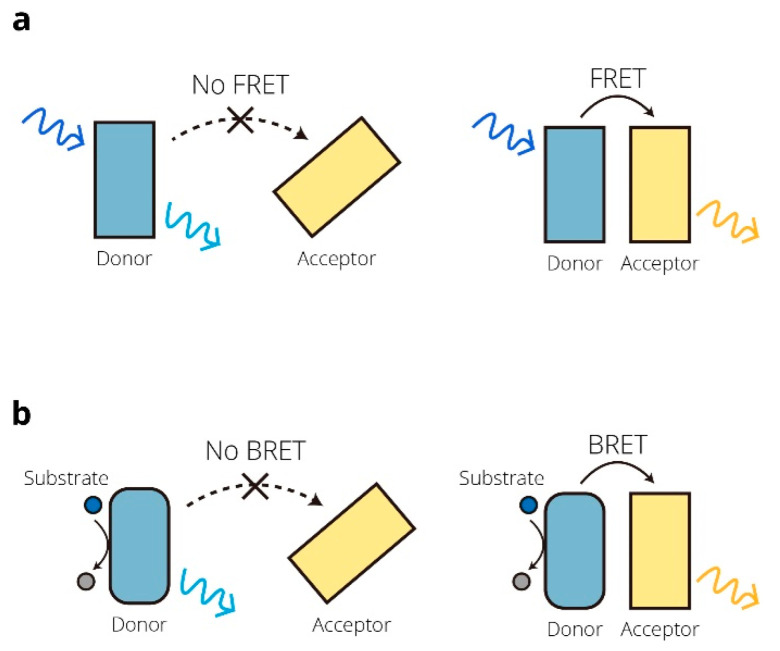
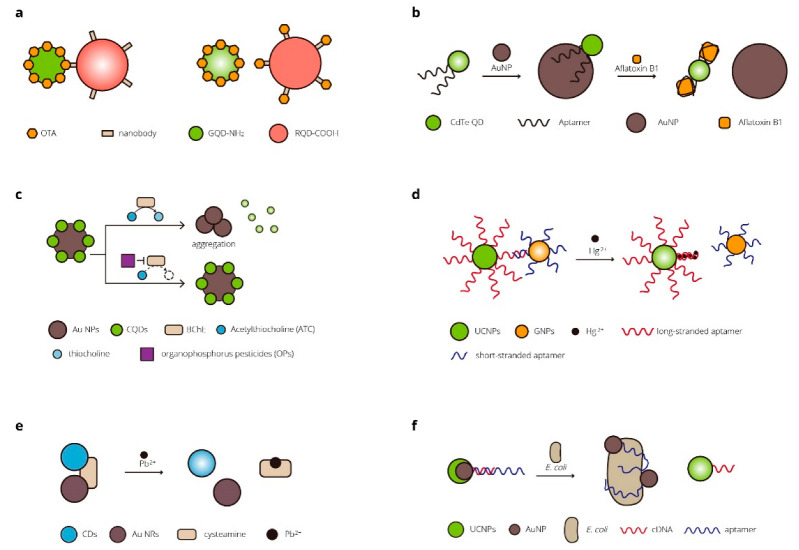
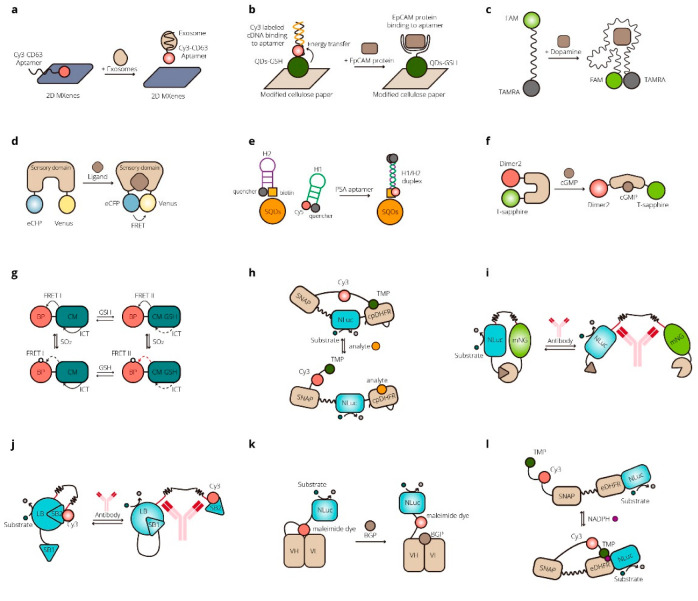
Resonance energy transfer technologies have achieved great success in the field of analysis. Particularly, fluorescence resonance energy transfer (FRET) and bioluminescence resonance energy transfer (BRET) provide strategies to design tools for sensing molecules and monitoring biological processes, which promote the development of biosensors. Here, we provide an overview of recent progress on FRET- and BRET-based biosensors and their roles in biomedicine, environmental applications, and synthetic biology. This review highlights FRET- and BRET-based biosensors and gives examples of their applications with their design strategies. The limitations of their applications and the future directions of their development are also discussed.
共振能量转移技术在分析领域取得了巨大成功。特别是,荧光共振能量转移(FRET)和生物发光共振能量转移(BRET)为设计用于传感分子和监测生物过程的工具提供了策略,这推动了生物传感器的发展。在此,我们概述了基于FRET和BRET的生物传感器的最新进展及其在生物医学、环境应用和合成生物学中的作用。本综述重点介绍了基于FRET和BRET的生物传感器,并举例说明了它们的应用及其设计策略。还讨论了它们应用的局限性及其未来的发展方向。