Hartal-Benishay Liat H, Saadi Esraa, Toubiana Shir, Shaked Lior, Lalzar Maya, Abu Hatoum Ossama, Tal Sharon, Selig Sara, Barki-Harrington Liza
Department of Human Biology, Faculty of Natural Sciences, University of Haifa, Haifa, Israel.
Department of Genetics and Developmental Biology, Rappaport Faculty of Medicine and Research Institute, Technion, Haifa, Israel.
Front Oncol. 2022 Oct 10;12:1004014. doi: 10.3389/fonc.2022.1004014. eCollection 2022.
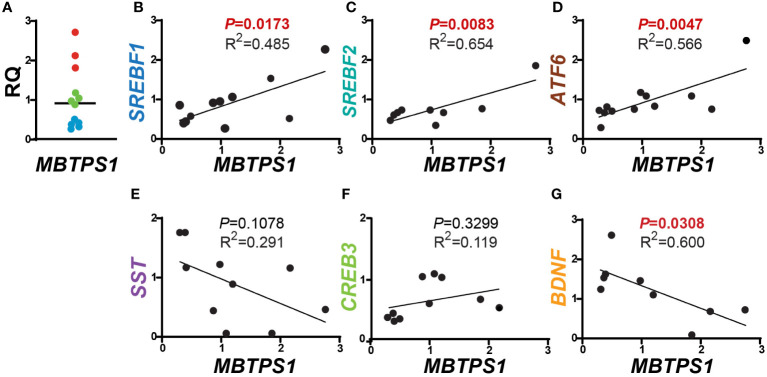
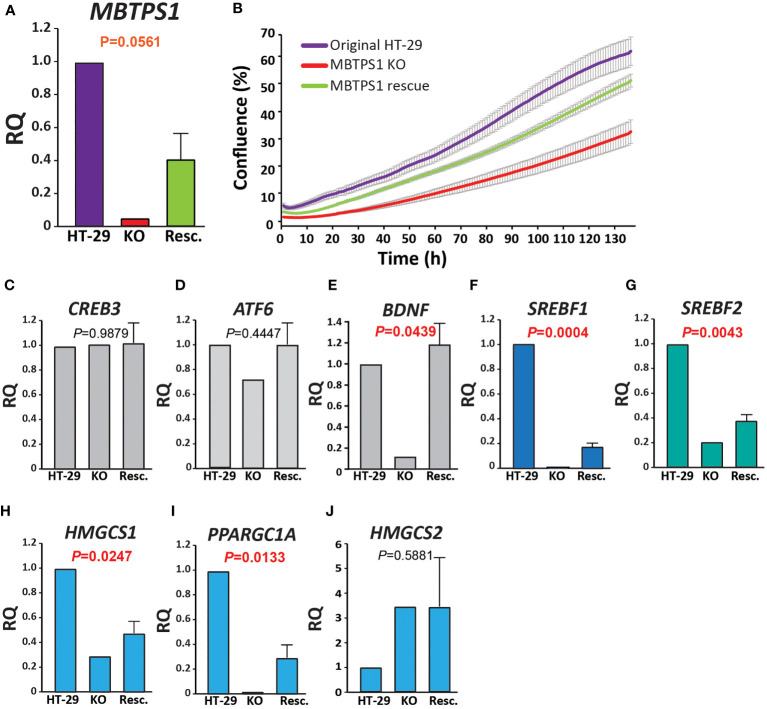
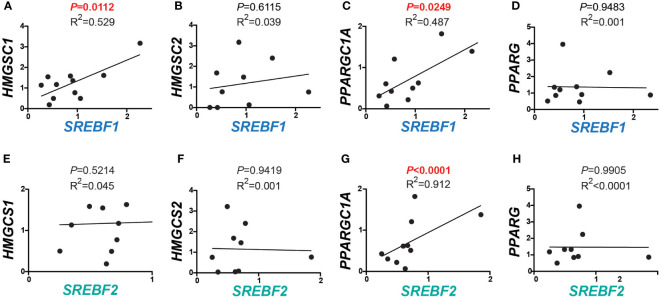
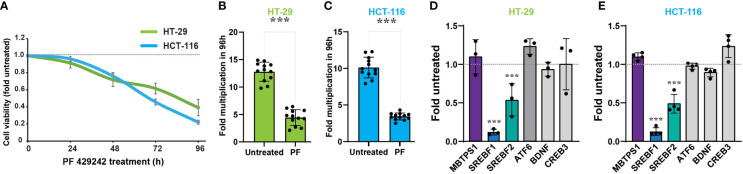
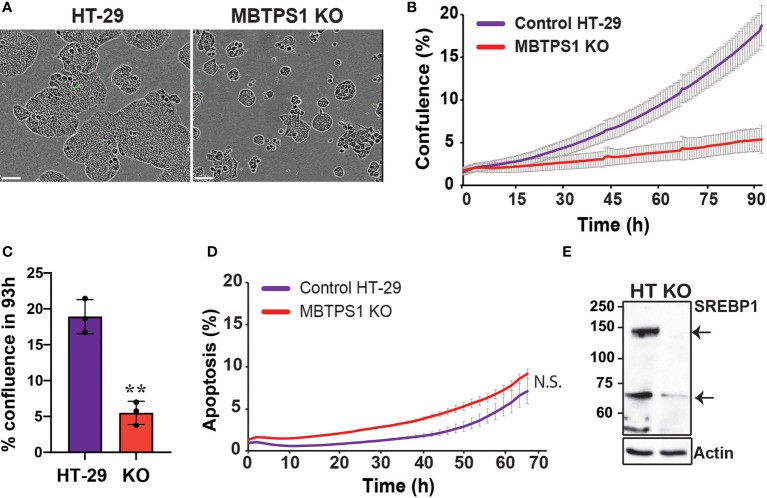
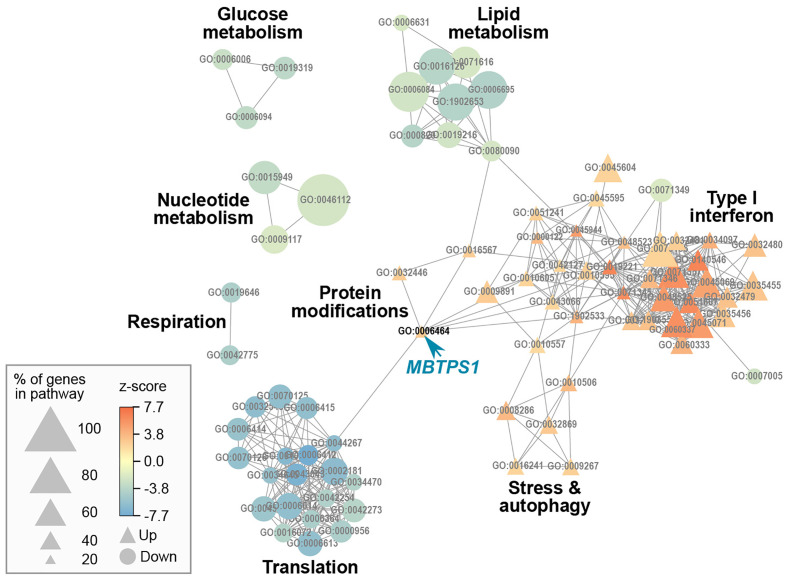
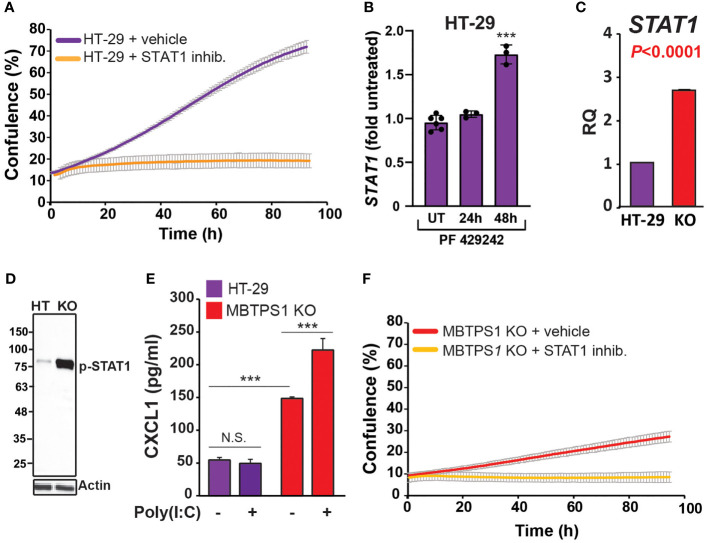
Among the main metabolic pathways implicated in cancer cell proliferation are those of cholesterol and fatty acid synthesis, both of which are tightly regulated by sterol regulatory element-binding proteins (SREBPs). SREBPs are activated through specific cleavage by membrane-bound transcription factor protease 1 (MBTPS1), a serine protease that cleaves additional substrates (ATF6, BDNF, CREBs and somatostatin), some of which are also implicated in cell proliferation. The goal of this study was to determine whether MBTPS1 may serve as a master regulator in proliferation of colorectal cancer (CRC). Tumors from CRC patients showed variable levels of MBTPS1 mRNA, which were in positive correlation with the levels of SREBPs and ATF6, and in reverse correlation with BDNF levels. Chemical inhibition of MBTPS1 activity in two CRC-derived cell lines resulted in a marked decrease in the levels of SREBPs, but not of its other substrates and a marked decrease in cell proliferation, which suggested that MBTPS1 activity is critical for proliferation of these cells. In accordance, CRISPR/Cas9 targeted knockout (KO) of the gene resulted in the survival of only a single clone that presented a phenotype of severely attenuated proliferation and marked downregulation of several energy metabolism pathways. We further showed that survival of the MBTPS1 KO clone was dependent upon significant upregulation of the type-1 interferon pathway, the inhibition of which halted proliferation entirely. Finally, rescue of the MBTPS1 KO cells, resulted in partial restoration of MBTPS1 levels, which was in accordance with partial recovery in proliferation and in SREBP levels. These finding suggest that MBTPS1 plays a critical role in regulating colon cancer proliferation primarily through SREBP-associated lipid metabolism, and as such may serve as a possible therapeutic target in CRC.
参与癌细胞增殖的主要代谢途径包括胆固醇和脂肪酸合成途径,这两种途径均受固醇调节元件结合蛋白(SREBPs)的严格调控。SREBPs通过膜结合转录因子蛋白酶1(MBTPS1,一种丝氨酸蛋白酶,可切割其他底物(ATF6、BDNF、CREBs和生长抑素),其中一些底物也与细胞增殖有关)的特异性切割而被激活。本研究的目的是确定MBTPS1是否可作为结直肠癌(CRC)增殖的主要调节因子。CRC患者的肿瘤显示出不同水平的MBTPS1 mRNA,其与SREBPs和ATF6的水平呈正相关,与BDNF水平呈负相关。对两种CRC来源的细胞系中MBTPS1活性进行化学抑制,导致SREBPs水平显著降低,但其其他底物水平未降低,细胞增殖也显著减少,这表明MBTPS1活性对这些细胞的增殖至关重要。与此一致,CRISPR/Cas9靶向敲除该基因仅导致一个克隆存活,该克隆呈现出增殖严重减弱和几种能量代谢途径显著下调的表型。我们进一步表明,MBTPS1敲除克隆的存活依赖于1型干扰素途径的显著上调,抑制该途径可完全阻止增殖。最后,对MBTPS1敲除细胞进行拯救,导致MBTPS1水平部分恢复,这与增殖和SREBP水平的部分恢复一致。这些发现表明,MBTPS1主要通过与SREBP相关的脂质代谢在调节结肠癌增殖中起关键作用,因此可能作为CRC的一个潜在治疗靶点。