Division of Gastroenterology and Hepatology, Department of Internal Medicine, Keio University School of Medicine, Shinjuku-ku, Tokyo, Japan.
Research Unit/Immunology & Inflammation, Sohyaku Innovative Research Division, Mitsubishi Tanabe Pharma Corporation, Kanagawa, Japan.
PLoS One. 2022 Oct 27;17(10):e0276925. doi: 10.1371/journal.pone.0276925. eCollection 2022.
Liver fibrosis is one of the cardinal clinical features of chronic hepatitis C (CHC). However, the mechanisms underlying the evolution and reversion of liver fibrosis after hepatitis C virus (HCV) eradication and their relationship with clinical outcomes and metabolic alterations are not fully elucidated. Whether any non-invasive fibrosis marker can predict prognosis is unknown.
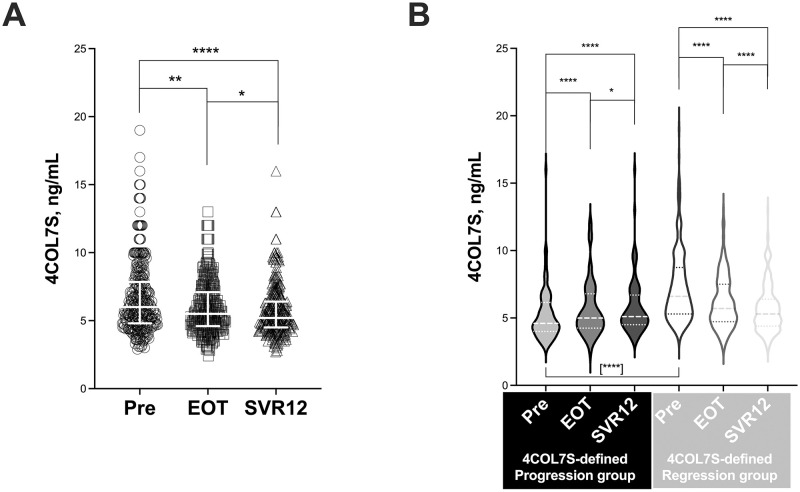
Between October 2014 and September 2019, 418 patients with CHC or compensated cirrhosis with HCV were prospectively recruited in this observational study. 326 patients that were successfully eradicated with interferon-free direct antiviral agents (IFN-free DAAs) were analyzed. Peri-treatment dynamics of serum levels of type IV collagen 7S fragment (4COL7S), a fibrosis marker, and subsequent clinical outcomes, including hepatic decompensation, newly emerged hepatocellular carcinoma (HCC), and all-cause mortality were analyzed.
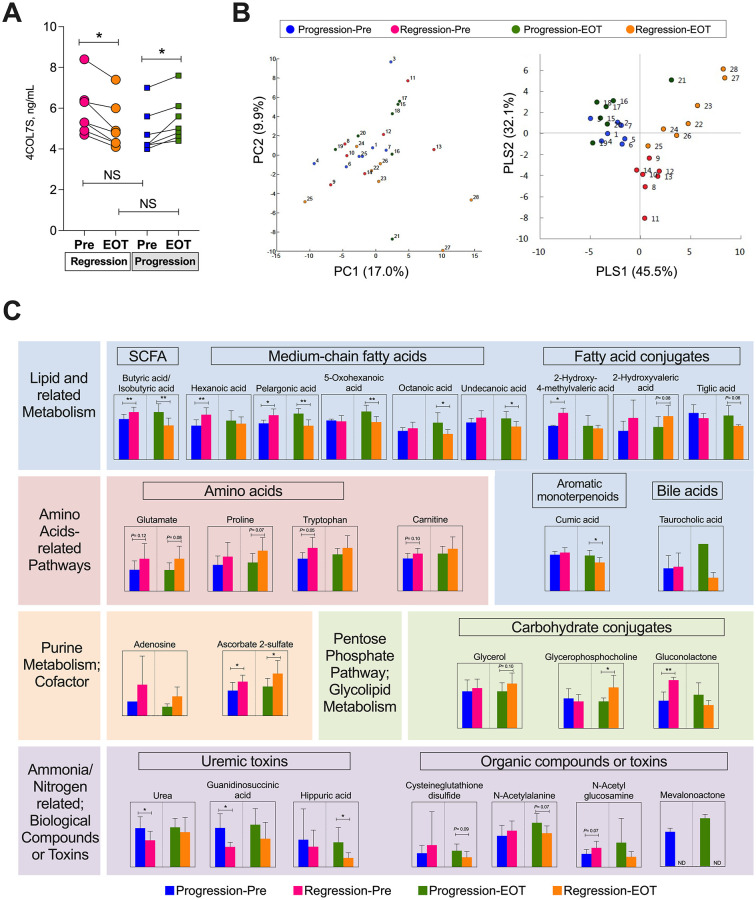
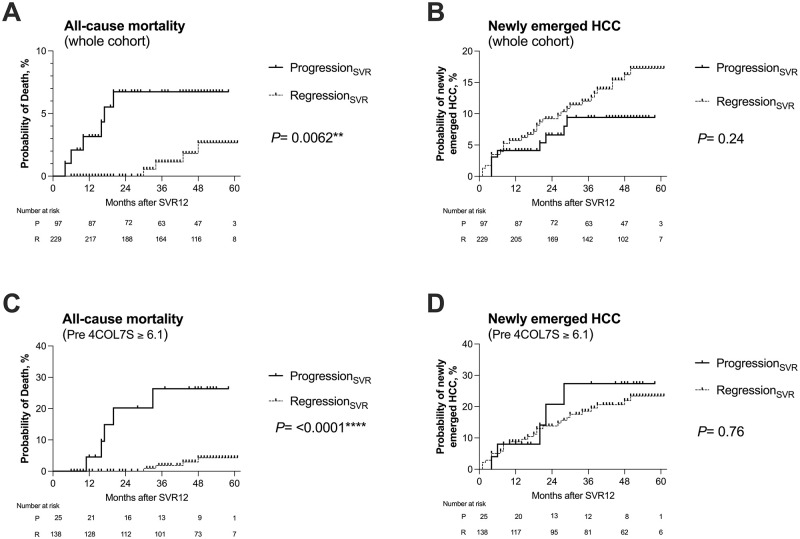
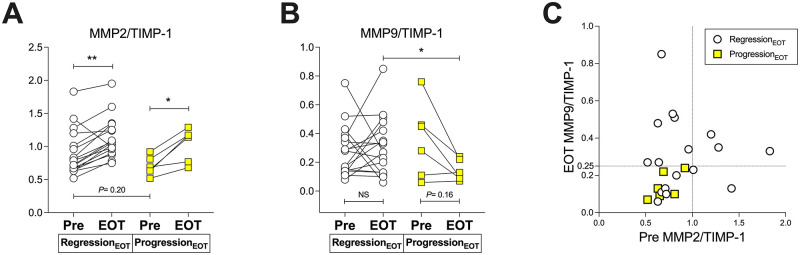
Ten (3.1%) patients died during the observation period. 4COL7S-defined fibrosis progression (n = 97, 29.8%) at SVR was significantly correlated with worse all-cause mortality post-SVR (P = 0.0062) but not with the probability of newly emerged HCC (P = 0.24). Prognostic tendency was more prominent in patients with advanced fibrosis (P< 0.0001). 4COL7S-defined fibrosis progression at SVR and a baseline platelet count less than 10×104/μL were significantly predicted all-cause mortality (P = 0.0051). In exploratory analyses, a decreased 4COL7S at the end of treatment was correlated with a matrix-degrading phenotype that showed higher serum metalloproteinase to tissue inhibitors of metalloproteinase-1 ratios and characteristic metabolic fingerprints such as increased butyrate, some medium-chain fatty acids, anabolic amino acids, and decreased uremia toxins.
Peri-treatment dynamics of serum 4COL7S, a non-invasive fibrosis marker, predict prognosis. Non-invasive fibrosis markers may be useful biomarkers for risk stratification post-SVR.
肝纤维化是慢性丙型肝炎(CHC)的主要临床特征之一。然而,HCV 清除后肝纤维化的演变和逆转的机制及其与临床结局和代谢改变的关系尚未完全阐明。是否有任何非侵入性的纤维化标志物可以预测预后尚不清楚。
本观察性研究于 2014 年 10 月至 2019 年 9 月期间前瞻性招募了 418 例 CHC 或代偿性肝硬化合并 HCV 的患者。分析了 326 例成功接受无干扰素直接抗病毒药物(IFN-free DAA)治疗的患者。分析了治疗期间血清 IV 型胶原 7S 片段(4COL7S),一种纤维化标志物的水平变化,以及随后的临床结局,包括肝失代偿、新发肝细胞癌(HCC)和全因死亡率。
在观察期间,有 10 例(3.1%)患者死亡。SVR 时 4COL7S 定义的纤维化进展(n=97,29.8%)与 SVR 后全因死亡率较高显著相关(P=0.0062),但与新发 HCC 的概率无关(P=0.24)。在纤维化程度较重的患者中,预后趋势更为明显(P<0.0001)。SVR 时 4COL7S 定义的纤维化进展和基线血小板计数低于 10×104/μL 显著预测全因死亡率(P=0.0051)。在探索性分析中,治疗结束时 4COL7S 的降低与基质降解表型相关,表现为更高的血清金属蛋白酶与组织金属蛋白酶抑制剂-1 比值,以及特征性的代谢指纹,如增加的丁酸盐、一些中链脂肪酸、合成代谢氨基酸和降低的尿毒症毒素。
血清 4COL7S,一种非侵入性的纤维化标志物,在治疗期间的动态变化可预测预后。非侵入性纤维化标志物可能是 SVR 后风险分层的有用生物标志物。