Sun Bei, Yeh John
Sackler Faculty of Medicine, Sackler School of Medicine, New York State/American Program of Tel Aviv University, Tel Aviv University, Tel Aviv, Israel.
Reproductive Endocrinology and Infertility, UMass Memorial Medical Center, University of Massachusetts Medical School, Worcester, MA, United States.
Front Reprod Health. 2022 May 4;4:863173. doi: 10.3389/frph.2022.863173. eCollection 2022.
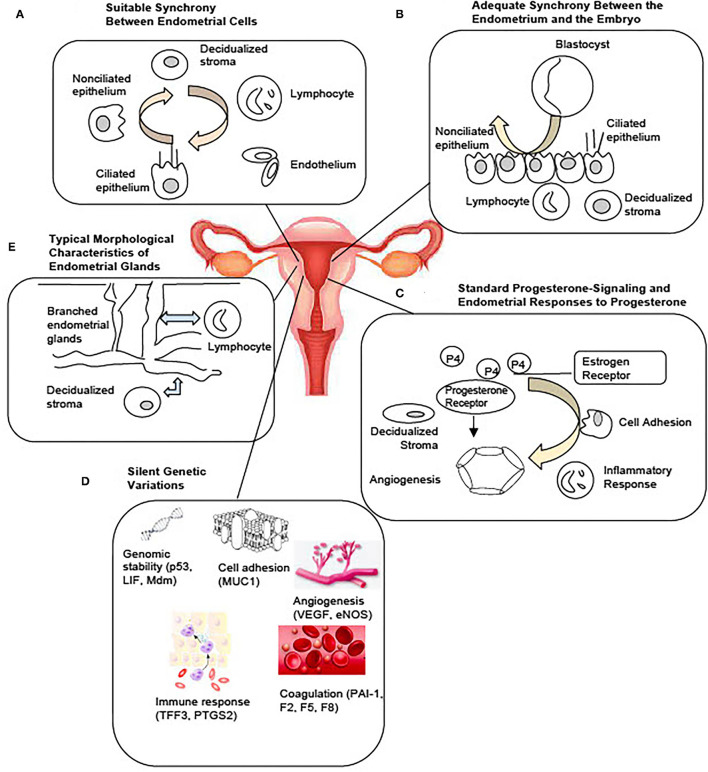
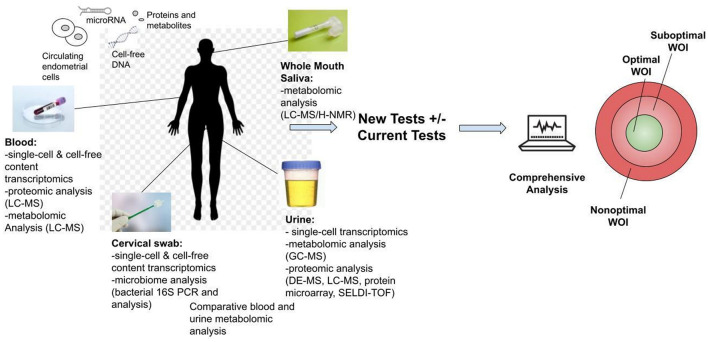
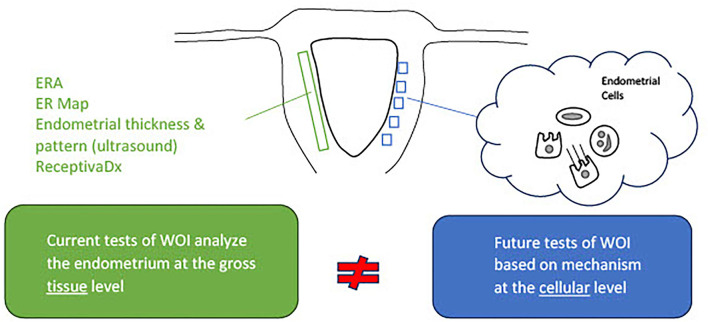
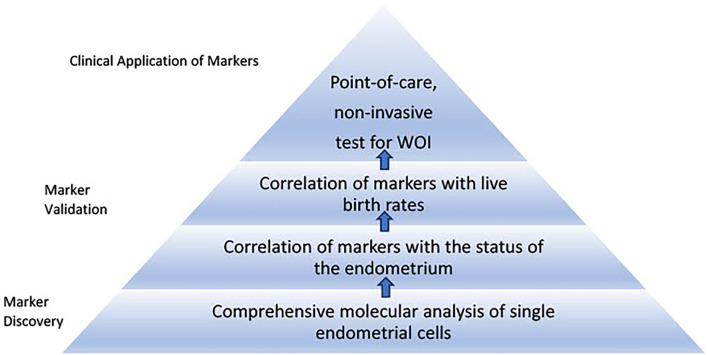
Suboptimal endometrial receptivity and altered embryo-endometrial crosstalk account for approximately two-thirds of human implantation failures. Current tests of the window of implantation, such as endometrial thickness measurements and the endometrial receptivity assay, do not consistently improve clinical outcomes as measured by live birth rates. Understanding the mechanisms regulating the endometrial receptivity during the window of implantation is a critical step toward developing clinically meaningful tests. In this narrative review, the available literature is evaluated regarding mechanisms that regulate the endometrial receptivity during the window of implantation and the current tests developed. Overall, both animal and human studies point to five possible and interrelated mechanisms regulating the endometrial window of implantation: suitable synchrony between endometrial cells, adequate synchrony between the endometrium and the embryo, standard progesterone signaling and endometrial responses to progesterone, silent genetic variations, and typical morphological characteristics of the endometrial glands. The biological basis of current clinical markers or tests of window of implantation is poor. Future studies to elucidate the mechanisms shaping the window of implantation and to investigate the potential markers based on these mechanisms are required. In addition, molecular testing of the endometrium at single-cell resolution should be an initial step toward developing clinically meaningful tests for the optimal window of implantation. As understanding of the optimal window of implantation continues to evolve, one can envision the future development of non-invasive, mechanism-based testing of the window of implantation.
子宫内膜容受性欠佳以及胚胎与子宫内膜间的串扰改变,约占人类着床失败原因的三分之二。目前用于检测着床窗的方法,如子宫内膜厚度测量和子宫内膜容受性检测,并未如活产率所衡量的那样持续改善临床结局。了解着床窗期间调节子宫内膜容受性的机制是开发具有临床意义检测方法的关键一步。在这篇叙述性综述中,我们评估了关于着床窗期间调节子宫内膜容受性的机制以及当前所开发检测方法的现有文献。总体而言,动物和人类研究均指向调节着床窗的五种可能且相互关联的机制:子宫内膜细胞间的适当同步、子宫内膜与胚胎间的充分同步、标准的孕酮信号传导及子宫内膜对孕酮的反应、沉默基因变异以及子宫内膜腺体的典型形态特征。当前临床标志物或着床窗检测方法的生物学基础薄弱。需要开展进一步研究以阐明塑造着床窗的机制,并基于这些机制探究潜在标志物。此外,以单细胞分辨率对子宫内膜进行分子检测应是朝着开发针对最佳着床窗的具有临床意义检测方法迈出的第一步。随着对着床最佳窗的理解不断发展,可以预见未来会开发出基于机制的非侵入性着床窗检测方法。