Research Group Facility Management, Research Centre for Built Environment NoorderRuimte, Hanze University of Applied Sciences, Groningen, The Netherlands.
Department of the Built Environment, Building Performance IEQ-Health, Eindhoven University of Technology, Eindhoven, The Netherlands.
Indoor Air. 2022 Oct;32(10):e13116. doi: 10.1111/ina.13116.
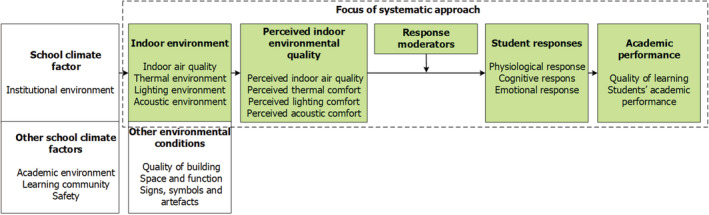
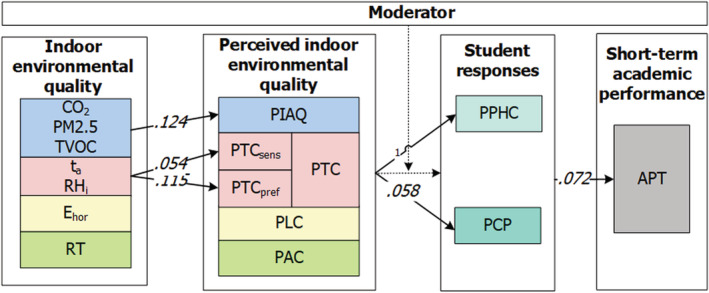
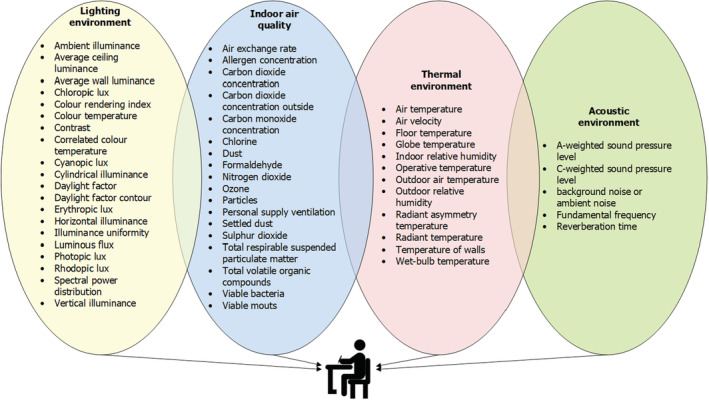
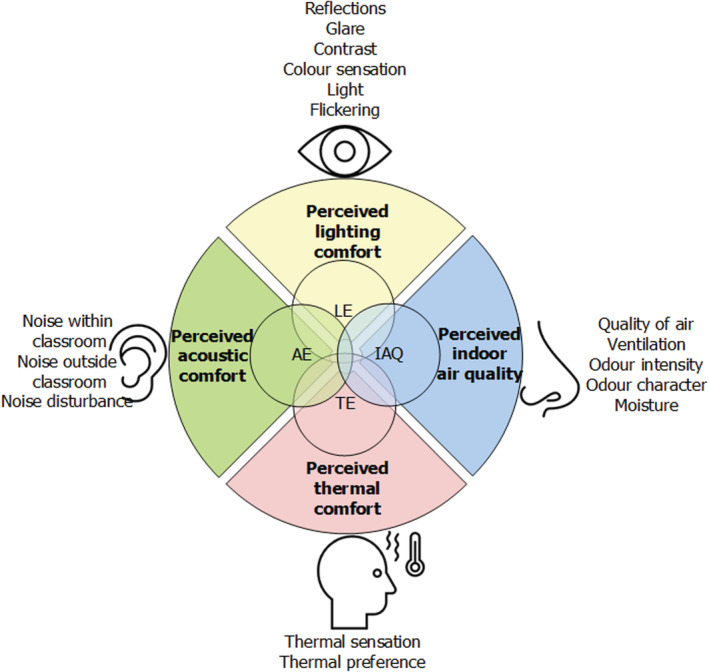
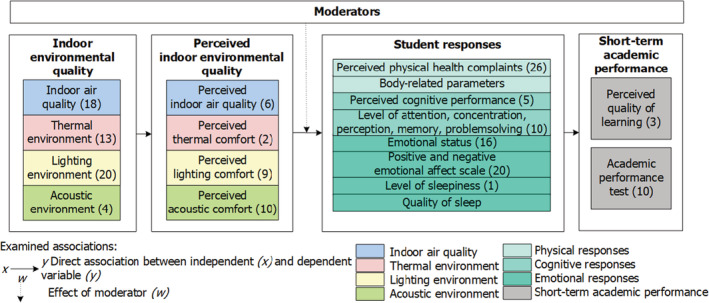
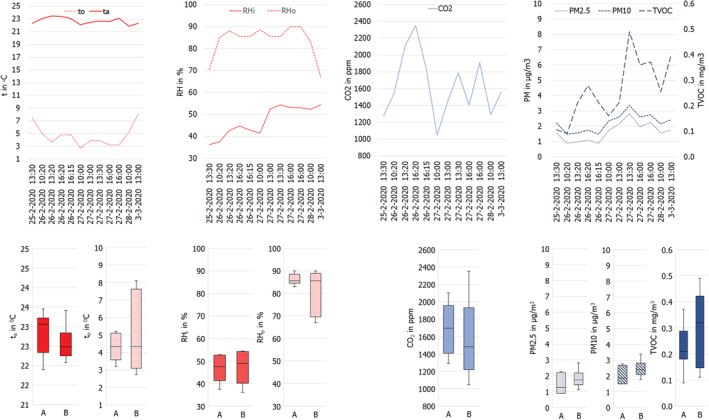
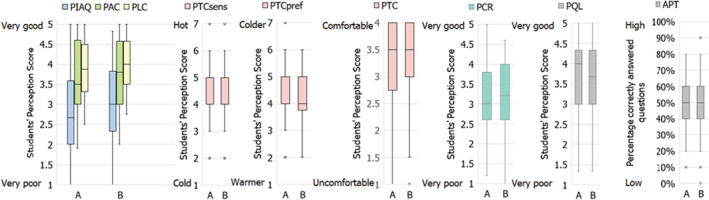
Several studies found that classrooms' indoor environmental quality (IEQ) can positively influence in-class activities. Understanding and quantifying the combined effect of four indoor environmental parameters, namely indoor air quality and thermal, acoustic, and lighting conditions on people is essential to create an optimal IEQ. Accordingly, a systematic approach was developed to study the effect of multiple IEQ parameters simultaneously. Methods for measuring the IEQ and students' perceived IEQ, internal responses, and academic performance were derived from literature. Next, this systematic approach was tested in a pilot study during a regular academic course. The perceptions, internal responses, and short-term academic performance of participating students (n = 163) were measured. During the pilot study, the IEQ of the classrooms varied slightly. Significant associations (p < 0.05) were observed between these natural variations and students' perceptions of the thermal environment and indoor air quality. These perceptions were significantly associated with their physiological and cognitive responses (p < 0.05). Furthermore, students' perceived cognitive responses were associated with their short-term academic performance (p < 0.01). The observed associations confirm the construct validity of the systematic approach. However, its validity for investigating the influence of lighting remains to be determined.
多项研究发现,教室的室内环境质量(IEQ)可以积极影响课堂活动。理解和量化四个室内环境参数(即室内空气质量以及热、声和光条件)的综合效应,对于创造最佳 IEQ 至关重要。因此,开发了一种系统方法来同时研究多个 IEQ 参数的影响。IEQ 和学生感知的 IEQ、内部反应和学业成绩的测量方法源自文献。然后,在常规学术课程的试点研究中测试了这种系统方法。参与学生(n=163)的感知、内部反应和短期学术表现都被测量了。在试点研究期间,教室的 IEQ 略有变化。学生对热环境和室内空气质量的感知与这些自然变化之间存在显著关联(p<0.05)。这些感知与他们的生理和认知反应显著相关(p<0.05)。此外,学生感知到的认知反应与他们的短期学术表现相关(p<0.01)。观察到的关联证实了系统方法的结构有效性。然而,其调查光照影响的有效性仍有待确定。