Manzanares Laura D, David Joseph, Ren Xingsheng, Yalom Lenore K, Piccolo Enzo B, Dehghan Yalda, David Aidan J, Hanauer Stephen B, Sumagin Ronen
Laboratory 7-065 Department of Pathology, Northwestern University Feinberg School of Medicine, Chicago, IL, United States.
Department of Medicine, Gastroenterology and Hepatology University of Arizona College of Medicine, Phoenix, AZ, United States.
Front Pharmacol. 2022 Oct 14;13:1011115. doi: 10.3389/fphar.2022.1011115. eCollection 2022.
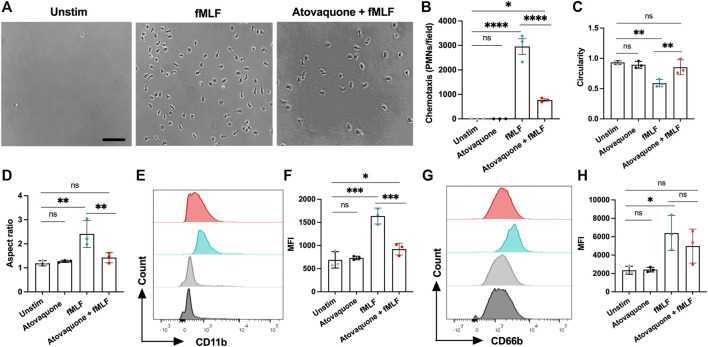
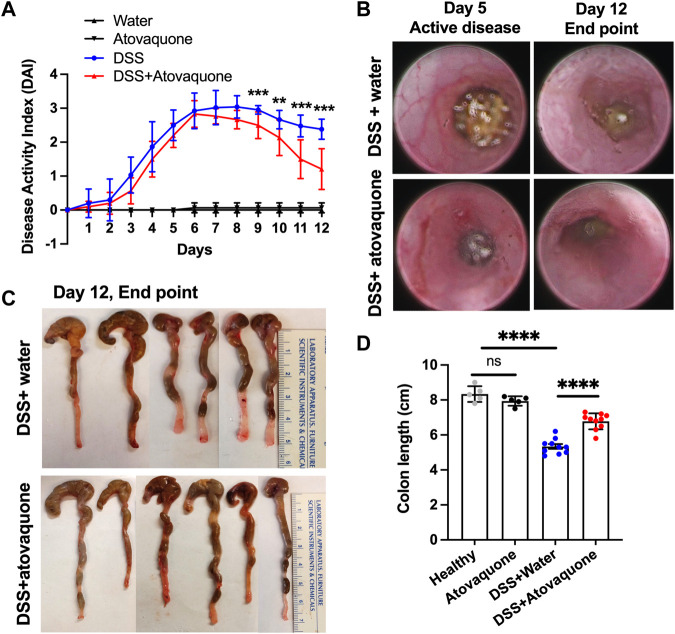
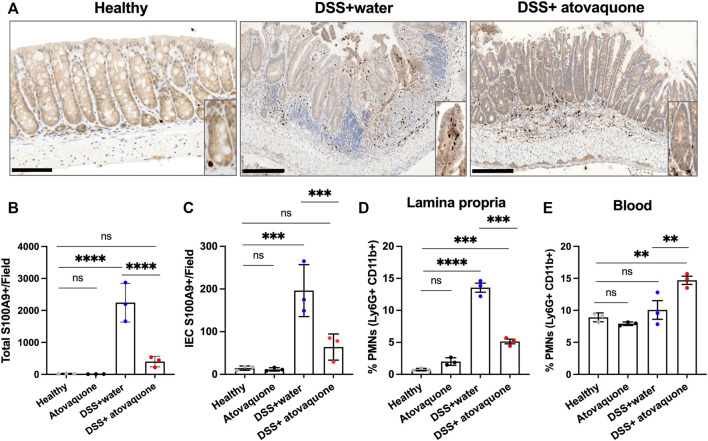
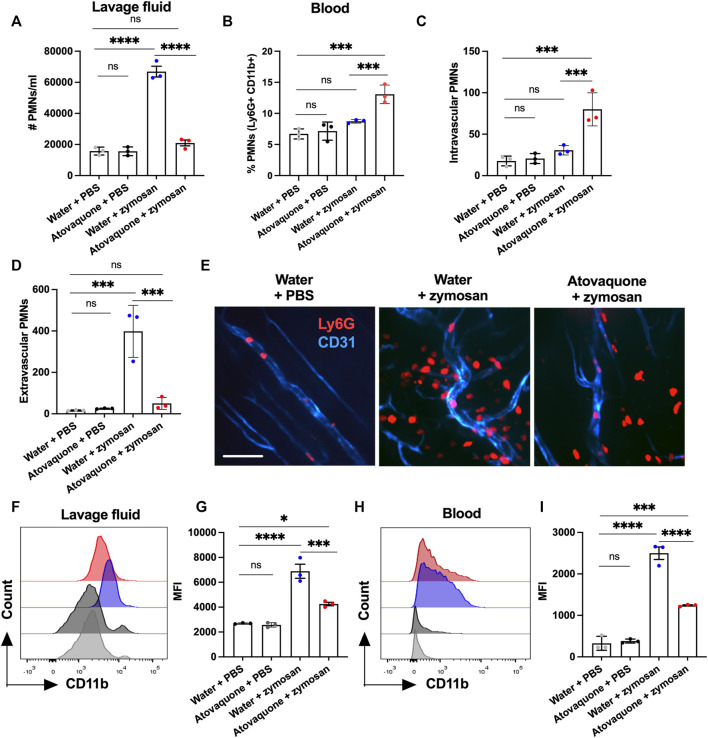
Ulcerative colitis (UC) is a chronic relapsing disease featuring aberrant accumulation of neutrophils in colonic mucosa and the luminal space. Although significant advances in UC therapy have been made with the development of novel biologics and small molecules targeting immune responses, success of most current therapies is still limited, with significant safety concerns. Thus, there is a need to develop additional safe and effective therapies for the treatment of UC. Antimalarial drugs have been safely used for many years to resolve tissue inflammation and the associated pathologies. Atovaquone is a recent FDA-approved antimalarial drug that has shown anti-viral and tumor-suppressive properties however, its role in mucosal inflammation has not been evaluated. Using pre-clinical murine DSS-induced colitis model combined with complementary peritonitis and human neutrophil activation and chemotaxis assays we investigated functional and mechanistic impacts of atovaquone on disease resolution and neutrophil trafficking. We demonstrate that atovaquone promotes resolution of DSS-induced murine colitis by reducing neutrophil accumulation in the inflamed colonic mucosa. Mechanistically, we show that atovaquone suppressed induction of CD11b expression in neutrophils, reducing their polarization and migratory ability. Thus, our findings identify a new role of atovaquone in promoting resolution of mucosal inflammation, supporting the idea of potential repurposing of this FDA-approved drug as UC therapeutic.
溃疡性结肠炎(UC)是一种慢性复发性疾病,其特征是中性粒细胞在结肠黏膜和管腔空间异常积聚。尽管随着针对免疫反应的新型生物制剂和小分子药物的开发,UC治疗取得了重大进展,但目前大多数治疗方法的成功率仍然有限,且存在重大安全问题。因此,需要开发更多安全有效的UC治疗方法。抗疟药物已安全使用多年,可缓解组织炎症及相关病理状况。阿托伐醌是一种最近获得美国食品药品监督管理局(FDA)批准的抗疟药物,已显示出抗病毒和肿瘤抑制特性,然而,其在黏膜炎症中的作用尚未得到评估。我们使用临床前小鼠葡聚糖硫酸钠(DSS)诱导的结肠炎模型,结合补充性腹膜炎以及人类中性粒细胞活化和趋化试验,研究了阿托伐醌对疾病缓解和中性粒细胞迁移的功能及机制影响。我们证明,阿托伐醌通过减少炎症结肠黏膜中的中性粒细胞积聚,促进DSS诱导的小鼠结肠炎的缓解。从机制上讲,我们表明阿托伐醌抑制中性粒细胞中CD11b表达的诱导,降低其极化和迁移能力。因此,我们的研究结果确定了阿托伐醌在促进黏膜炎症缓解中的新作用,支持将这种FDA批准的药物重新用作UC治疗药物的想法。