Department of Pathology, Northwestern University Feinberg School of Medicine, Chicago, IL, United States.
Front Immunol. 2021 Apr 20;12:654259. doi: 10.3389/fimmu.2021.654259. eCollection 2021.
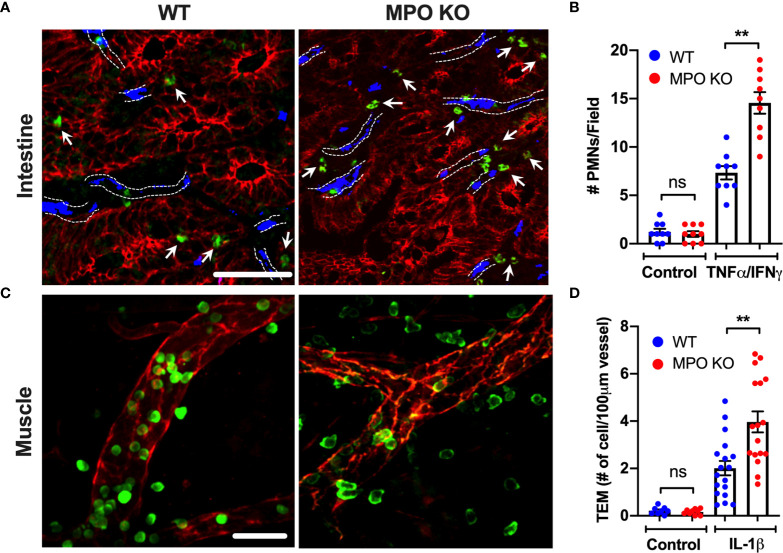
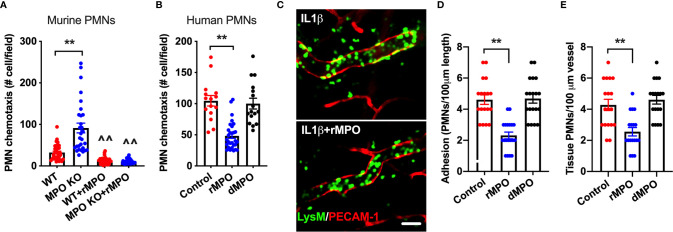
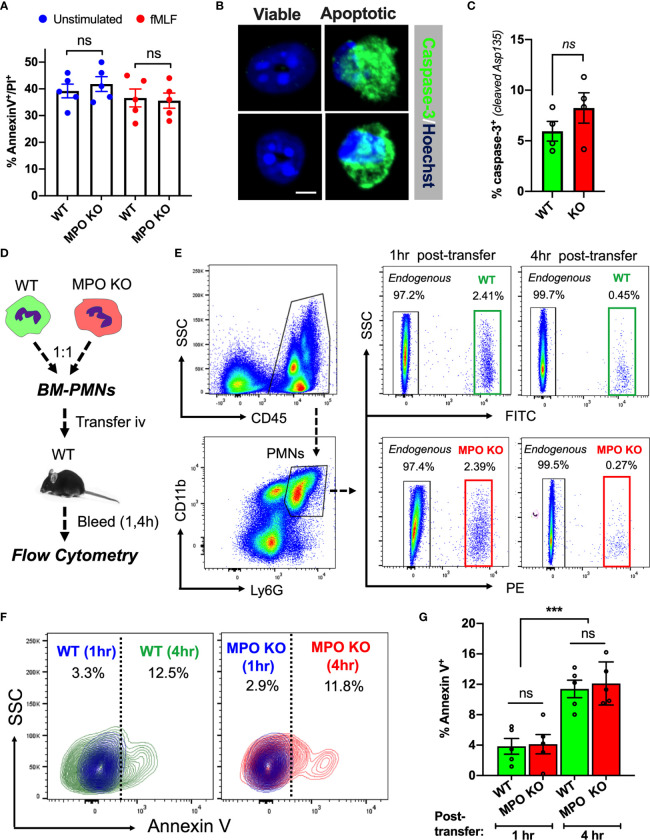
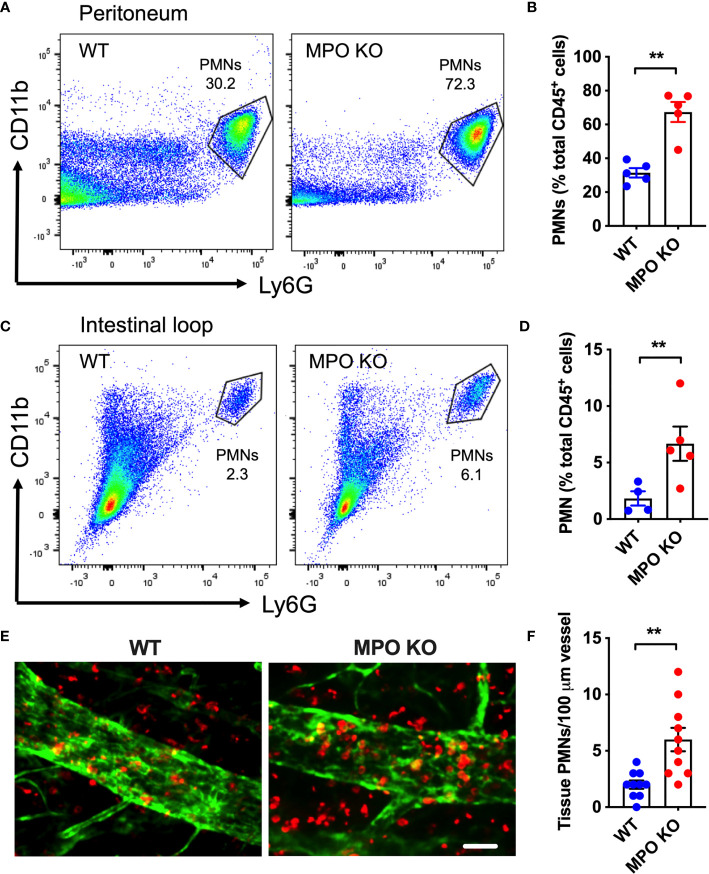
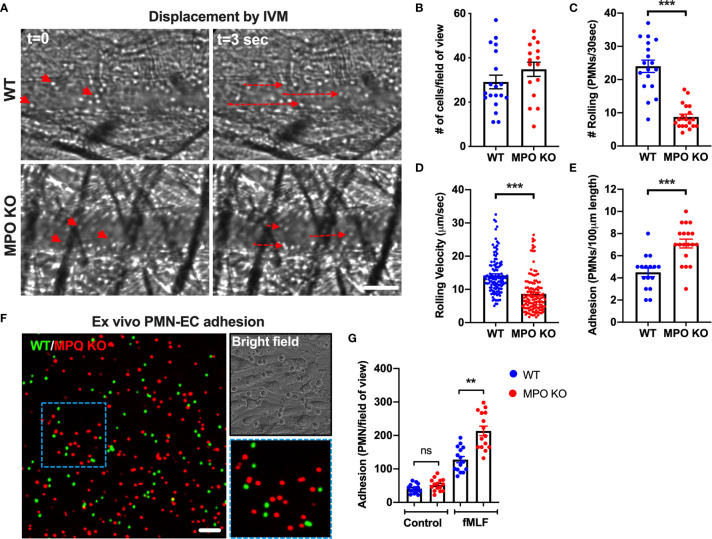
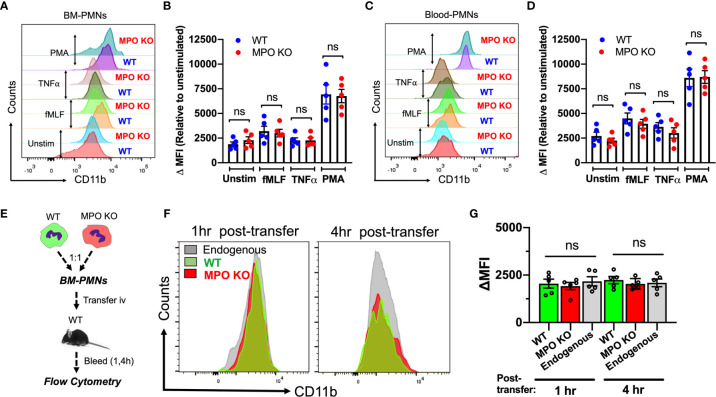
Neutrophil (PMN) recruitment to sites of insult is critical for host defense, however excessive PMN activity and tissue accumulation can lead to exacerbated inflammation and injury. Myeloperoxidase (MPO) is a PMN azurophilic granule enzyme, which together with HO, forms a powerful antimicrobial system designed to kill ingested bacteria. Intriguingly, in addition to intracellular killing of invading microorganisms and extracellular tissue damage due generation of ROS, soluble MPO has been directly implicated in modulating cellular responses and tissue homeostasis. In the current work, we used several models of inflammation, murine and human PMNs and state-of-the-art intravital microscopy to examine the effect of MPO on PMN migration and tissue accumulation. We found that in the absence of functional MPO (MPO knockout, KO mice) inflammatory PMN tissue accumulation was significantly enhanced. We determined that the elevated numbers of PMNs in MPO knockout mice was not due to enhanced viability, but due to increased migratory ability. Acute PMN migration in models of zymosan-induced peritonitis or ligated intestinal loops induced by intraluminal administration of PMN-chemokine CXCL1 was increased over 2-fold in MPO KO compared to wild type (WT) mice. Using real-time intravital imaging of inflamed mouse cremaster muscle and PMN co-culture with inflamed endothelial cells (ECs) we demonstrate that elevated migration of MPO KO mice was due to enhanced adhesive interactions. In contrast, addition of soluble recombinant MPO both and diminished PMN adhesion and migration. Although MPO has been previously suggested to bind CD11b, we found no significant difference in CD11b expression in either resting or activated PMNs and further showed that the MPO binding to the PMN surface is not specific to CD11b. As such, our data identify MPO as a novel regulator of PMN trafficking in inflammation.
中性粒细胞(PMN)向损伤部位的募集对于宿主防御至关重要,然而,过度的PMN 活性和组织积聚会导致炎症加剧和损伤。髓过氧化物酶(MPO)是一种PMN 嗜天青颗粒酶,与 HO 一起形成了一种强大的抗菌系统,旨在杀死吞噬的细菌。有趣的是,除了由于 ROS 的产生导致细胞内杀伤入侵的微生物和细胞外组织损伤外,可溶性 MPO 还直接参与调节细胞反应和组织稳态。在当前的工作中,我们使用了几种炎症模型、鼠和人 PMN 以及最先进的活体显微镜来研究 MPO 对 PMN 迁移和组织积聚的影响。我们发现,在缺乏功能性 MPO(MPO 敲除,KO 小鼠)的情况下,炎症性 PMN 组织积聚显著增强。我们确定,MPO 敲除小鼠中 PMN 数量的增加不是由于活力增强,而是由于迁移能力增强。在酵母聚糖诱导的腹膜炎或通过腔内给予 PMN 趋化因子 CXCL1 诱导的结扎肠环模型中,与野生型(WT)小鼠相比,MPO KO 小鼠中的急性 PMN 迁移增加了 2 倍以上。通过对发炎的鼠精索肌的实时活体成像以及 PMN 与发炎的内皮细胞(EC)的共培养,我们证明了 MPO KO 小鼠迁移能力增强是由于粘附相互作用增强。相反,添加可溶性重组 MPO 均减少了 PMN 的粘附和迁移。尽管 MPO 先前被认为与 CD11b 结合,但我们发现静止或激活的 PMN 中 CD11b 的表达没有显著差异,并且进一步表明 MPO 与 PMN 表面的结合不是特异性针对 CD11b。因此,我们的数据确定 MPO 是炎症中 PMN 迁移的新型调节剂。