Immunology Research Center, Inflammation and Inflammatory Diseases Division, Medical School, Mashhad University of Medical Sciences, Mashhad, Iran.
Molecular and Cell Biology Research Center, Faculty of Medicine, Mazandaran University of Medical Sciences, Sari, Iran.
Mol Biol Rep. 2023 Jan;50(1):173-183. doi: 10.1007/s11033-022-07907-y. Epub 2022 Nov 1.
Seemingly, the Matrix metalloproteinases (MMPs) play a role in the etiopathogenesis of coronavirus disease 2019 (COVID-19). Here in this study, we determined the association of MMP9 rs3918242, MMP3 rs3025058, and MMP2 rs243865 polymorphisms with the risk of COVID-19, especially in those with neurological syndrome (NS).
We enrolled 500 patients with COVID-19 and 500 healthy individuals. To genotype the target SNPs, the Real-time allelic discrimination technique was used. To determine serum levels of MMPs, Enzyme-linked immunosorbent assay (ELISA) was exerted.
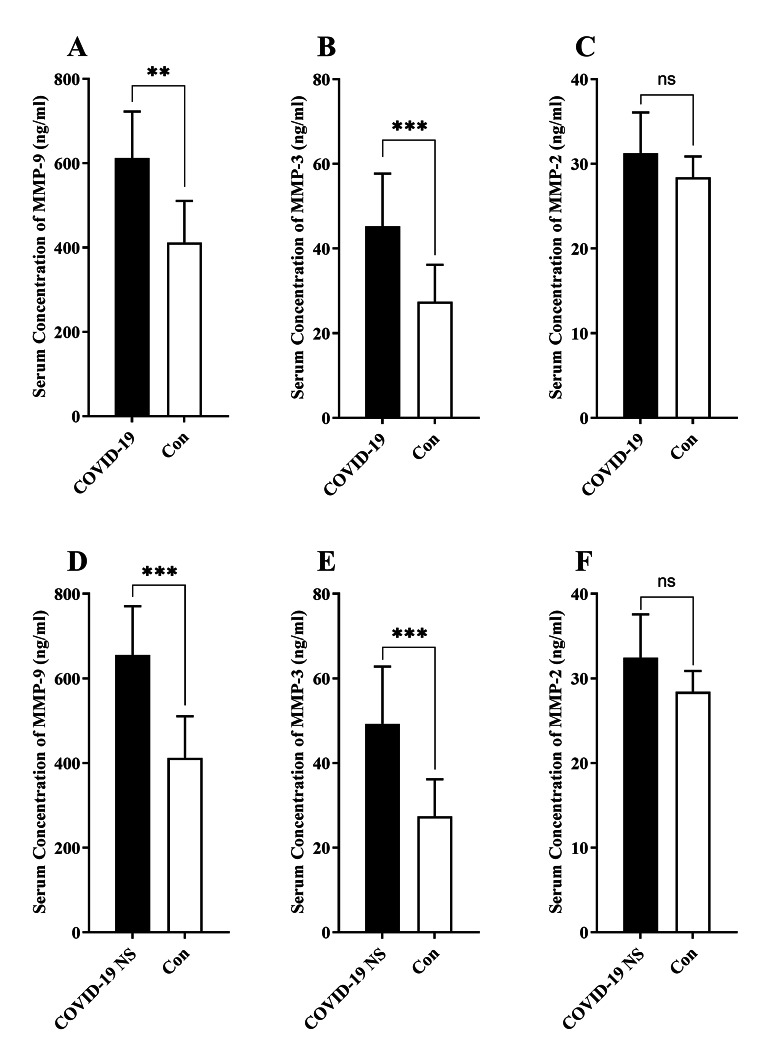
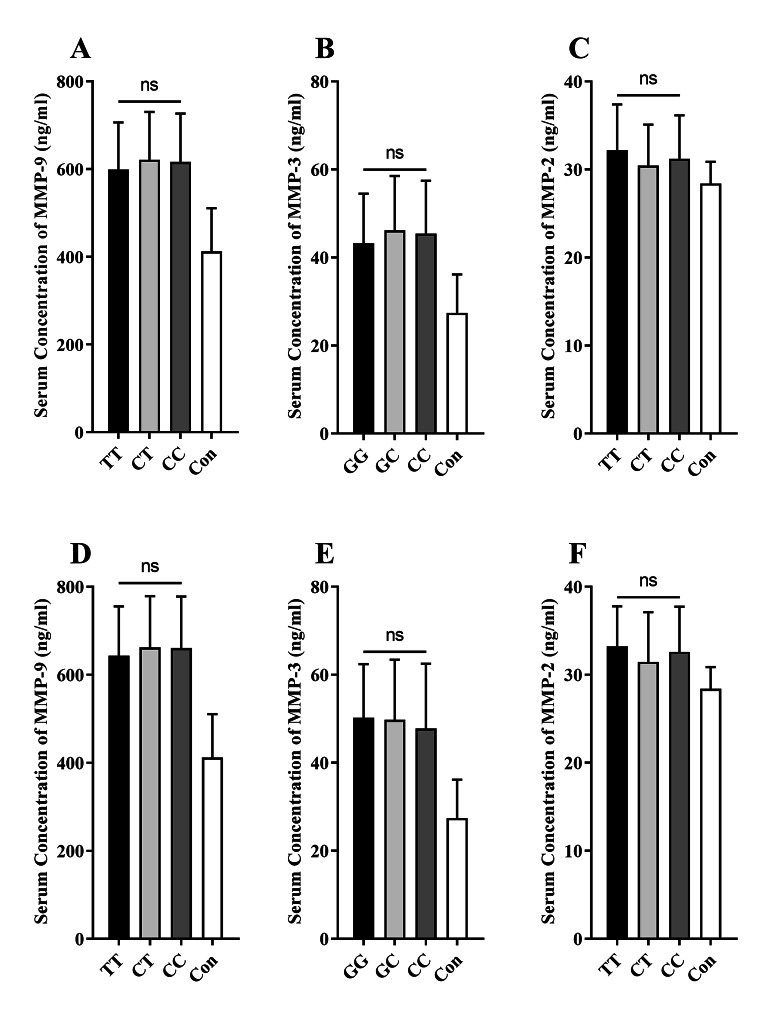
The MMP9 gene rs3918242 and MMP3 gene rs3025058 SNP were significantly associated with increased COVID-19 risk and susceptibility to COVID-19 with NS. The serum level of MMP-9 and MMP-3 was significantly higher in COVID-19 cases compared with the healthy controls. Serum MMP-9 and MMP-3 levels were also higher in COVID-19 subjects with NS in comparison to the healthy controls. The polymorphisms in MMP genes were not associated with serum level of MMPs.
MMP9 and MMP3 gene polymorphisms increases the susceptibility to COVID-19 as well as COVID-19 with neurologic syndrome, but they probably have no role in the regulation of serum MMP-9 and MMP-3 levels.
基质金属蛋白酶(MMPs)似乎在 2019 年冠状病毒病(COVID-19)的发病机制中起作用。在本研究中,我们确定了 MMP9 rs3918242、MMP3 rs3025058 和 MMP2 rs243865 多态性与 COVID-19 风险的关联,尤其是在伴有神经综合征(NS)的患者中。
我们招募了 500 名 COVID-19 患者和 500 名健康个体。使用实时等位基因鉴别技术对目标 SNP 进行基因分型。使用酶联免疫吸附测定(ELISA)测定 MMPs 的血清水平。
MMP9 基因 rs3918242 和 MMP3 基因 rs3025058 SNP 与 COVID-19 风险增加和伴有 NS 的 COVID-19 易感性显著相关。与健康对照组相比,COVID-19 患者的 MMP-9 和 MMP-3 血清水平明显更高。与健康对照组相比,伴有 NS 的 COVID-19 患者的 MMP-9 和 MMP-3 血清水平也更高。MMP 基因的多态性与 MMPs 的血清水平无关。
MMP9 和 MMP3 基因多态性增加了 COVID-19 以及伴有神经综合征的 COVID-19 的易感性,但它们可能在调节血清 MMP-9 和 MMP-3 水平方面没有作用。