Daear W, Sule K, Lai P, Prenner E J
Department of Biological Sciences, University of Calgary Calgary AB T2N 1N4 Canada
RSC Adv. 2022 Sep 30;12(43):27918-27932. doi: 10.1039/d2ra02859j. eCollection 2022 Sep 28.
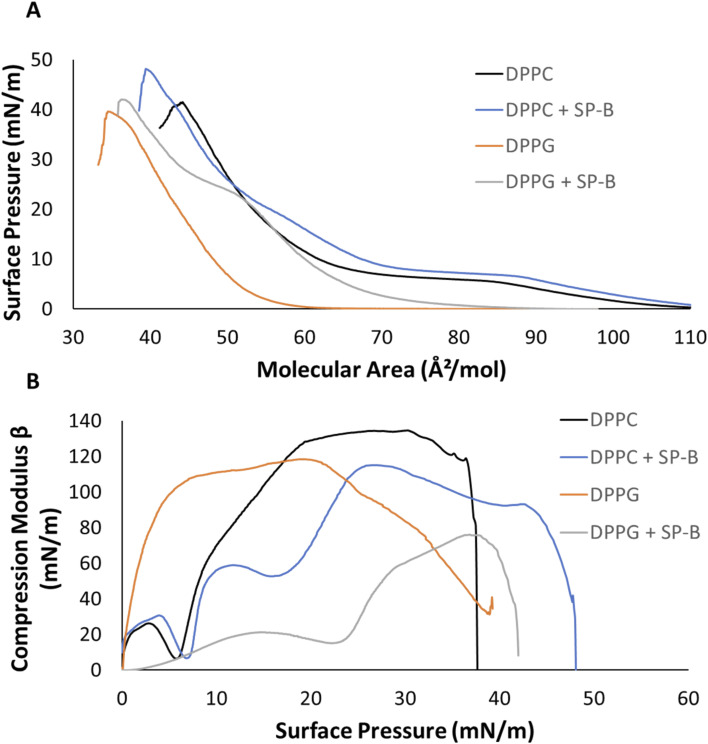
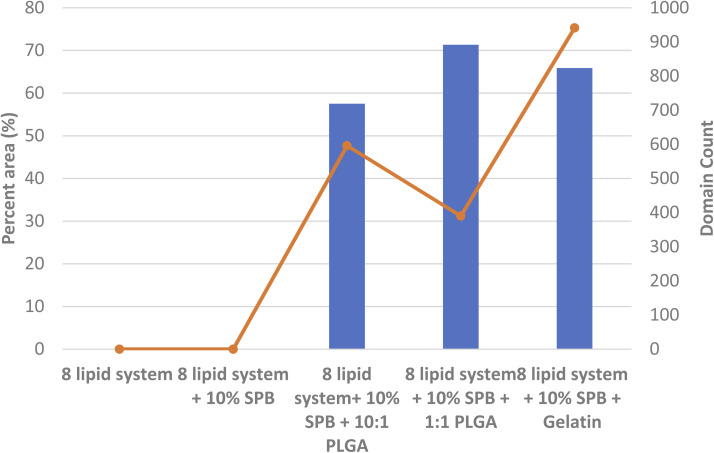
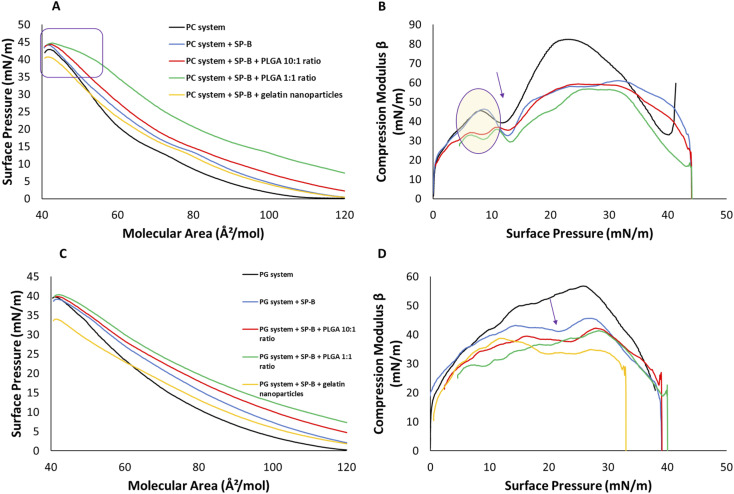
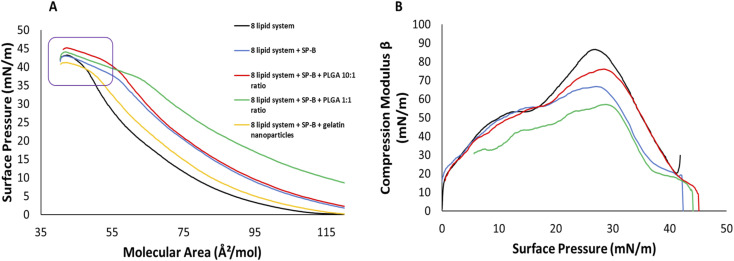
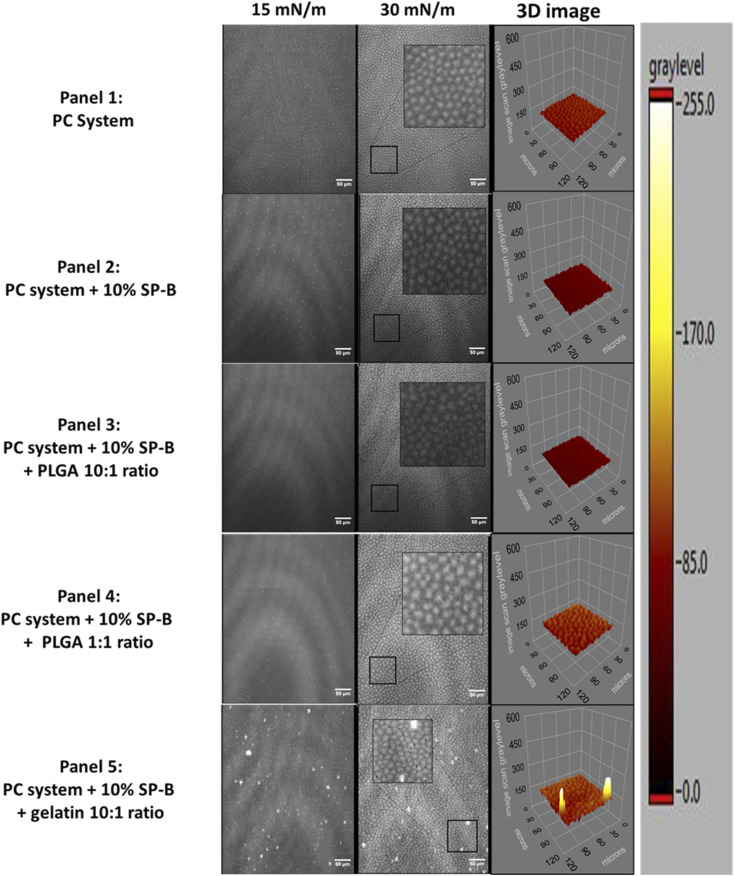
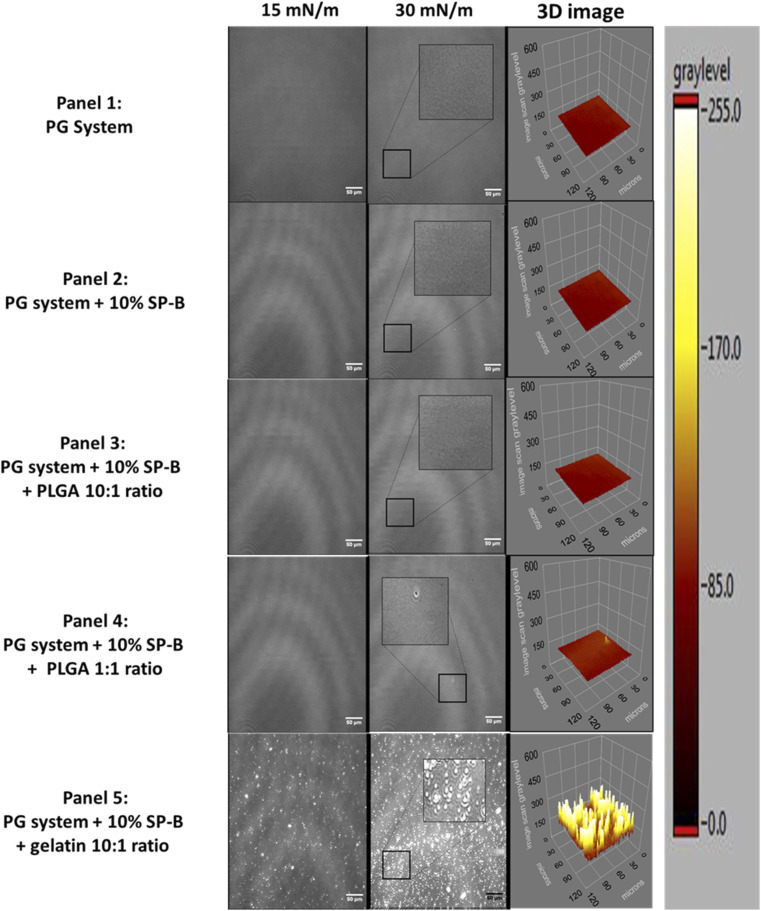
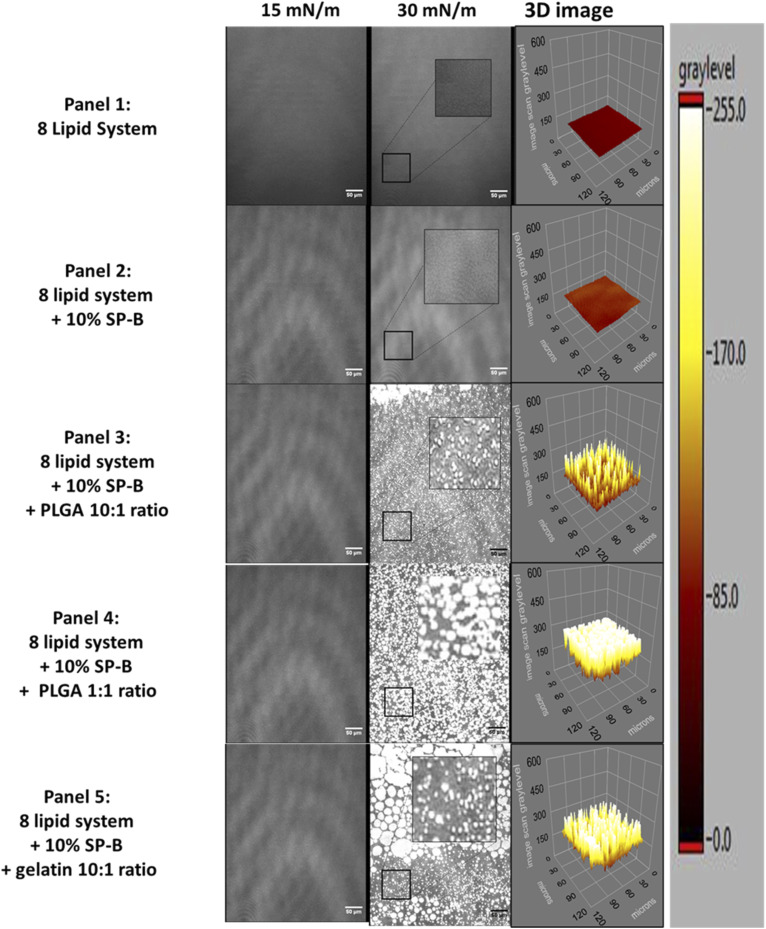
Biocompatible materials are increasingly used for pulmonary drug delivery, and it is essential to understand their potential impact on the respiratory system, notably their effect on lung surfactant, a monolayer of lipids and proteins, responsible for preventing alveolar collapse during breathing cycles. We have developed a complex mimic of lung surfactant composed of eight lipids mixed in ratios reported for native lung surfactant. A synthetic peptide based on surfactant protein B was added to better mimic the biological system. This model was used to evaluate the impact of biocompatible gelatin and poly(lactic-co-glycolic acid) nanoparticles. Surface pressure-area isotherms were used to assess lipid packing, film compressibility and stability, whereas the lateral organization was visualized by Brewster angle microscopy. Nanoparticles increased film fluidity and altered the monolayer collapse pressure. Bright protruding clusters formed in their presence indicate a significant impact on the lateral organization of the surfactant film. Altogether, this work indicates that biocompatible materials considered to be safe for drug delivery still need to be assessed for their potential detrimental impact before use in therapeutic applications.
生物相容性材料越来越多地用于肺部药物递送,了解它们对呼吸系统的潜在影响至关重要,尤其是它们对肺表面活性剂的影响,肺表面活性剂是一层由脂质和蛋白质组成的单分子层,负责在呼吸周期中防止肺泡塌陷。我们开发了一种复杂的肺表面活性剂模拟物,它由八种脂质按天然肺表面活性剂报道的比例混合而成。添加了一种基于表面活性剂蛋白B的合成肽,以更好地模拟生物系统。该模型用于评估生物相容性明胶和聚乳酸-乙醇酸共聚物纳米颗粒的影响。表面压力-面积等温线用于评估脂质堆积、膜的压缩性和稳定性,而通过布鲁斯特角显微镜观察横向组织。纳米颗粒增加了膜的流动性并改变了单分子层的塌陷压力。在它们存在的情况下形成的明亮突出簇表明对表面活性剂膜的横向组织有显著影响。总之,这项工作表明,被认为对药物递送安全的生物相容性材料在用于治疗应用之前仍需要评估其潜在的有害影响。