Bezerra Eveline M, de Alvarenga Érika C, Dos Santos Ricardo P, de Sousa Jeanlex S, Fulco Umberto L, Freire Valder N, Albuquerque Eudenilson L, da Costa Roner F
Programa de Pós-Graduação em Ciência e Engenharia de Materiais (PPgCEM), Universidade Federal Rural do Semi-Árido (UFERSA) CEP 59625-900 Mossoró RN Brazil
Departamento de Física, Universidade Federal do Ceará (UFC) CEP 60440-900 Fortaleza CE Brazil
RSC Adv. 2022 Oct 5;12(44):28395-28404. doi: 10.1039/d2ra04340h. eCollection 2022 Oct 4.
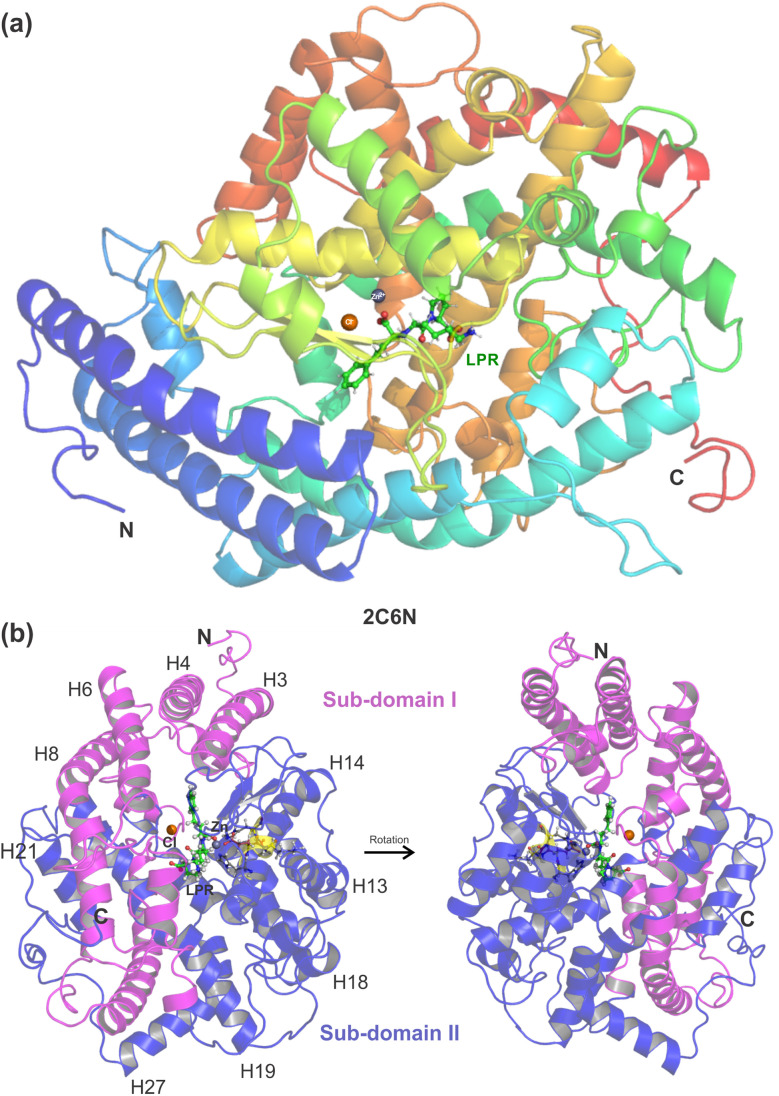
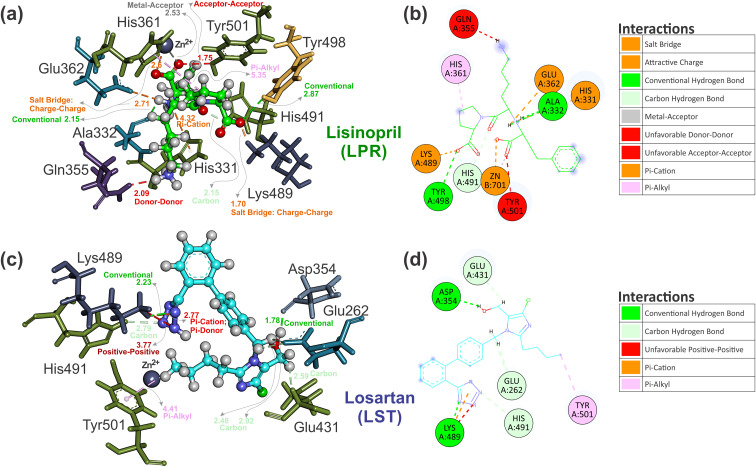
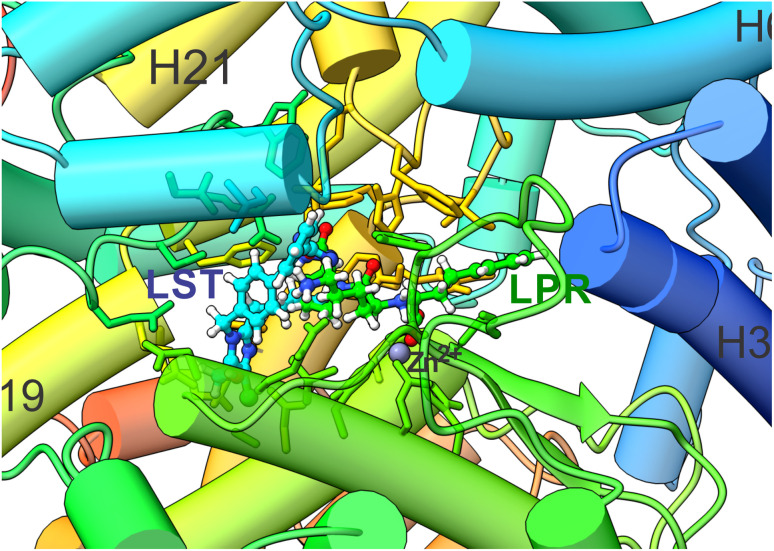
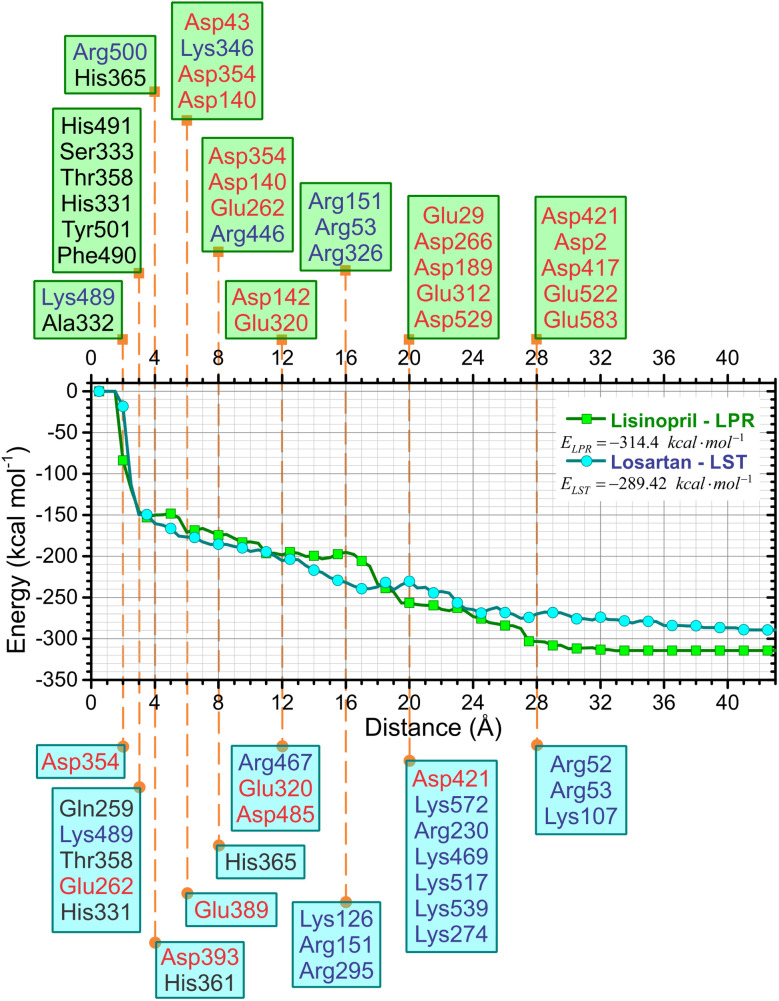
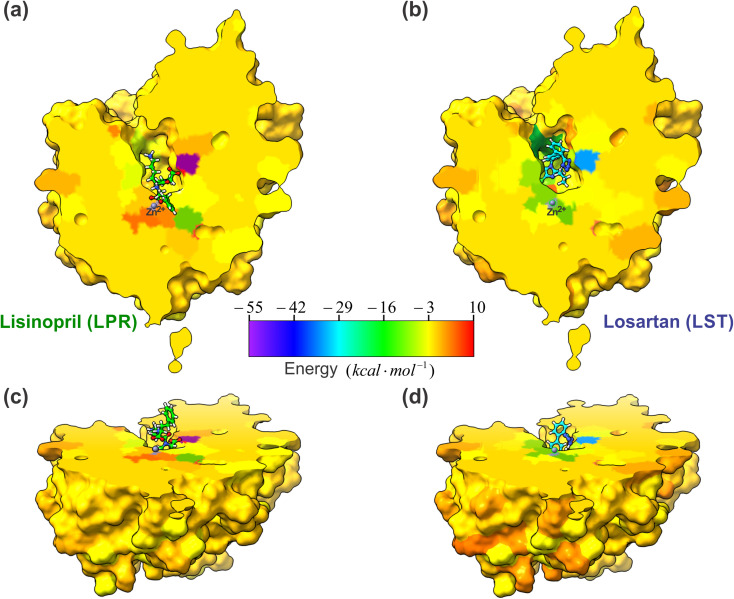
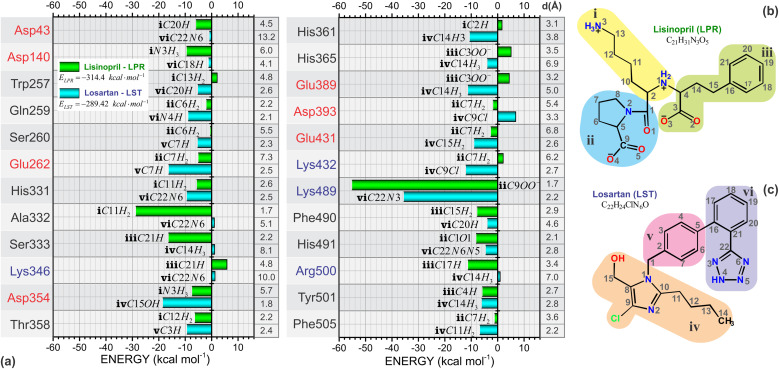
Losartan (LST) is a potent and selective angiotensin II (Ang II) type 1 (AT1) receptor antagonist widely used in the treatment of hypertension. The formation of Ang II is catalyzed by the angiotensin I-converting enzyme (ACE) through proteolytic cleavage of angiotensin I (Ang I), which is involved in the control of blood pressure. Despite the vast literature on the relationship of losartan with the renin-angiotensin system (RAS), the actions of losartan on the sACE enzyme are so far poorly understood. In view of this, we investigated how losartan can interact with the sACE enzyme to block its activity and intracellular signaling. After performing docking assays following quantum biochemistry calculations using losartan and sACE crystallographic data, we report that their interaction results reveal a new mechanism of action with important implications for understanding its effects on hypertension.
氯沙坦(LST)是一种强效且选择性的血管紧张素II(Ang II)1型(AT1)受体拮抗剂,广泛用于治疗高血压。血管紧张素I转换酶(ACE)通过对血管紧张素I(Ang I)进行蛋白水解切割来催化血管紧张素II的形成,而血管紧张素I参与血压控制。尽管关于氯沙坦与肾素-血管紧张素系统(RAS)关系的文献众多,但氯沙坦对可溶性ACE(sACE)酶的作用迄今仍知之甚少。有鉴于此,我们研究了氯沙坦如何与sACE酶相互作用以阻断其活性和细胞内信号传导。在使用氯沙坦和sACE晶体学数据进行量子生物化学计算后进行对接分析后,我们报告称它们的相互作用结果揭示了一种新的作用机制,这对于理解其对高血压的影响具有重要意义。