MOE Key Laboratory of Marine Genetics and Breeding, College of Marine Life Sciences, Ocean University of China, Qingdao, 266003, China.
Key Laboratory of Tropical Aquatic Germplasm of Hainan Province, Sanya Oceanog Inst, Ocean University of China, Sanya, 572000, China.
BMC Genomics. 2022 Nov 2;23(1):738. doi: 10.1186/s12864-022-08940-8.
Mytilidae, also known as marine mussels, are widely distributed in the oceans worldwide. Members of Mytilidae show a tremendous range of ecological adaptions, from the species distributed in freshwater to those that inhabit in deep-sea. Mitochondria play an important role in energy metabolism, which might contribute to the adaptation of Mytilidae to different environments. In addition, some bivalve species are thought to lack the mitochondrial protein-coding gene ATP synthase F0 subunit 8. Increasing studies indicated that the absence of atp8 may be caused by annotation difficulties for atp8 gene is characterized by highly divergent, variable length.
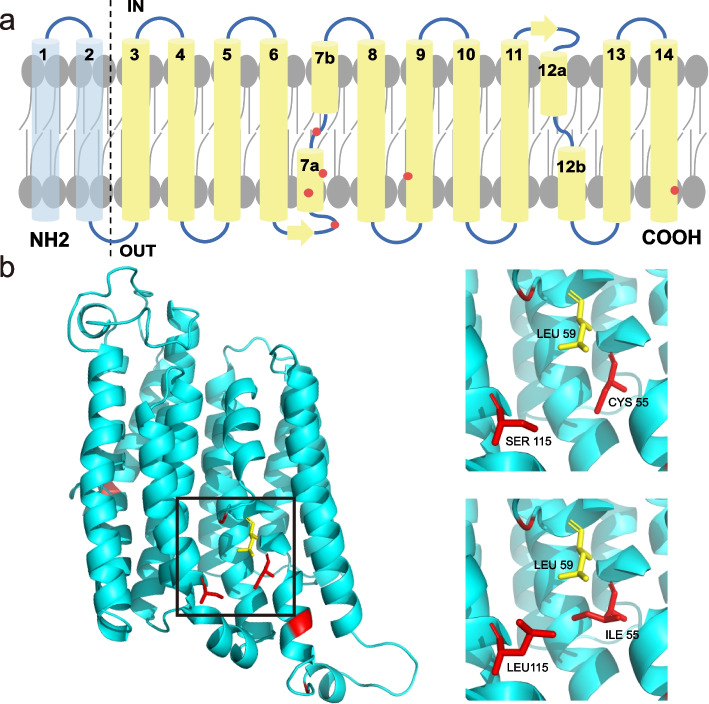
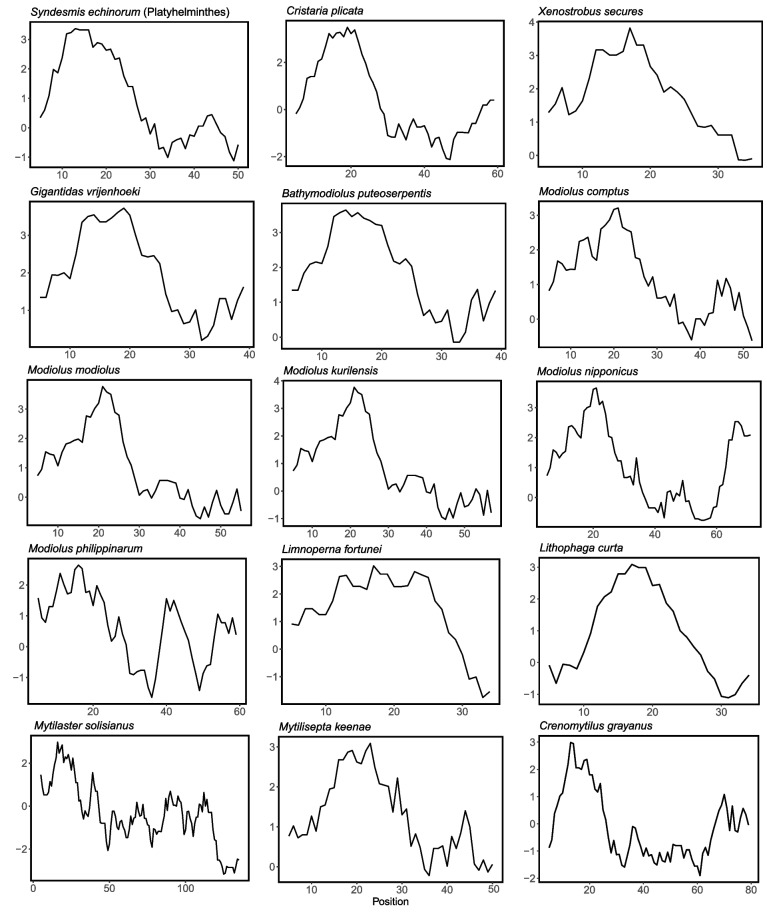
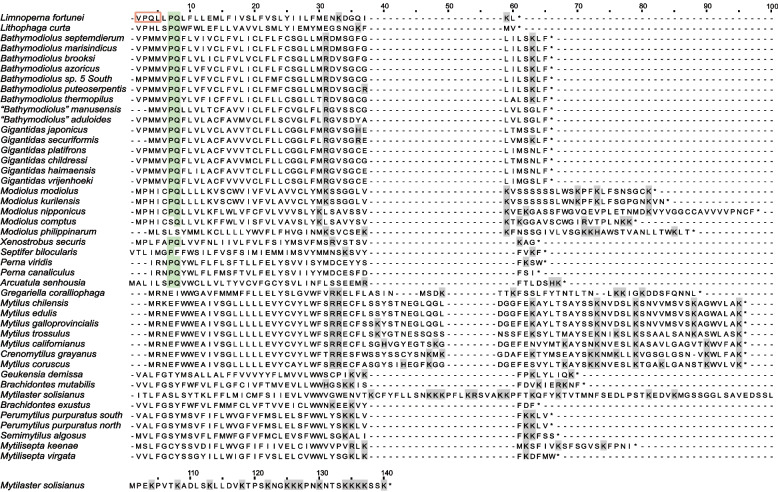
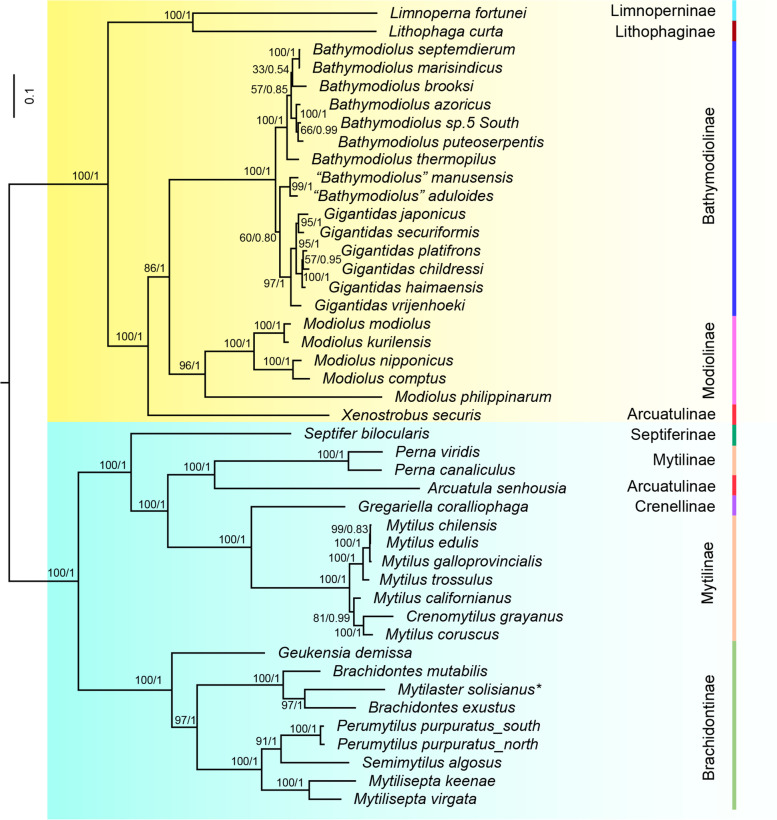
In this study, the complete mitochondrial genomes of three marine mussels (Xenostrobus securis, Bathymodiolus puteoserpentis, Gigantidas vrijenhoeki) were newly assembled, with the lengths of 14,972 bp, 20,482, and 17,786 bp, respectively. We annotated atp8 in the sequences that we assembled and the sequences lacking atp8. The newly annotated atp8 sequences all have one predicted transmembrane domain, a similar hydropathy profile, as well as the C-terminal region with positively charged amino acids. Furthermore, we reconstructed the phylogenetic trees and performed positive selection analysis. The results showed that the deep-sea bathymodiolines experienced more relaxed evolutionary constraints. And signatures of positive selection were detected in nad4 of Limnoperna fortunei, which may contribute to the survival and/or thriving of this species in freshwater.
Our analysis supported that atp8 may not be missing in the Mytilidae. And our results provided evidence that the mitochondrial genes may contribute to the adaptation of Mytilidae to different environments.
贻贝科,又称海洋贻贝,广泛分布于世界各地的海洋中。贻贝科的成员表现出极大的生态适应范围,从分布在淡水中的物种到栖息在深海中的物种。线粒体在能量代谢中发挥着重要作用,这可能有助于贻贝科适应不同的环境。此外,一些双壳类物种被认为缺乏线粒体蛋白编码基因 ATP 合酶 F0 亚基 8。越来越多的研究表明,atp8 的缺失可能是由于 atp8 基因的注释困难所致,该基因的特点是高度变异,长度可变。
在这项研究中,我们新组装了三种海洋贻贝(Xenostrobus securis、Bathymodiolus puteoserpentis、Gigantidas vrijenhoeki)的完整线粒体基因组,长度分别为 14972bp、20482bp 和 17786bp。我们在组装的序列和缺少 atp8 的序列中注释了 atp8。新注释的 atp8 序列都具有一个预测的跨膜结构域、相似的疏水性图谱以及带正电荷氨基酸的 C 末端区域。此外,我们构建了系统发育树并进行了正选择分析。结果表明,深海 bathymodiolines 经历了更放松的进化约束。在 Limnoperna fortunei 的 nad4 中检测到正选择的特征,这可能有助于该物种在淡水中的生存和/或繁殖。
我们的分析支持贻贝科可能不缺少 atp8。我们的结果为线粒体基因可能有助于贻贝科适应不同环境提供了证据。