Centers for Disease Control and Prevention, Atlanta, GA, USA.
Oak Ridge Institute for Science and Education, Oak Ridge, TN, USA.
Glob Health Sci Pract. 2022 Jun 29;10(3). doi: 10.9745/GHSP-D-21-00284.
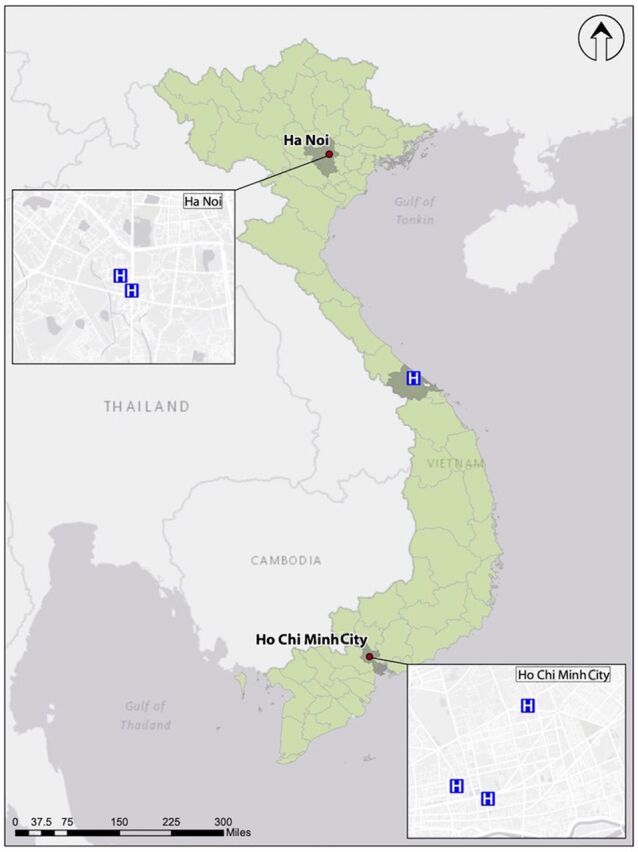
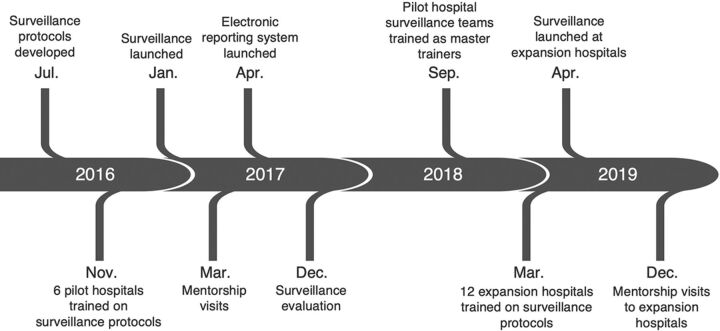
Standardized surveillance for health care-associated infections (HAI) is critical to understand HAI burden and inform prevention strategies at a national level. Due to differing and generally limited resources in Vietnam's health care facilities, implementation of HAI surveillance has been variable and data quality has not been systematically assessed. In 2016, the Vietnam Administration for Medical Services (VAMS) under the Ministry of Health, with the support of partners, began to establish a context-appropriate, standardized HAI surveillance system for bloodstream infections (BSI) and urinary tract infections (UTI) among 6 pilot hospitals in Vietnam. We identified 5 key elements of our HAI surveillance implementation process that have been conducive to ensuring data quality and program sustainability and scalability. These include: (1) engaging stakeholders, (2) designating roles and responsibilities, (3) developing context-sensitive, standardized surveillance protocols, (4) creating a surveillance implementation strategy, and (5) linking HAI surveillance and prevention activities. With the active participation of infection prevention and control staff from the 6 pilot hospitals, standardized HAI surveillance for BSIs and UTIs was expanded to 12 additional hospitals in 2019. Together, VAMS and partners are helping Vietnam fulfill its commitment to safe health care for all patients.
标准化的医疗保健相关性感染(HAI)监测对于了解 HAI 负担并在国家层面提供预防策略至关重要。由于越南医疗机构的资源不同且通常有限,HAI 监测的实施情况各不相同,并且数据质量也没有得到系统评估。2016 年,越南卫生部下属的医疗服务管理局(VAMS)在合作伙伴的支持下,开始在越南的 6 家试点医院中建立一个适合国情、标准化的血流感染(BSI)和尿路感染(UTI)HAI 监测系统。我们确定了 HAI 监测实施过程中的 5 个关键要素,这些要素有助于确保数据质量和计划的可持续性和可扩展性。这些要素包括:(1)吸引利益相关者;(2)指定角色和责任;(3)制定针对具体情况的标准化监测方案;(4)制定监测实施策略;(5)将 HAI 监测和预防活动联系起来。在来自 6 家试点医院的感染预防和控制人员的积极参与下,BSI 和 UTI 的标准化 HAI 监测于 2019 年扩大到另外 12 家医院。VAMS 和合作伙伴正在共同努力,帮助越南履行对所有患者提供安全医疗保健的承诺。