Department of Rheumatology and Clinical Immunology, Chinese Academy of Medical Sciences & Peking Union Medical College; National Clinical Research Center for Dermatologic and Immunologic Diseases (NCRC-DID), Ministry of Science & Technology; State Key Laboratory of Complex Severe and Rare Diseases, Peking Union Medical College Hospital (PUMCH); Key Laboratory of Rheumatology and Clinical Immunology, Ministry of Education, Beijing, 100730, China.
Department of Rheumatology and Immunology, Tianjin Medical University General Hospital, Tianjin, 300052, China.
Arthritis Res Ther. 2022 Nov 4;24(1):249. doi: 10.1186/s13075-022-02938-z.
Macrophages are key innate immune cells implicated in the pathogenesis of Behçet's disease (BD), and macrophage polarization plays a pivotal role in inflammatory response. This study aimed to investigate the role of BD serum on the phenotypes and functions of macrophage polarization.
BD or HC serum-treated human monocyte-derived macrophages (HMDMs) were examined M1/M2 phenotypes using flow cytometry and ELISA. The phagocytic capacity of HMDMs and CD4T cell differentiation facilitated by HMDMs were measured by flow cytometry. Transcriptome analysis of BD and HC serum-stimulated HMDMs was conducted to identify differentially expressed genes. NF-κB signaling was examined using western blot to explore the mechanism of macrophage polarization induced by BD serum.
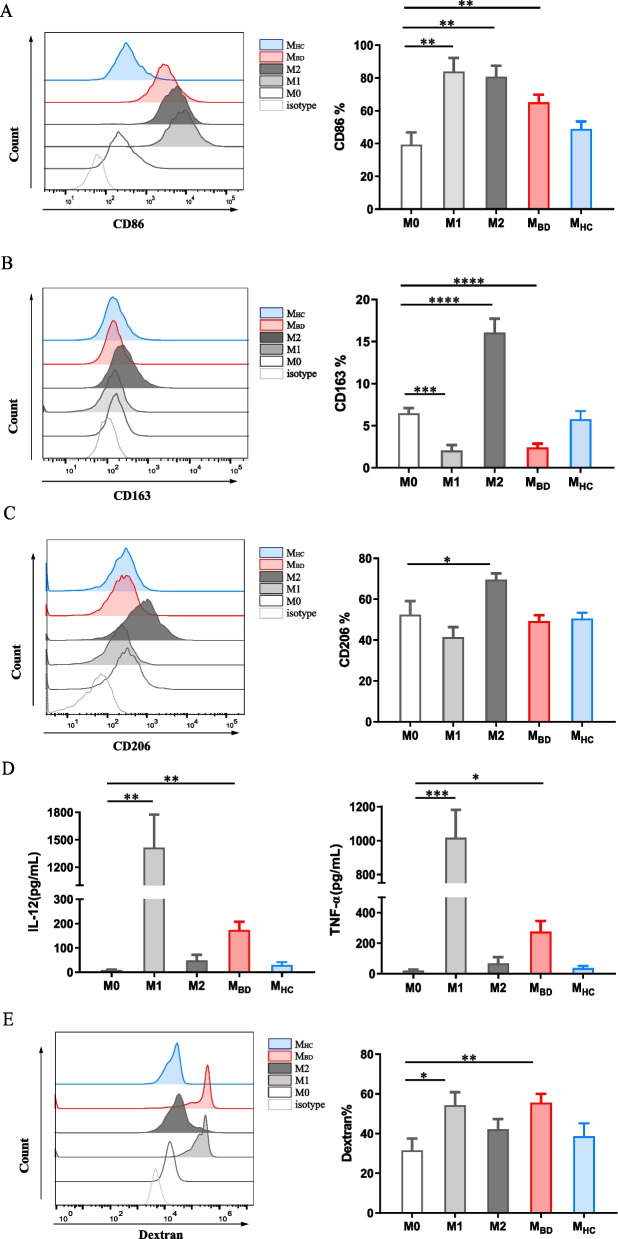
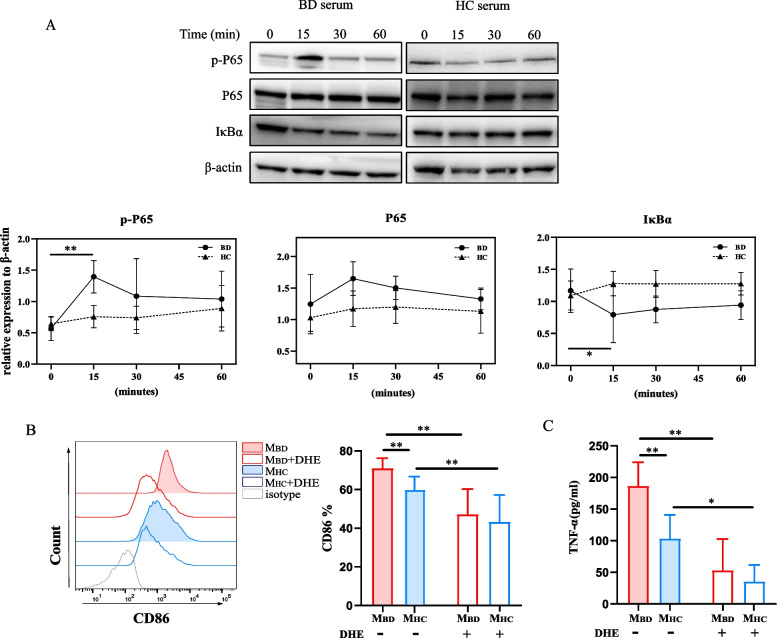
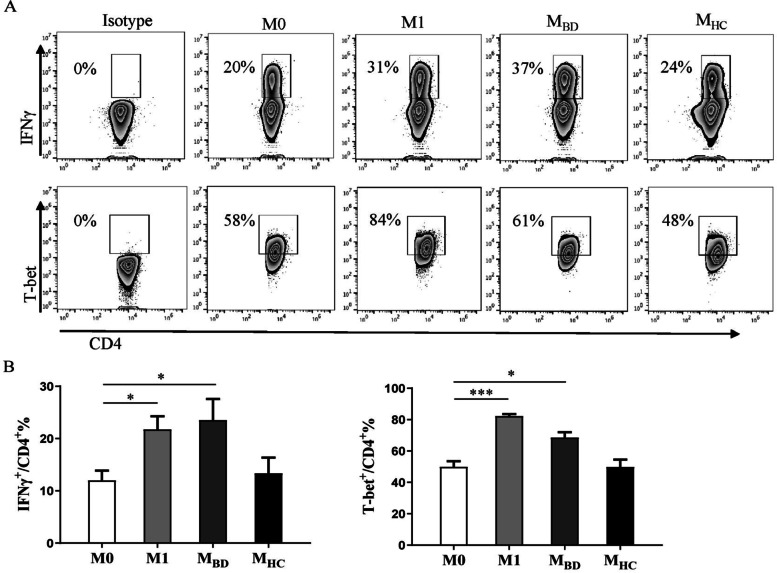
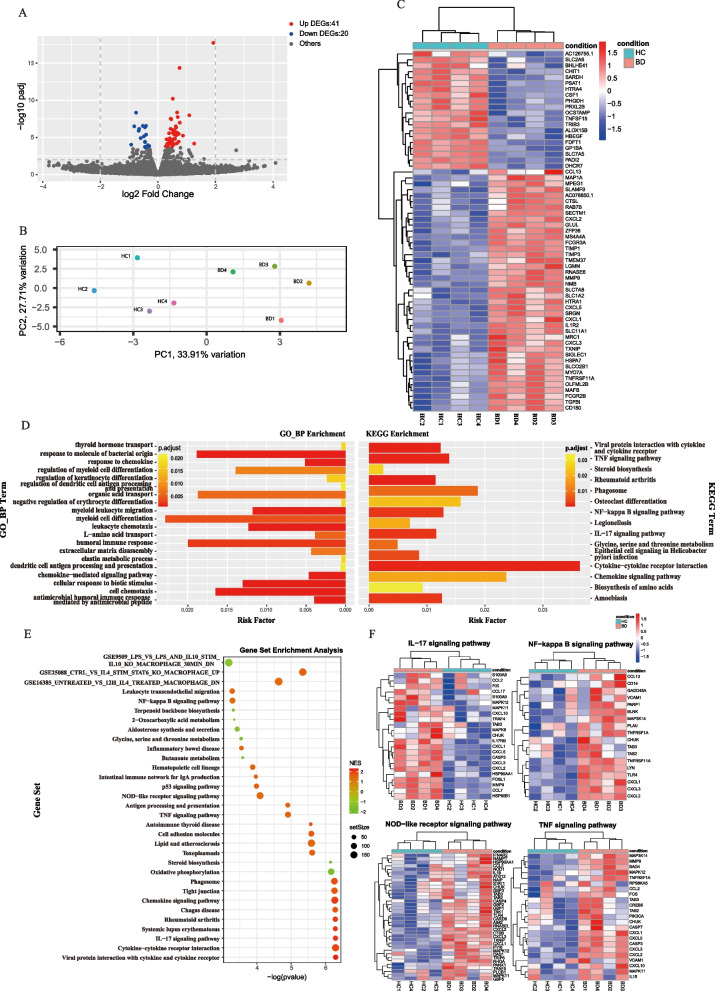
BD serum-treated macrophages expressed a higher level of CD86, IL-12, and TNF-α and a lower level of CD163, which were compatible with the M1-like phenotype. Furthermore, BD serum-treated macrophages showed enhanced phagocytic capacity and promoted more Th1 cell differentiation. Sixty-one differentially expressed genes were identified between BD and HC serum-treated macrophages and were enriched in NF-κB signaling. BD serum-treated macrophages showed upregulated p-p65 and downregulated IκBα, and NF-κB inhibitor attenuated BD serum-stimulated M1-like phenotype.
BD serum promoted macrophage polarization toward a proinflammatory M1-like phenotype through NF-κB signaling and potentially facilitated inflammation in BD. M1 polarized macrophages may be a potential therapeutic target for BD.
巨噬细胞是参与贝赫切特病(BD)发病机制的关键固有免疫细胞,巨噬细胞极化在炎症反应中起着关键作用。本研究旨在探讨 BD 血清对巨噬细胞极化表型和功能的作用。
采用流式细胞术和 ELISA 检测 BD 或 HC 血清处理的人单核细胞来源的巨噬细胞(HMDM)的 M1/M2 表型。通过流式细胞术测量 HMDM 的吞噬能力和 HMDM 促进的 CD4T 细胞分化。对 BD 和 HC 血清刺激的 HMDM 进行转录组分析,以鉴定差异表达基因。采用 Western blot 检测 NF-κB 信号通路,探讨 BD 血清诱导巨噬细胞极化的机制。
BD 血清处理的巨噬细胞表达更高水平的 CD86、IL-12 和 TNF-α,以及更低水平的 CD163,与 M1 样表型一致。此外,BD 血清处理的巨噬细胞表现出增强的吞噬能力,并促进更多的 Th1 细胞分化。在 BD 和 HC 血清处理的巨噬细胞之间鉴定出 61 个差异表达基因,这些基因富集在 NF-κB 信号通路中。BD 血清处理的巨噬细胞表现出 p-p65 的上调和 IκBα的下调,NF-κB 抑制剂减弱了 BD 血清刺激的 M1 样表型。
BD 血清通过 NF-κB 信号通路促进巨噬细胞向促炎的 M1 样表型极化,并可能促进 BD 中的炎症。M1 极化的巨噬细胞可能是 BD 的潜在治疗靶点。