Alipour Reihane, Jamalimoghadamsiahkali Saeidreza, Karimi Mehrdad, Asadi Asma, Ghaem Haleh, Adel-Mehraban Mohammad Sadegh, Kazemi Amir Hooman
Department of Traditional Medicine, School of Persian medicine, Tehran University of Medical Sciences, Tehran, Iran.
Traditional Persian Medicine and Complementary Medicine (PerCoMed) Student's Association, Student's Scientific Research Center, Tehran University of Medical Sciences, Tehran, Iran.
Integr Med Res. 2022 Dec;11(4):100898. doi: 10.1016/j.imr.2022.100898. Epub 2022 Oct 29.
Non-pharmacological strategies that have been proposed by complementary medical systems, can be effective in management of COVID-19.
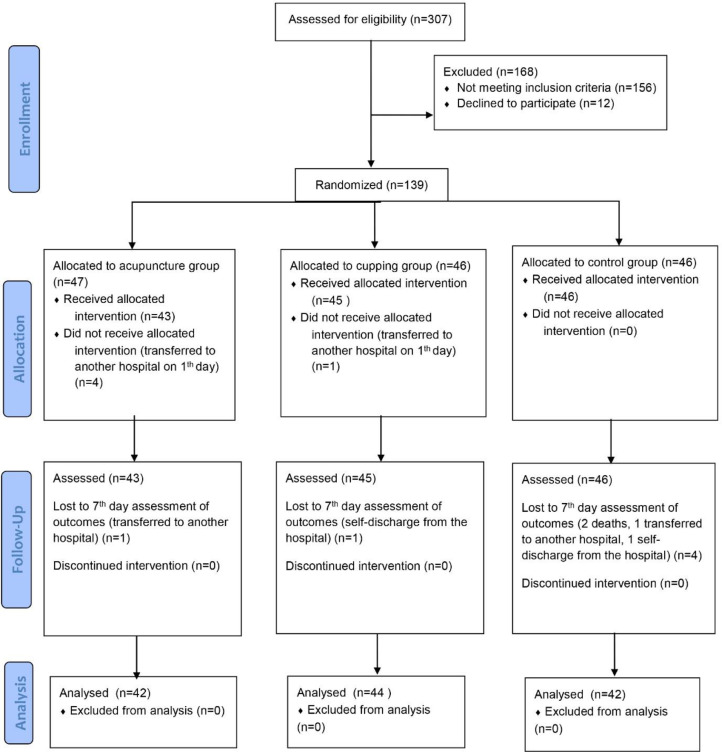
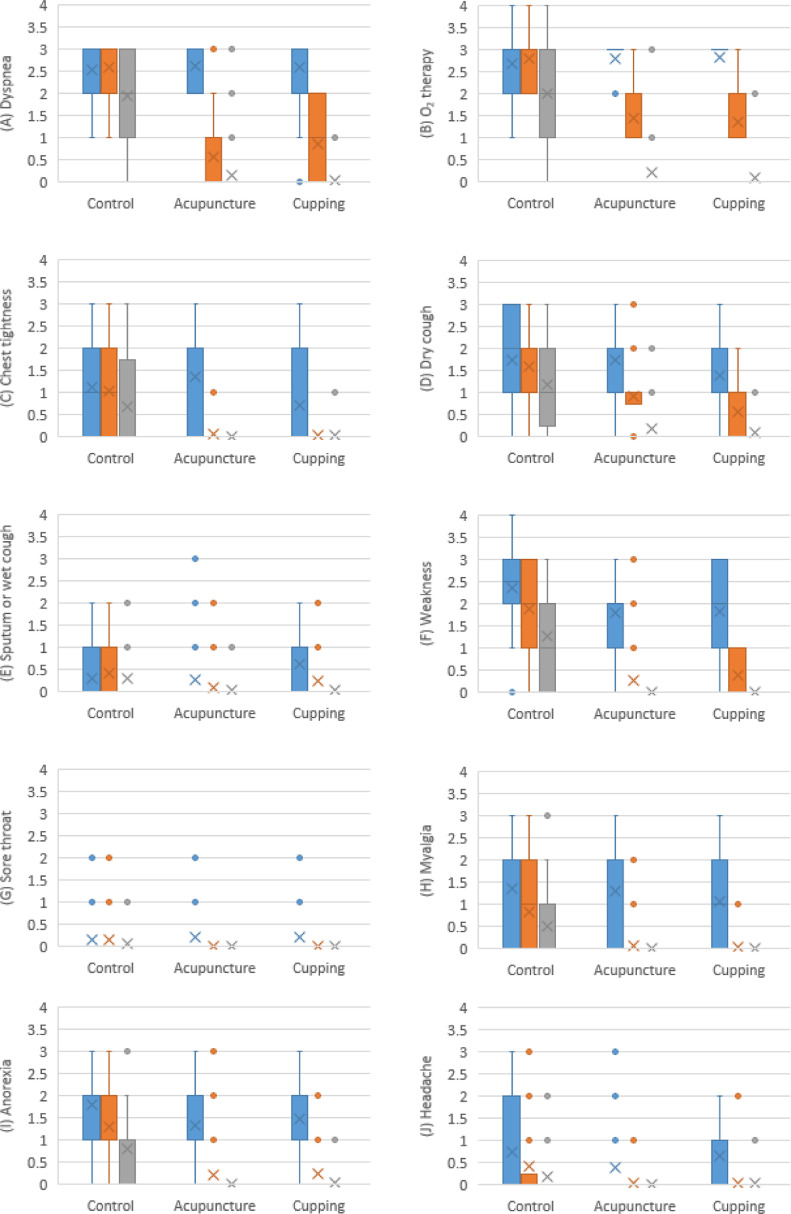
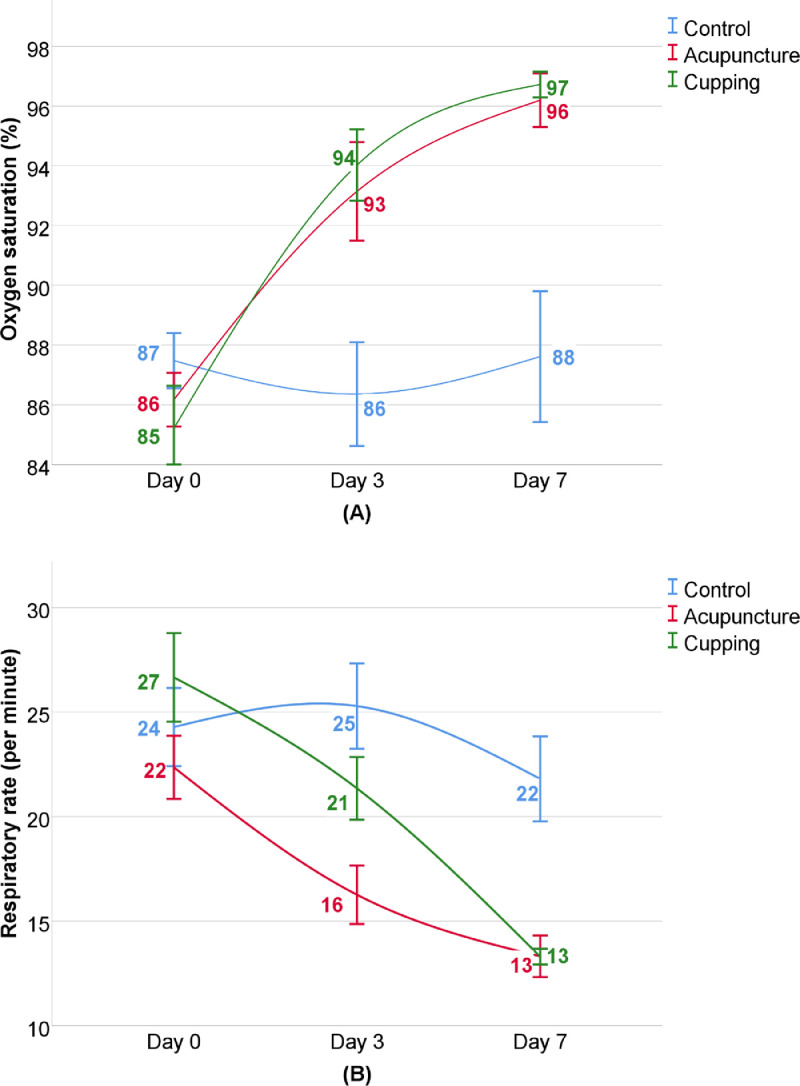
This study was designed as a three-arm, assessor-blinded, randomized controlled trial. A total of 139 hospitalized COVID-19 patients were randomly assigned into three groups: (1) acupuncture (ACUG), (2) cupping (CUPG), and (3) control (CTRG). All participants received conventional treatment. The primary study endpoint included changes in respiratory signs including oxygen saturation (SpO) and respiratory rate (RR). The secondary endpoints were COVID-19-related hospitalization duration and serious adverse events such as intensive care unit (ICU) admission, intubation or death, all up to day 30. Also, improvements in cough, dyspnea, chest tightness, oxygen demand, anorexia, headache, weakness, sore throat, and myalgia were evaluated.
Forty-two patients in ACUG, 44 patients in CUPG, and 42 patients in CTRG completed the trial. After 3 days, SpO and RR improved significantly in CUPG and ACUG compared with CTRG (effect size: 8.49 (6.4 to 10.57) and 8.51 (6.67 to 10.34), respectively: p<0.001). Compared with CTRG, patients in CUPG and ACUG recovered faster (mean difference: 6.58 (4.8 to 8.35) and 9.16 (7.16 to 11.15), respectively) and except for two patients in ACUG who were admitted to ICU, none of patients in ACUG or CUPG needed ICU or intubation (p<0.001 in comparison to CTRG). Amelioration of clinical COVID-19 related symptoms reached a high level of statistical significance in CUPG and ACUG in comparison with CTRG (p<0.01).
Cupping and acupuncture are promising safe and effective therapies in management of COVID-19. Trial registration: This study was registered at Iranian Registry of Clinical Trials: IRCT20201127049504N1 (https://en.irct.ir/trial/52621).
辅助医疗系统提出的非药物策略可能对新冠病毒疾病(COVID-19)的管理有效。
本研究设计为一项三臂、评估者盲法、随机对照试验。总共139名住院的COVID-19患者被随机分为三组:(1)针灸组(ACUG),(2)拔罐组(CUPG),以及(3)对照组(CTRG)。所有参与者均接受常规治疗。主要研究终点包括呼吸体征的变化,包括血氧饱和度(SpO)和呼吸频率(RR)。次要终点为COVID-19相关的住院时间以及严重不良事件,如入住重症监护病房(ICU)、插管或死亡,均截至第30天。此外,还评估了咳嗽、呼吸困难、胸闷、吸氧需求、厌食、头痛、乏力、咽痛和肌痛的改善情况。
ACUG组42例患者、CUPG组44例患者和CTRG组42例患者完成了试验。3天后,与CTRG组相比,CUPG组和ACUG组的SpO和RR显著改善(效应量分别为:8.49(6.4至10.57)和8.51(6.67至10.34):p<0.001)。与CTRG组相比,CUPG组和ACUG组的患者恢复更快(平均差异分别为:6.58(4.8至8.35)和9.16(7.16至11.15)),除ACUG组有2例患者入住ICU外,ACUG组或CUPG组的患者均无需入住ICU或进行插管(与CTRG组相比,p<0.001)。与CTRG组相比,CUPG组和ACUG组中与临床COVID-19相关症状的改善达到了高度统计学显著性(p<0.01)。
拔罐和针灸在COVID-19的管理中是有前景的安全有效疗法。试验注册:本研究在伊朗临床试验注册中心注册:IRCT20201127049504N1(https://en.irct.ir/trial/52621)。