McLellan Maddison, Heffernan Carly, Xu Jason, Billimek John, Kim Brian Y
Orthopedic Surgery Department, University of California, Irvine, Irvine, USA.
Family Medicine, University of California, Irvine, School of Medicine, Irvine, USA.
Cureus. 2022 Oct 2;14(10):e29836. doi: 10.7759/cureus.29836. eCollection 2022 Oct.
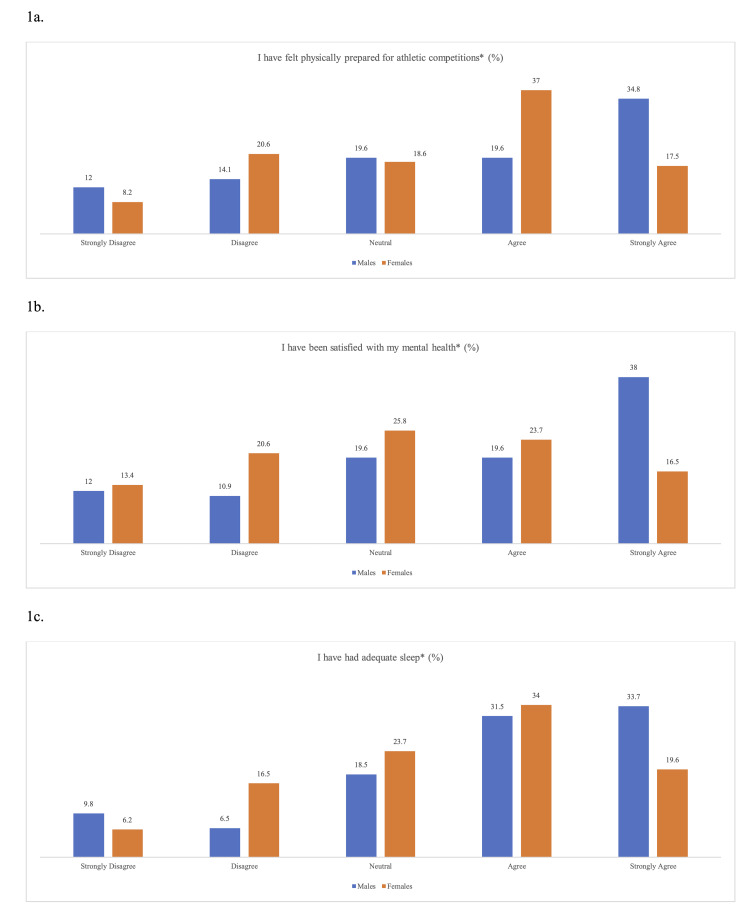
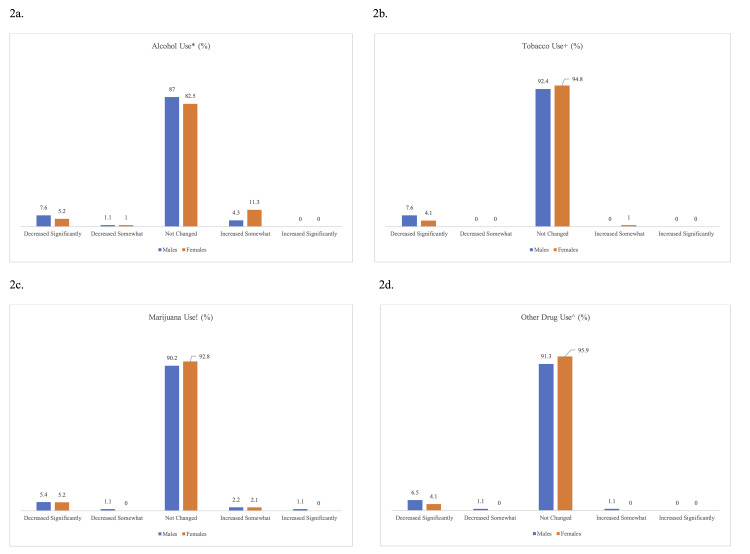
Background Although the coronavirus disease 2019 (COVID-19) pandemic had pervasive effects on the lives of individuals, its influence on the mental health of collegiate athletes remains unknown. This study aimed to assess changes in mental health and substance use in National Collegiate Athlete Association (NCAA) Division I athletes in Southern California during the COVID-19 pandemic. Methodology An online survey was created using the Qualtrics software (Qualtrics, Provo, Utah). NCAA Division I athletes in Southern California completed preseason surveys querying indices of mental health, substance use, and injury in the year before the COVID-19 pandemic (March 2019 to March 2020) and during the pandemic (March 2020 to March 2021). The athletes filled out the survey from June 2021 to September 2021. Participants were asked how likely they were to agree with the following statements: I have felt physically prepared for athletic competitions, I have been satisfied with my mental health, and I have had adequate sleep. Participants were also asked to compare their substance use between the two time periods. Sociodemographic information regarding participants' age, gender, sports team, as well as year in sport and school was also collected. Group comparison analyses were performed using Fisher's exact test. Correlations between mental health measures and other variables were examined using Spearman's correlation coefficients. Results A total of 189 athletes completed the survey (out of the 259 surveys that were started). Females were significantly less likely to feel satisfied with mental health (p < 0.01) and physically prepared for sport (p < 0.01). Across all respondents, satisfaction with mental health was positively correlated with adequate sleep (p < 0.01) and physical preparedness for sport (p < 0.01) and negatively correlated with injury (p < 0.05). There was no significant correlation between mental health status and history of COVID-19 infection (p = 0.84). The vast majority of athletes reported no significant change in substance use pre- to post-pandemic, with no differences according to sex. Conclusions The COVID-19 pandemic had a differential impact on the mental health of female versus male NCAA athletes. Mental health was correlated with sleep, physical preparedness, and being injury-free but not with a history of COVID-19 infection. Despite reports indicating increased substance use in the general population, athletes in this group reported no change in licit and illicit substance use.
背景 尽管2019冠状病毒病(COVID-19)大流行对个人生活产生了广泛影响,但其对大学生运动员心理健康的影响仍不明确。本研究旨在评估COVID-19大流行期间南加州国家大学生体育协会(NCAA)一级运动员的心理健康和物质使用变化。方法 使用Qualtrics软件(Qualtrics,普罗沃,犹他州)创建了一项在线调查。南加州的NCAA一级运动员完成了季前调查,询问了COVID-19大流行前一年(2019年3月至2020年3月)和大流行期间(2020年3月至2021年3月)的心理健康、物质使用和受伤指标。运动员们在2021年6月至2021年9月期间填写了调查问卷。参与者被问及他们对以下陈述的认同程度:我感觉自己在身体上为体育比赛做好了准备,我对自己的心理健康感到满意,以及我有充足的睡眠。参与者还被要求比较两个时间段内他们的物质使用情况。还收集了有关参与者年龄、性别、运动队以及运动和学校年级的社会人口统计学信息。使用Fisher精确检验进行组间比较分析。使用Spearman相关系数检验心理健康指标与其他变量之间的相关性。结果 共有189名运动员完成了调查(在开始的259份调查问卷中)。女性对心理健康感到满意(p < 0.01)和对体育运动有身体准备的可能性显著较低(p < 0.01)。在所有受访者中,心理健康满意度与充足睡眠(p < 0.01)和体育运动的身体准备程度(p < 0.01)呈正相关,与受伤情况呈负相关(p < 0.05)。心理健康状况与COVID-19感染史之间无显著相关性(p = 0.84)。绝大多数运动员报告大流行前后物质使用没有显著变化,按性别无差异。结论 COVID-19大流行对NCAA男女运动员的心理健康有不同影响。心理健康与睡眠、身体准备程度和未受伤相关,但与COVID-19感染史无关。尽管有报告表明普通人群中物质使用增加,但该组运动员报告合法和非法物质使用没有变化。